

August 14, 2026, 2:54 pm | Read time: 4 minutes
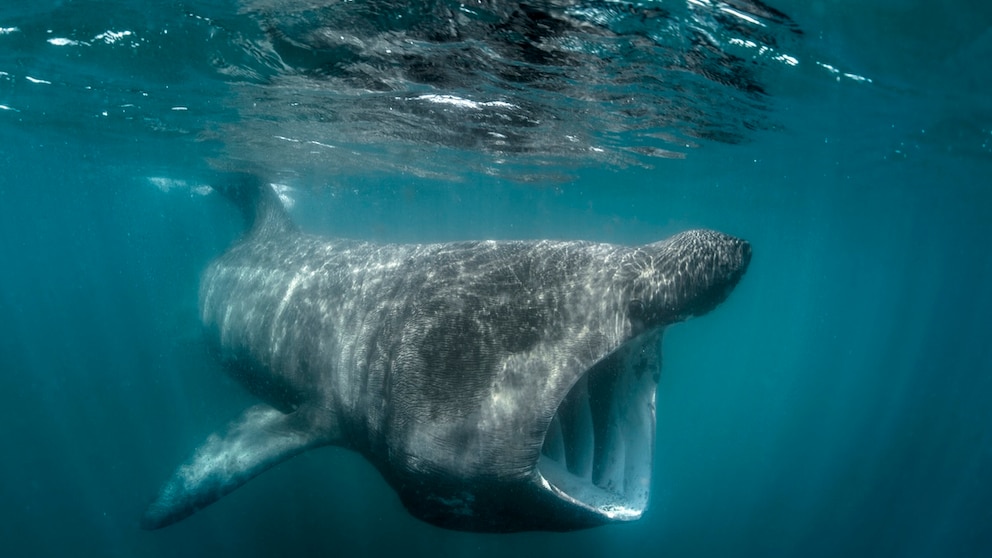
The basking shark is the second-largest shark species in the world and lives up to its name. However, anyone who expects a dangerous predator behind its massive mouth is mistaken. PETBOOK explains what makes this fascinating marine creature so special.
Just How Big Does the Basking Shark Get?
When people hear “shark,” they usually think of sharp teeth and dangerous ocean predators. The surprise is even greater when a basking shark (Cetorhinus maximus) is mentioned in local waters. It is one of the largest fish in the world.
With a length of up to 40 feet, a fully grown basking shark can be larger than many sailboats. Most reach “only” 20 to 26 feet, but they still appear gigantic. The marine giant also weighs quite a bit: up to 11,000 pounds, which is roughly the weight of three compact cars.
Only the whale shark is larger than the basking shark, making it the second-largest shark in the world.
Does the Basking Shark Live in the Baltic Sea?
The giant is rarely found in the Baltic Sea. According to the German Marine Conservation Foundation, the animals are occasionally spotted in the Kattegat and Skagerrak, the marine areas between the North and Baltic Seas.1
Basking sharks generally live in cool to warm temperate seas and are widespread in many regions of the Northern Hemisphere. They are found off the coasts of Great Britain and Norway, in the Mediterranean, and off North America and East Asia. They inhabit both coastal areas and the open sea.
Mysterious Find on the Danish Coast
The fact that basking sharks occasionally roam the waters between the North and Baltic Seas is evidenced by a recent find in Denmark. On August 13, 2026, a nearly 16-foot-long basking shark was washed ashore dead. The animal had previously been observed multiple times by vacationers.
During the examination, researchers made a surprising discovery: The young female appeared to have been healthy until shortly before its death. Neither injuries nor signs of food scarcity were found. Why the marine giant died remains unclear. Further analyses are expected to provide clarity.
Also interesting: Giant Fish Weighs More Than a Car
Is the Basking Shark Dangerous?
The sheer size of its mouth and body makes the basking shark appear intimidating at first glance. However, the marine giant is harmless to humans. This is even suggested by its English name: “Basking Shark.” Translated, it means “sunbathing shark,” a name it owes to its habit of often being near the water’s surface. However, it does not stay there to hunt large prey. Instead, it searches for something much smaller.

Are There Sharks in the North Sea and the Baltic Sea?

Difference Between Seals, Sea Lions, and Other Pinnipeds
What Do Basking Sharks Eat?
With its mouth wide open, the basking shark swims just below the water’s surface, filtering plankton from the water. Tiny crustaceans are a particular favorite on its menu. Special filter structures in its gills trap the food while the water flows back out. In this way, the second-largest shark in the world can pass millions of liters of water through its gills every hour. The filters are regularly shed and then reformed.2
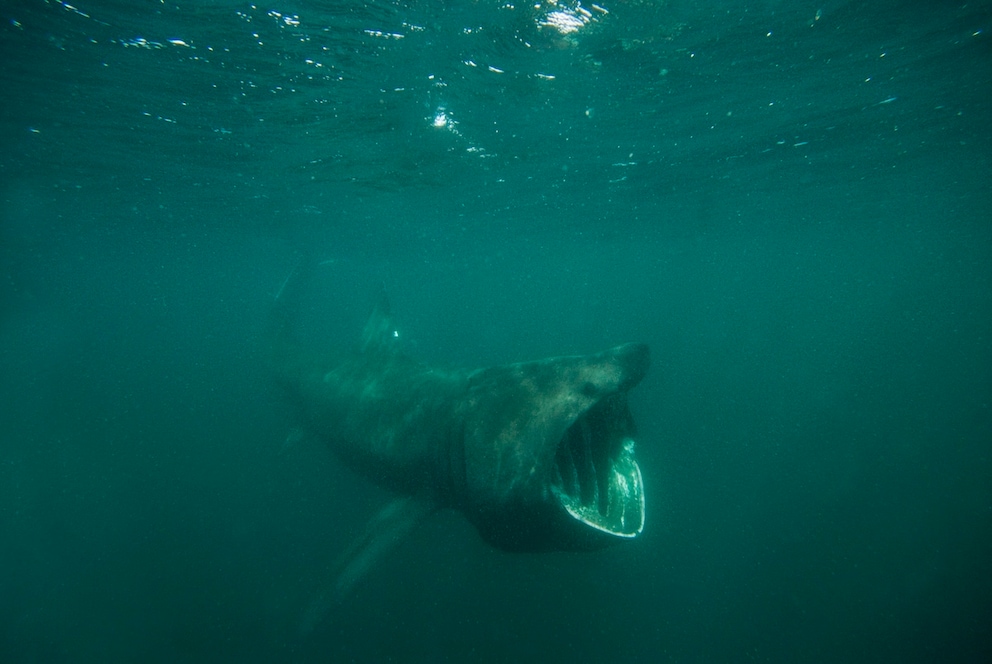
This makes the basking shark unique: Despite its enormous size, it lives almost exclusively on tiny organisms.
How Old Do Basking Sharks Get?
Sharks can live to remarkable ages, as shown by the Greenland shark, which can live for several centuries. While the basking shark does not live that long, it still reaches an impressive age of more than 50 years, similar to some humans.
During this time, it covers enormous distances. Basking sharks are true long-distance travelers, crossing entire oceans on their journeys. They even switch between the Northern and Southern Hemispheres. While they often stay near the surface in temperate regions, they retreat to cooler depths in tropical waters, diving more than 3,900 feet deep. Despite their massive size, they are not only enduring travelers but also impressive deep-sea divers.