

September 8, 2025, 10:07 am | Read time: 3 minutes
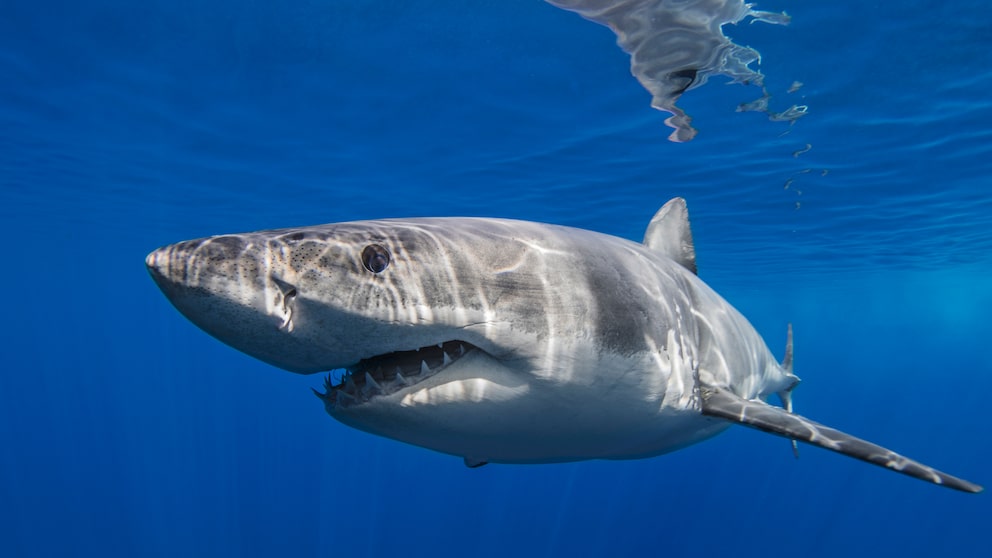
A triangular dorsal fin menacingly emerging from the water? You probably wouldn’t expect that while swimming in the North Sea or the Baltic Sea. Yet, sharks do live here. PETBOOK reveals which species are found in local waters and whether they are dangerous.
Many people are afraid of sharks. One reason is certainly that these cartilaginous fish are portrayed as bloodthirsty monsters in films like Spielberg’s classic “Jaws” or the trash series “Sharknado.” When sharks attack humans, it makes headlines worldwide. It’s no wonder some wonder if there are sharks in the North Sea or the Baltic Sea. The answer is: yes! But are they dangerous to humans?
These Sharks Live in the North Sea
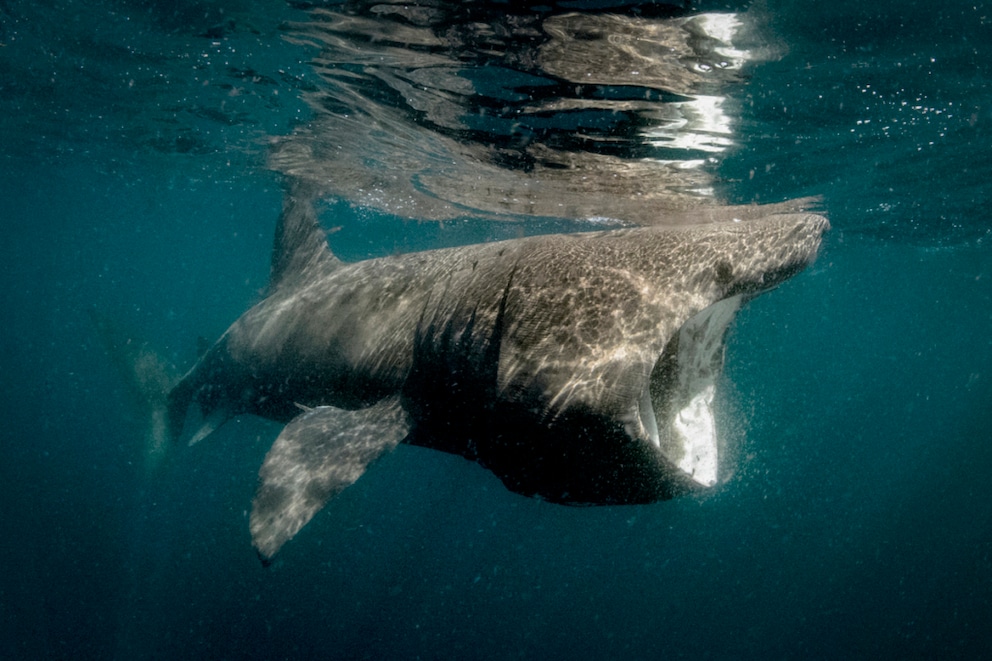
The second-largest fish in the world, the basking shark, also resides in the North Sea. It can grow up to ten meters long and weigh four tons, living up to its name. Fortunately, it is a harmless plankton eater, feeding on small marine organisms like krill and copepods. Additionally, the basking shark is a shy creature and is rather rare in the North Sea, preferring cooler waters. 1
Southwest of Helgoland, you can regularly observe smooth-hound sharks. They grow to about two meters long and have a long, pointed snout. These animals travel long distances: They swim into the North Sea in spring and leave again in autumn. Scientists suspect that smooth-hound sharks give birth to their young in the North Sea. Whether this is true is still being researched. Other shark species in the North Sea include the spiny dogfish, the small-spotted catshark, and the starry smooth-hound. 2

These Sharks Live in the Mediterranean and How Dangerous They Are
How Dangerous the Basking Shark Really Is
18 Different Shark Species Live in the Baltic Sea
According to a report by the Shark Alliance, there is evidence of 18 different shark species in the Baltic Sea. The good news: All are harmless to humans. Even the largest fish in the world, the whale shark, occasionally appears in the Baltic Sea. It reaches a body length of nearly 13 meters and filters plankton from seawater with its gills. 3
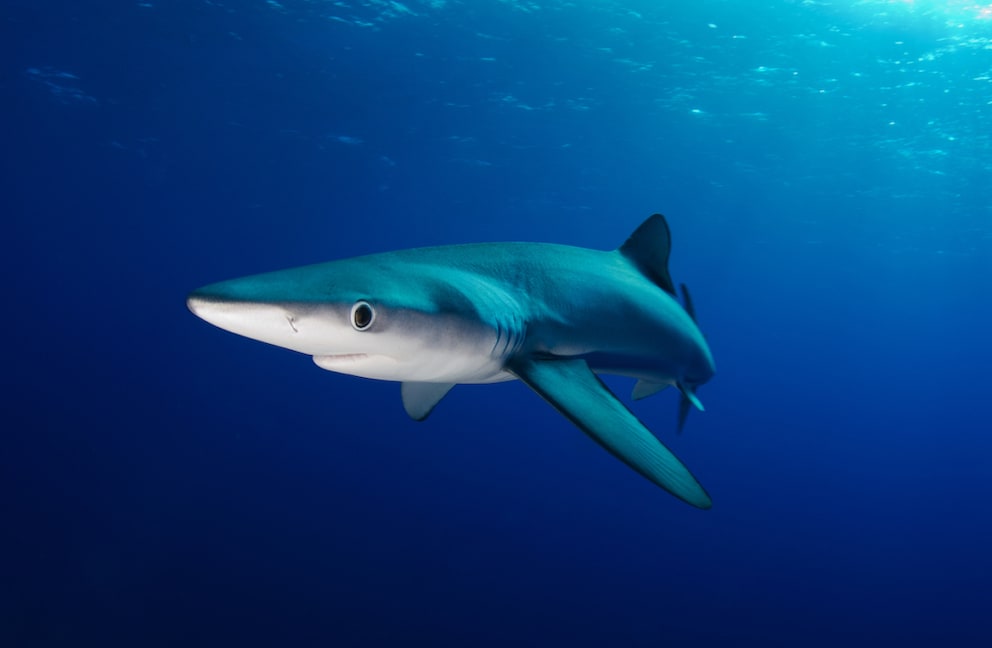
Other shark species occasionally found in the Baltic Sea include the spiny dogfish, the spotted dogfish, the porbeagle, and the blue shark. However, it is believed that these animals end up in this inland sea of the Atlantic by chance. The Baltic Sea has a comparatively low salt and oxygen content and is therefore not an ideal habitat for sharks. Most likely got “lost” and stay only briefly, or prefer to remain in the border waters of the North Sea. 4
No Fear of Sharks in the North Sea and Baltic Sea
Vacationers and swimmers in the North Sea and Baltic Sea need not fear sharks. Shark attacks on humans are quite rare. On the “Shark Attack Map“—a map of reported shark attacks—the North Sea and Baltic Sea have not appeared in recent years. Most species in German waters are not after large prey. Those lucky enough to spot a shark in the North Sea or Baltic Sea, perhaps from a boat, should remember: Sharks play an important role. They control the growth of fish populations and help maintain the natural balance in the sea.