

June 30, 2026, 3:58 am | Read time: 7 minutes
When you read about shark encounters or even “attacks,” these reports usually come from regions like Australia or South Africa. But what about the Mediterranean? Can you encounter sharks while swimming or diving there–and can they be dangerous to humans? PETBOOK dove in and investigated.
How likely is it to encounter a shark in the Mediterranean?
The Mediterranean stretches between the coasts of Europe, Africa, and Asia and is a marginal sea of the Atlantic Ocean. It is home to around 500 fish species–including about 50 shark species. Its deepest points are south of Greece, reaching depths of up to 5,000 meters. Through the Suez Canal, which connects the Mediterranean with the Red Sea, some species have migrated and become native there.
In general, sharks mostly stay in deeper waters and avoid proximity to humans. Encounters near the coast are therefore rare–but they always attract attention and sometimes dramatic headlines.
For example, on April 18, 2026, off the French Mediterranean coast near Port-La Nouvelle, fishermen filmed a shark about ten meters long that appeared less than a kilometer from the shore. Several media outlets reported on it. The animal was likely a basking shark–the second-largest fish in the world after the whale shark. Occasionally, it hunts prey like mackerel or sardines near the coast. Documented shark attacks in the Mediterranean are extremely rare, and fatal incidents are absolute exceptions. Most shark species are considered shy and avoid contact with humans.


Jaws Poster Features Different Shark Species
Are There Sharks in the North Sea and the Baltic Sea?
What shark species appear in the Mediterranean?
About 50 species of sharks live in the Mediterranean. Some of them are repeatedly sighted–though usually far from the coasts. Among them is the feared great white shark, as it feels comfortable in the warm waters of the Strait of Sicily, the Aegean, and the Adriatic.
Great White Shark (Carcharodon carcharias)
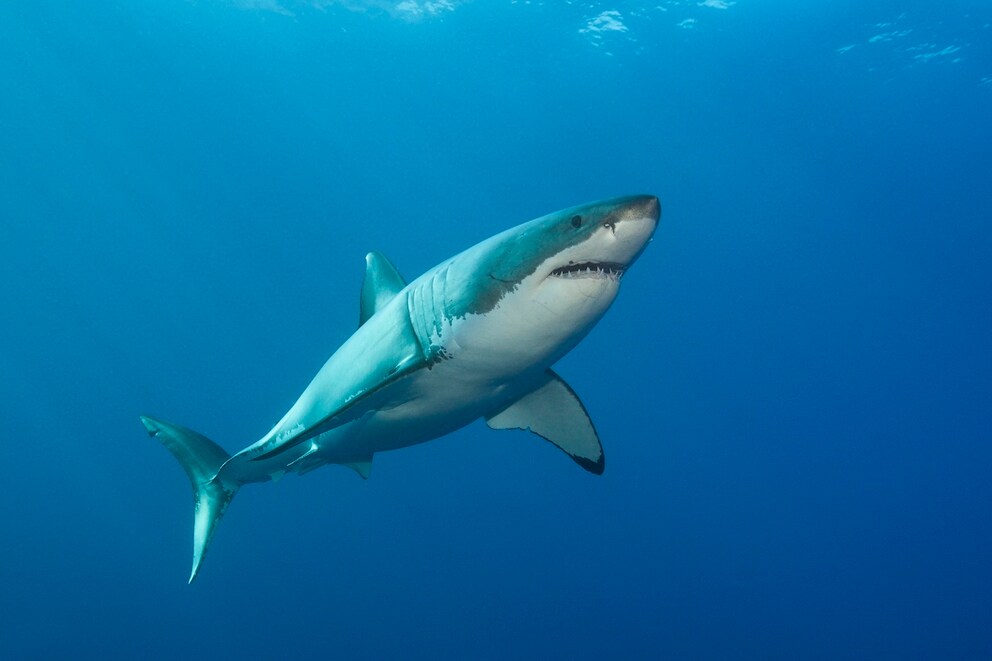
The great white shark is one of the largest predatory fish in the world and can grow up to seven meters long, with females being larger than males. It is also found in the Mediterranean. They can weigh up to 3.2 tons and are found in all oceans. In the Mediterranean, their already small population has further declined due to water pollution and the decrease in tuna stocks.
Additionally, they continue to be reduced as bycatch in the large nets of trawlers. Nevertheless, media outcry is significant with each sighting, such as when a specimen strayed off the coast of the Balearic island of Cabrera. Unfortunately, there are significantly fewer great white sharks today than in the past. The great white shark is considered endangered. The likelihood of encountering it in the Mediterranean is extremely low.
Hammerhead Shark (Sphyrnidae)
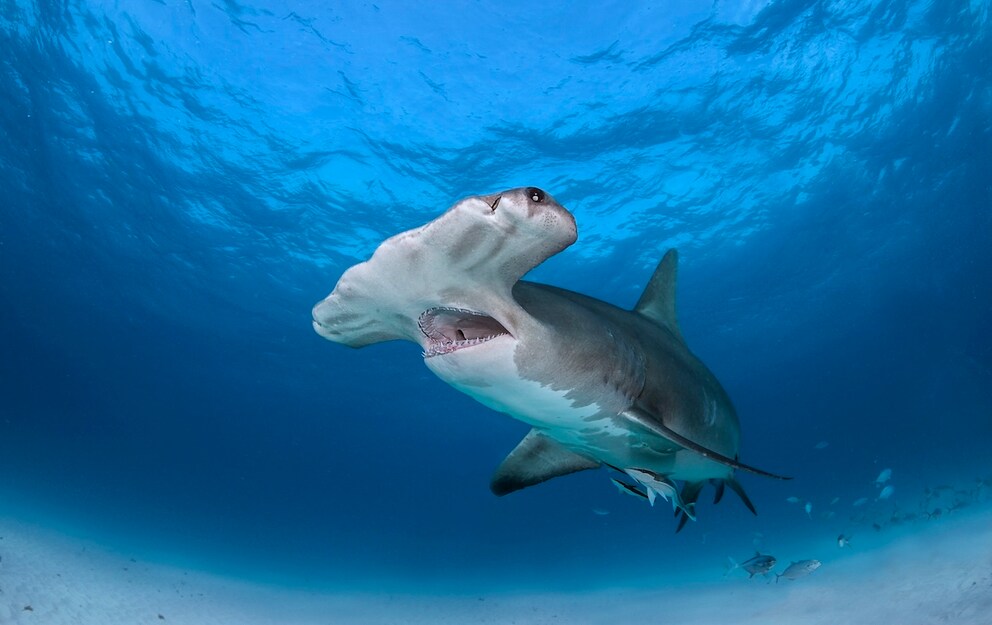
Hammerhead sharks are also present in the Mediterranean, including the great hammerhead. Sightings occasionally occur off the coast of Liguria. The animals prefer warm waters and are classified by the International Union for Conservation of Nature (IUCN) as “vulnerable” to “critically endangered,” depending on the species. The great hammerhead can grow up to six meters long, while the bonnethead shark is just under a meter long. Hammerhead sharks prefer tropical and subtropical waters and are classified by the IUCN as “vulnerable” to “critically endangered.”
They are considered potentially dangerous, but attacks on humans are extremely rare and have not been fatal so far.
Blue Shark (Prionace glauca)
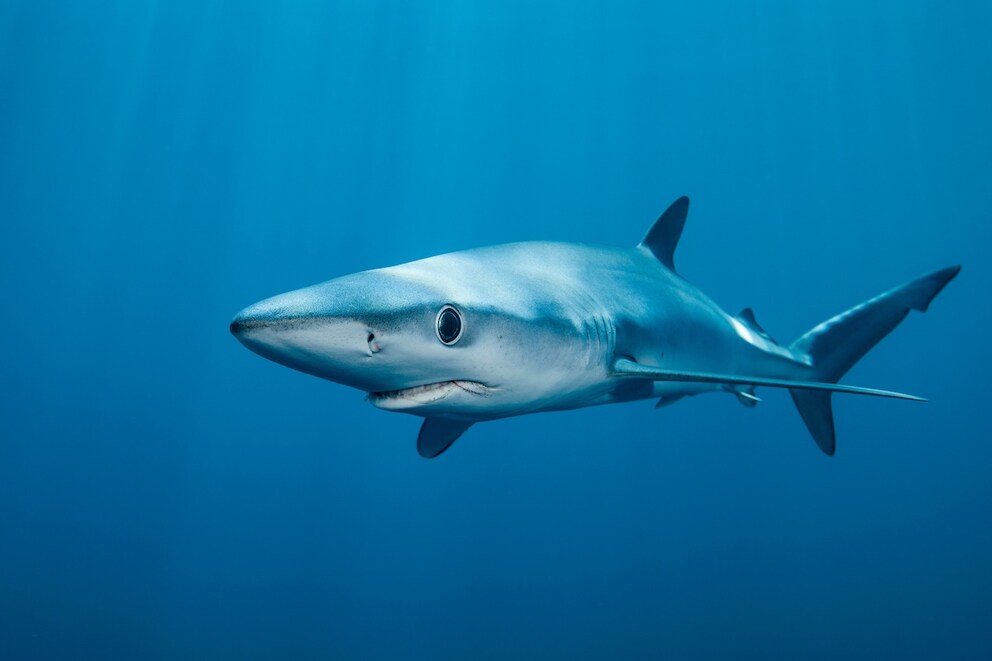
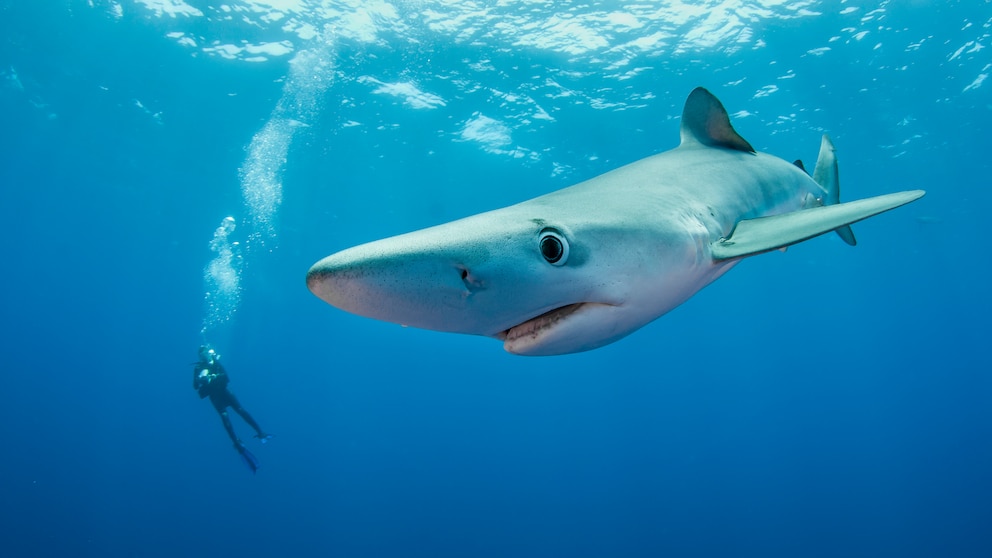
It is one of the most common pelagic shark species and reaches a length of about three and a half meters. In the Mediterranean, it usually stays in open water but is occasionally sighted near the coast. In the Azores, you can participate in guided dives to observe the species at all.
The back and upper side of the fins are indeed impressively dark blue. The blue shark has a notably narrow snout, with the tip curving upward. It is considered curious, and about 13 attacks on humans are known, four of which were fatal.
Shortfin Mako (Isurus oxyrinchus)
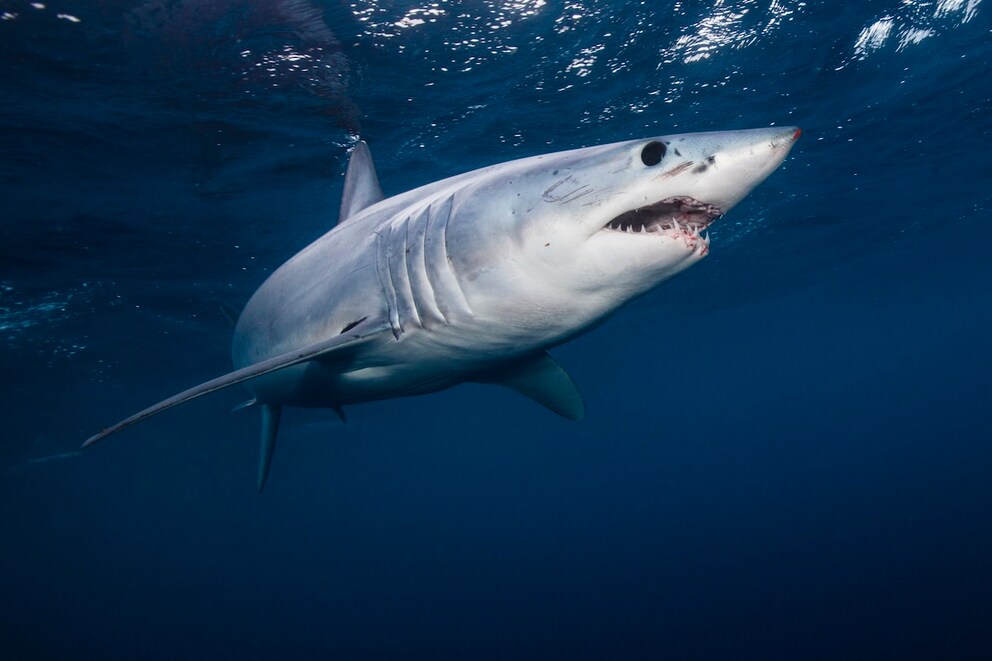
The mako shark is one of the fastest sharks in the world and can grow up to four meters long. For a long time, it was hardly sighted in the Mediterranean, so interest was high when several specimens appeared off Mallorca and Barcelona in 2022. Weighing 500 kilograms, it is already one of the more impressive predatory fish, but it has not been sighted in the Mediterranean for some time. Mako sharks can also jump relatively far out of the water. This species is also considered potentially dangerous, but specific incidents are rare.
Silky Shark (Carcharhinus falciformis)
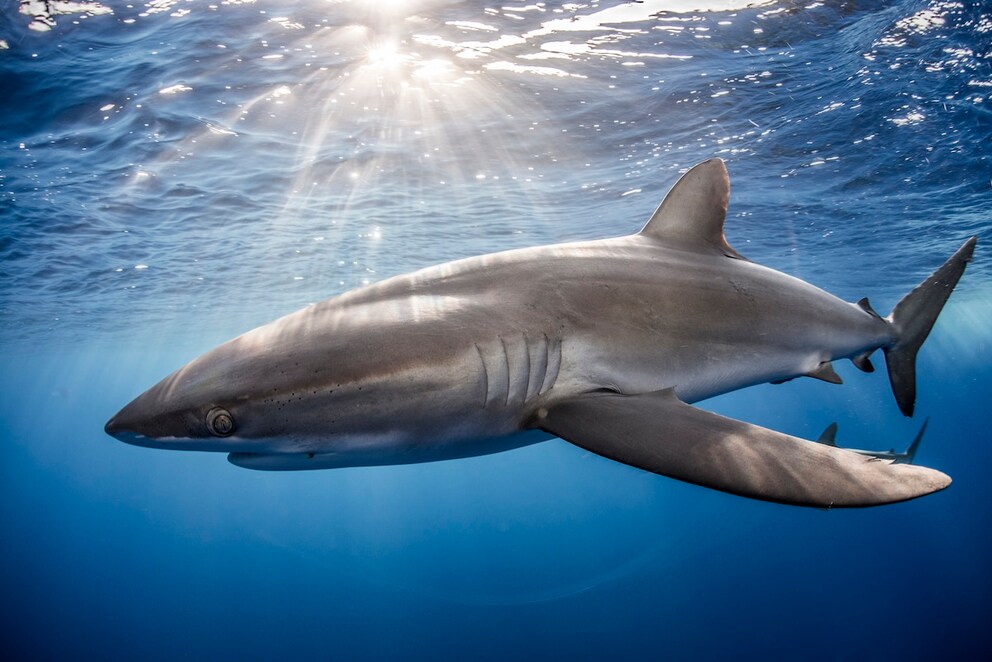
In recent years, the silky shark has occasionally been found in the Mediterranean. It likely migrated through the Strait of Gibraltar. It grows to two to three meters and swims mainly in the upper water layers. The silky shark is considered not very shy, but attacks are rare and have not been fatal so far. Divers are advised to retreat in an orderly manner if encountered.
Also interesting: How likely is a shark storm like in the trash film “Sharknado”? An expert explains
Other shark species in the Mediterranean
In addition to the more well-known species, there are numerous other sharks found in the Mediterranean–most of which are harmless to humans:
- Dogfish sharks (e.g., Mustelus species) – often near the coast, feed on small marine animals, and are harmless
- Basking shark (Cetorhinus maximus) – the second-largest fish in the world after the whale shark, feeds on plankton, and is completely harmless to humans
- Tiger shark (Galeocerdo cuvier) – generally considered potentially dangerous, but very rarely detected in the Mediterranean
- Sand tiger shark (Carcharias taurus) – appears threatening due to its teeth, but is relatively calm and rarely attacks humans
- Porbeagle (Lamna nasus) – a relative of the great white shark, potentially dangerous, but with no known incidents in the Mediterranean
- Catsharks (e.g., Scyliorhinus canicula) – small, bottom-dwelling sharks that are completely harmless to humans
- Angel sharks (Squatina species) – live flat on the seabed, harmless but highly endangered
- Bronze whaler shark (Carcharhinus brachyurus) – can grow large and is considered potentially dangerous, but is rare in the Mediterranean
- Thresher sharks (Alopias species) – recognizable by their long tail fin, hunt fish, and are harmless to humans
Overall, about 25 to 30 of the approximately 45 to 50 shark species in the Mediterranean are completely harmless to humans. For example: catsharks, angel sharks, basking sharks, and many dogfish sharks.
Another 10 to 15 are considered hardly risky (sand tiger shark, thresher sharks, blue shark, or bronze whaler shark), while only about five to seven species are classified as potentially dangerous–and even these are rare. Among them are the great white shark, mako shark, blue shark, hammerhead sharks, and bronze whaler shark. Species like the tiger shark are practically irrelevant for swimmers as they are pure exceptions.