

July 29, 2026, 3:09 pm | Read time: 4 minutes
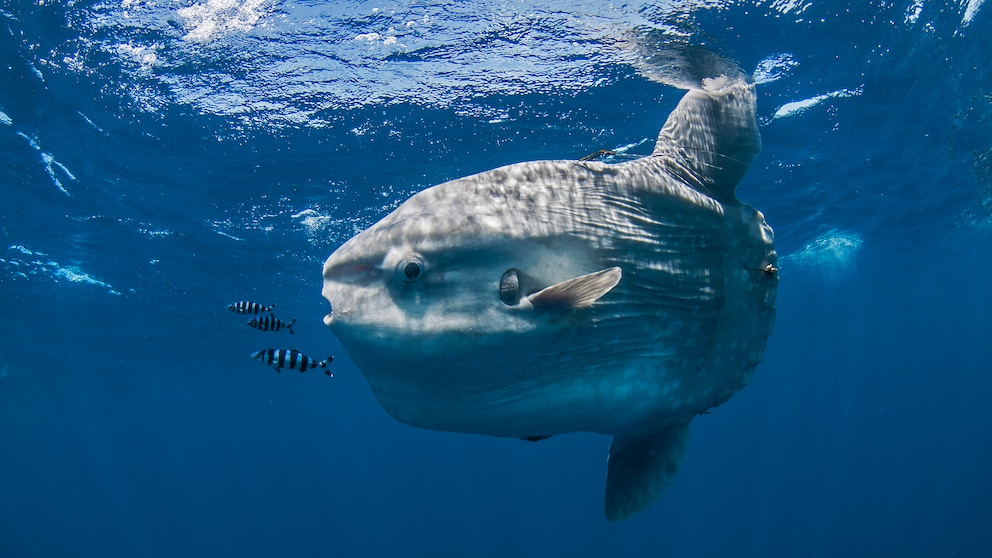
With its disc-shaped body, the ocean sunfish looks like a creature from another planet. This giant holds several records: It is one of the heaviest bony fish in the world, dives hundreds of meters deep, and can lay millions of eggs at once. PETBOOK presents fascinating facts about this gigantic marine inhabitant and why, despite its size, it doesn’t always have it easy.
What Makes the Ocean Sunfish So Special
With its disc-shaped body and enormous weight, the ocean sunfish is one of the most unusual inhabitants of the world’s oceans. But it’s not just its appearance that makes it unique. The marine fish holds several records, dives hundreds of meters deep, and surprises with traits that even many animal enthusiasts don’t know.
1. It Is the Heaviest Bony Fish in the World
Ocean sunfish (Mola mola) are among the largest and heaviest bony fish ever. The bony fish can weigh well over a ton. However, the current weight record is held by a relative: A Mola alexandrini discovered off the Azores weighed an incredible 2,744 kilograms, PETBOOK reported. This made the fish weigh more than some cars.1
However, if you encounter an ocean sunfish while diving, there’s no need to be afraid. The animals are considered curious and sometimes even approach humans. They are not dangerous.
2. Why the Ocean Sunfish Has a Hard Time
Among their natural predators are primarily orcas and large sharks. A recent scientific observation showed how cunning killer whales are when hunting: Researchers documented for the first time how several orcas worked together to deliberately tear an ocean sunfish into thousands of small pieces.
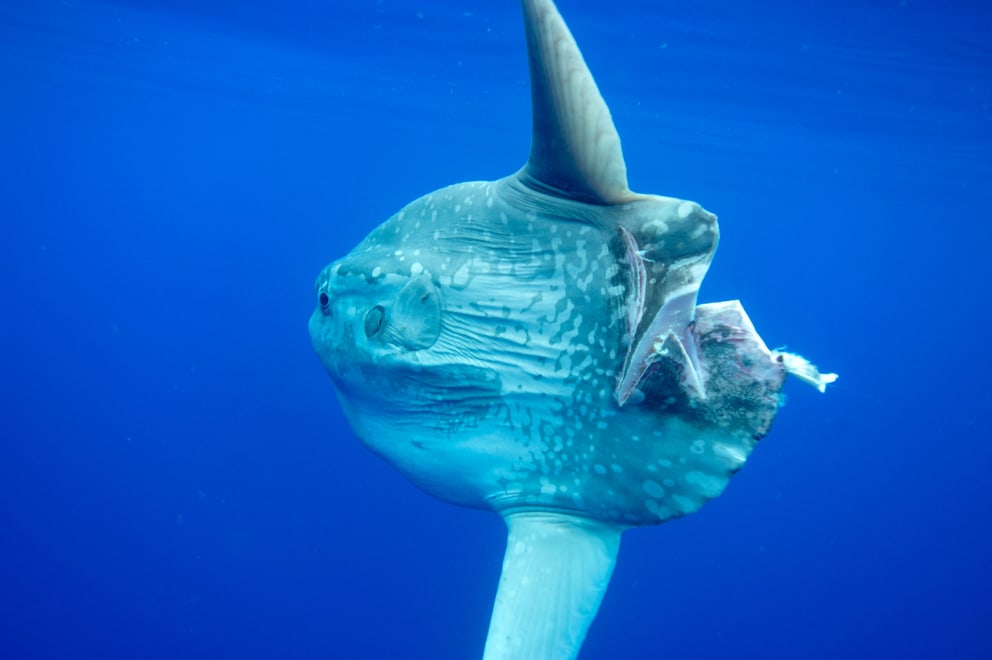
But that’s not all. In photos, ocean sunfish often appear as if pieces have been torn from their fins. In fact, many animals bear noticeable bite marks. Sea lions, orcas, and larger sharks occasionally attack ocean sunfish and bite off parts of their dorsal or anal fins. Not every attack is fatal, though. Due to their size, adult ocean sunfish survive many such injuries.2
3. Its Body Shape Still Puzzles Researchers
At first glance, an ocean sunfish appears almost incomplete. Its body is strongly flattened, lacking a traditional tail fin. Instead, it ends in a distinctive skin flap. Due to their unusual appearance, ocean sunfish are sometimes even called “swimming heads.”
Even though ocean sunfish often float at the water’s surface, they spend part of their lives in great depths, where they search for food. Scientists have documented dives of more than 600 meters.
4. Jellyfish Are Its Favorite Food
Ocean sunfish primarily feed on jellyfish. Since they don’t have normal teeth, they must break down larger prey in a special way: They repeatedly suck in jellyfish and spit them out again until smaller pieces are formed that they can swallow.
After spending time in the cold depths, ocean sunfish often float sideways at the water’s surface. There, they warm their bodies again. This behavior even earned them the name “Sunfish” in English.
5. Few Fish Harbor as Many Parasites
Ocean sunfish are popular hosts for parasites. Around 40 different species have already been detected on the animals. Seagulls and other seabirds take advantage of this: They pick the parasites off the fish lying at the surface, providing them with a free cleaning.
Also interesting: Rare Live Find! Doomsday Fish Washed Ashore in Mexico
6. A Female Lays Up to 300 Million Eggs
When it comes to offspring, the ocean sunfish has no competition. Females can spawn up to 300 million eggs at once, making the species one of the most fertile vertebrates on Earth.

Orcas Tear Apart Giant Sunfish Into Thousands of Pieces

How Dangerous the Basking Shark Really Is
7. Ocean Sunfish Stray into the Baltic Sea
Typically, the ocean sunfish lives in tropical and subtropical seas. However, it occasionally finds its way into the Baltic Sea. Strong saltwater inflows from the North Sea allow the sluggish swimmers to move from the Kattegat into the western Baltic Sea. In 2015, two young ocean sunfish were discovered: One ended up as bycatch in a trawl net in the Mecklenburg Bay, and another was found on the Rostock beach.3
However, the conditions there are only suitable for these unusual visitors in the short term. The reduced salinity, low temperatures, and lack of food make their survival difficult.
A Giant That Needs Protection
The ocean sunfish is one of the most extraordinary inhabitants of the oceans. Its enormous weight, unusual body shape, and spectacular records make it a true rarity. Yet despite its size, the marine giant is vulnerable: Fishing nets, plastic waste, and other human influences increasingly threaten the animals. Plastic bags, in particular, often become their downfall because they mistake them for jellyfish. Worldwide, ocean sunfish are considered endangered. Those who want to ensure that these fascinating giants continue to inhabit the seas should advocate for clean oceans and the protection of marine habitats.