

November 20, 2026, 10:18 am | Read time: 4 minutes
Whether for deterrence, escape, or even reproduction, some species use a unique strategy to survive or reproduce: These animals can play dead. The so-called thanatosis is much more than a mere reflex–in many cases, it is a perfectly staged act designed to deliberately mislead predators, rivals, or mating partners.
Animals also play dead in mating behavior
Thanatosis is also used to reproduce or even prevent it. For instance, the female moorland hawker dragonfly suddenly drops to the ground from the air and feigns death when overly persistent males become too aggressive.
In contrast, the male nursery web spider uses the pretense of death to approach receptive females without being eaten. Female spiders of this family are known to view males as food. The male plays dead and attaches itself to a self-spun food package. The female spider then drags this into her nest. As soon as she begins to consume the food, the male attempts to quickly mate with her.
The 7 Native Snake Species of Germany and How to Identify Them
These Animals Eat Their Own Kind—for Good Reason
These animals play dead to avoid being eaten
The most well-known reason animals play dead is simply for survival. Various animal species have developed different behaviors to appear unappetizing to predators.
North American Virginia Opossum
The Virginia opossum has perfected the art of appearing particularly unappetizing to hunters. When a predator approaches, the opossum collapses, opens its mouth, and lets its tongue hang out demonstratively. It also makes it clear to any hunter: I am inedible. To do this, it secretes a foul-smelling liquid and empties its bowels.
Dice Snake
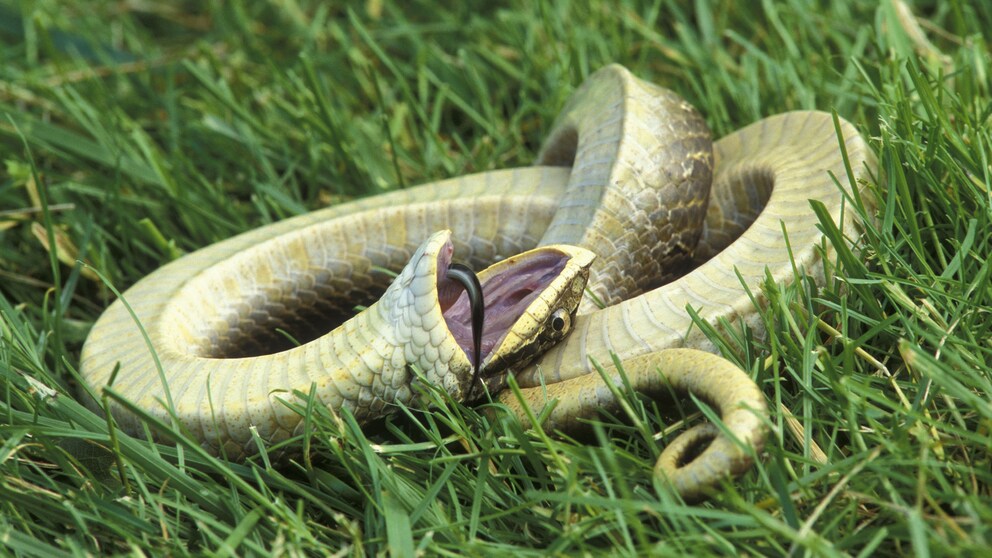
Dice snakes, which are also native to Europe, put on a similarly intense display when they feel threatened. During an attack, this snake species writhes violently and smears itself with feces and urine. The stench caused by this behavior already deters many predators. If that’s not enough, the dice snakes play dead, and blood runs from their mouths. This is meant to spoil the appetite of even the most persistent hunters. 1
In an experiment, researchers from the University of Belgrade found that older snakes display the full range of defense mechanisms, while younger ones play dead more quickly. The researchers attribute this to the greater experience of the older dice snakes, which have survived successfully. 2
Grass Snake
If you have a garden, there’s a high chance a grass snake has crossed it at some point. Grass snakes mostly eat frogs, newts, and small fish. However, grass snakes must also be on guard. When predators such as birds of prey, cats, or foxes approach, the grass snake begins its death-feigning act.
Before playing dead, it secretes a foul-smelling substance. If that doesn’t deter predators, other measures are taken. The snake dramatically flips onto its back, opens its mouth, and lets its tongue hang out demonstratively. It remains in this position until it can quickly escape into the bushes or water. 3
Guinea Pigs and Rabbits
Anyone who keeps guinea pigs or rabbits may have observed their pets playing dead. Sometimes a brief scare is enough for the animals to fall into a state of immobility for several minutes. Only their rapid breathing indicates that the rabbit or guinea pig is not actually dead. Birds of prey find it harder to spot prey that doesn’t move when circling in the sky. Other predators also primarily react to movement, which is why this tactic can be quite successful.
Other animal species that can play dead
In addition to rodents, snakes, or insects, birds also have playing dead in their behavioral repertoire. This includes wild ducks, Japanese quails, and domestic chickens.
But even a species of shark can mislead predators with feigned death: Lemon sharks go limp, their breathing becomes shallow, and they tremble slightly when turned on their backs and held.
Japanese giant water bugs, on the other hand, quickly flip onto their backs and extend all their legs, making it impossible for frogs to swallow the now cumbersome insect.