

June 17, 2026, 11:21 am | Read time: 5 minutes
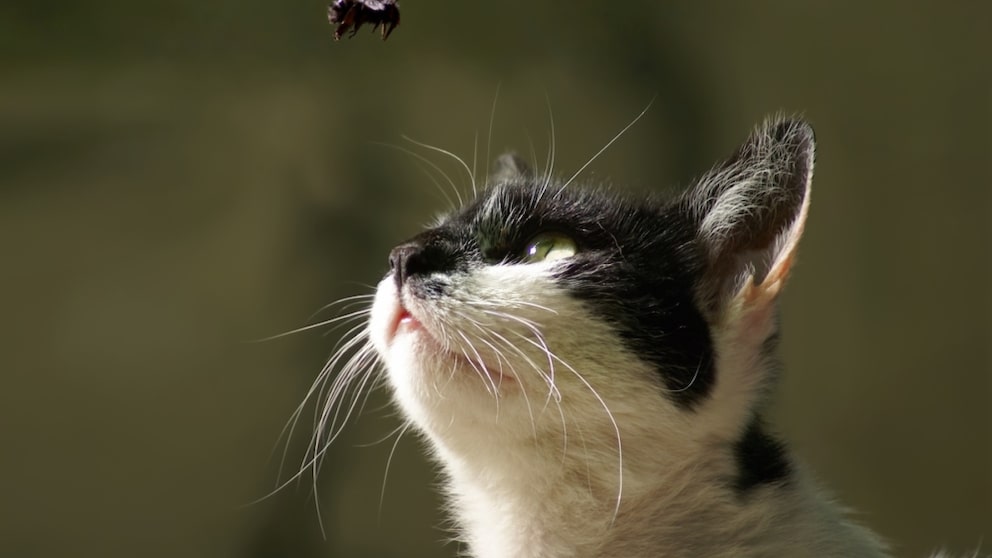
Grasshoppers, beetles, or spiders awaken the hunting instinct in many cats. However, some insects can cause injuries, allergic reactions, or even life-threatening conditions. PETBOOK highlights which creepy crawlies require caution.
1. Spiders
Since there are only a few venomous spiders in Germany, the risk of a cat experiencing health issues from eating one is relatively low. Spiders can bite if they feel threatened, but there are only a few species that can penetrate the thicker skin on a cat’s paws or legs.
A bite from the common cross or water spider in Germany is similar to a bee sting, while a bite from the introduced thorn finger or Nosferatu spider is like a wasp sting.
If a cat is indeed bitten by a spider, it can cause circulatory problems and swelling at the affected site. However, the amount of venom is usually so small that there is no significant danger to the animal.
2. Larger Beetles
These insects are not toxic to cats. However, there is a risk that a cat could choke while sniffing or playing with them. A beetle could get stuck in the throat and cause breathing difficulties.
An allergic reaction is also possible, as some creatures react allergically to May beetles or June beetles. In such cases, the cat’s throat may swell, leading to wheezing due to lack of air. It may also refuse to eat.
If a cat vomits, it may have eaten a May, June, dung beetle, or earwig. The wings, shell, or exoskeleton are partly made of chitin, which is indigestible for cats and can cause vomiting after consuming such an insect. This vomiting is usually harmless, but parts of the insect could remain stuck in the throat. It is advisable to monitor the animal and react quickly if further symptoms appear.
3. Grasshoppers
Grasshoppers are not toxic, but when playing with one, it can happen that the grasshopper’s barbed legs get caught in the cat’s mouth or throat. This can cause significant pain and pose an acute choking hazard. This also applies to locusts and crickets.
If you notice your cat showing symptoms of breathing difficulties after eating one of these insects, a veterinarian should be consulted.
Also of interest: Poisoning in pets – what you should do now
4. Oak Processionary Moth
The caterpillars of this moth are dangerous to humans and animals. They are primarily active in forests from March to May. Afterward, these caterpillars develop into harmless moths that no longer pose a threat.
The oak processionary caterpillars carry stinging hairs with the toxin thaumetopoein. The hairs can be “fired” in defense when they feel threatened or can be released upon the slightest contact. They stick to the opponent with their barbs. Contact with the toxin is similar to touching nettles but much stronger, leading to severe allergic and inflammatory reactions, especially on mucous membranes. Therefore, this insect is very toxic to cats.
Symptoms of contact between a cat and the oak processionary moth:
- Skin irritations, itching, burning, blister formation
- Breathing difficulties
- Eye irritations
- Dizziness, vertigo
- Fatigue and fever
- Swelling of the tongue, throat, and neck
- Life-threatening allergic shock
If there is suspicion or contact with the oak processionary moth, a veterinarian should always be consulted as a precaution to rule out or immediately treat a severe allergic reaction.
5. Black Oil Beetle and Stink Bugs (Shield Bugs)
Both beetles secrete a substance when they feel threatened. The oil beetle’s secretion contains cantharidin, an irritant and neurotoxin that is toxic to all living beings. The result is skin irritation, rash, inflammatory reactions, or blisters.
Ingesting or coming into contact with a stink bug leads to increased salivation in the cat. This poses no health risk and usually does not last long. However, some animals are hypersensitive to the stink bug’s secretion, which can cause gastrointestinal issues or vomiting.
6. Black and Red Ants
The common and widespread black ants are fun to watch and play with. They are also often eaten as a snack by cats. They are not toxic, so consuming these insects is harmless for cats.
Red ants, on the other hand, attack and defend themselves when threatened. They bite, which can lead to unpleasant pain, itching, swelling, and allergic reactions.

These Insects Can Be Life-Threatening for Cats

Dog Stung by Bee or Wasp–What to Do Now
7. Bees, Wasps, and Hornets
It hardly needs mentioning that no living being, whether cat or dog, should ever chase a bee, wasp, or hornet. The sting of a bee, wasp, or hornet is even more dangerous for cats due to their size and the concentration of the venom than it is for humans. Additionally, a sting is usually extremely painful. The sting site and surrounding tissue swell, the skin reddens and becomes painful, itchy, or hot, which can severely restrict and impair the cat. Licking and biting at the affected area can lead to a serious infection.
The greatest danger is if the cat is stung in the mouth, throat, or neck, as this poses an acute life-threatening situation. The tissue may swell so much that the cat can no longer breathe and may suffocate.
Watch for These Symptoms
Symptoms after an insect bite, sting, or possible signs of poisoning:
- Swelling or closing of the throat, mouth, and neck
- Breathing difficulties, wheezing, or gagging
- Increased salivation
- Vomiting
- Diarrhea
- Refusal to eat
- Disorientation and coordination difficulties
- Circulatory problems
- Unusual behavior

My Tip as a Health Advisor for Cats and Dogs
If a cat is a passionate outdoor explorer, curious and playful, it will not shy away from insects, as it is unaware of any danger. It is advisable to observe the animal after it comes indoors. If it shows signs of an insect bite, sting, or poisoning from eating a toxic insect, a veterinarian should be consulted as a precaution.