


July 20, 2026, 1:44 pm | Read time: 5 minutes
Cannibalism is a taboo topic for humans. Many are therefore puzzled when they hear that animals eat their own kind. Yet in the animal kingdom, cannibalism is widespread—and in many cases, even evolutionarily sensible. PETBOOK editor and biologist Saskia Schneider explains why fish eat their siblings in the womb, why even herbivores like rabbits sometimes resort to carrion, and why this behavior has nothing to do with “cruelty.”
What Counts as Cannibalism?
Biologically, the definition is clear: Cannibalism means that an animal eats an individual of the same species. A pike that eats a trout is a predator. However, if it eats a smaller pike, it is considered cannibalism.1
Professionally, two forms are distinguished:2
- Active cannibalism: The animal hunts and kills a conspecific to eat it.
- Passive cannibalism: An animal eats an already dead conspecific—in other words, carrion.
In addition, there are special forms that repeatedly make headlines:
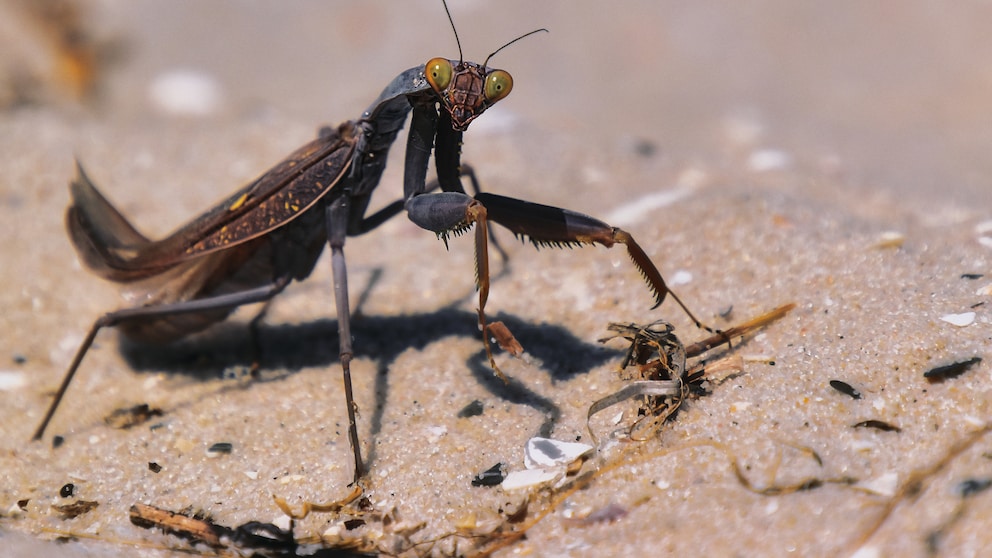
- Sexual cannibalism (such as in spiders or praying mantises)
- Cainism (sibling killing, usually among young animals)
- Infanticide (killing of young animals)
- Intrauterine cannibalism (when embryos eat their siblings in the womb)
It is important to note: All these forms are not “malfunctions” or behavioral disorders but are often evolutionarily explainable.
Which Animals Practice Cannibalism?
In short: often more than you think. I have focused here on a rough selection of particularly interesting examples.3
Fish–Cannibalism as “Routine”
Especially among fish, cannibalism is widespread. In pike or perch, large portions of the young are eaten by older conspecifics. It sounds dramatic—but it is part of natural population regulation.
Particularly spectacular is the intrauterine cannibalism in sand tiger sharks: Several embryos develop in the womb, but the first hatched young eat their siblings. In the end, usually only one strong young fish is born per uterus—with significantly better survival chances.4
Amphibians–When Tadpoles Become Predators
In certain spadefoot toads, some tadpoles develop stronger jaws under tight conditions and become cannibals. The advantage: They grow faster and are more likely to transform before their water body dries up.
Reptiles and Birds–Competition in Their Own Nest
Snakes, monitor lizards, or alligators occasionally eat smaller conspecifics. Therefore, snake owners are advised to separate offspring as soon as possible. If one of the siblings is slightly smaller, there is a high risk it will simply be identified as prey and eaten.
In birds, the so-called Cainism is particularly known: In bearded vultures, for example, the first-hatched chick attacks its younger sibling. Especially in times of food scarcity, at least one young bird survives this way.
Many Mammals Also Practice Cannibalism
Even among mammals, cannibalism occurs. Male lions kill young that are not their own. This makes the females ready to mate again sooner—a clear reproductive advantage.5
In rodents or polar bears, it can happen that young are killed and eaten when food is scarce. Many hamsters eat their young if conditions are not right. Especially hamsters kept in unsuitable enclosures may exhibit this behavior.
Even supposed herbivores surprise: Snowshoe hares in the Canadian winter have been observed eating carcasses—even of their own kind. Protein is a valuable resource in extreme winters.6
Why Do Some Animals Eat Their Own Kind?
As harsh as it sounds: In most cases, the answer is simply survival.
1. Food Shortage
When resources are scarce, a conspecific becomes an available energy source. This is not “cruelty,” but energy management.
2. Competition Reduction
Fewer competitors mean more food and better chances for one’s own offspring. In black-tailed prairie dogs, for example, females sometimes kill the young of close relatives—to increase the survival chances of their own young.
3. Population Control
Computer models show: If more young are born than can be supported, eating some offspring can lead to at least some surviving—rather than all starving.7
4. Reproductive Advantages
In sexual cannibalism, females benefit from additional nutrients. In the Australian redback spider, studies even show that eaten males sire more offspring than those that escape.
5. Regaining Energy
In some snakes, mothers eat their dead offspring—presumably to regain invested energy and become reproductively capable again more quickly.
Are There Animals That Are Always Cannibals?
“Always” is a big word in biology. Some species—such as many predatory fish or certain spiders—show cannibalism very regularly. But usually, the behavior is situation-dependent. It occurs mainly in high population density, stress, or food shortage.
Even the intrauterine cannibalism of sharks is not a random product but a clearly established reproductive strategy. Since it only occurs in the womb and before actual birth, one cannot say that these sharks are naturally cannibals.
Blue-Striped Octopuses Poison Partners to Prevent Them from Being Eaten During Sex

Only One Doesn’t Hop! 6 Exciting Facts About Kangaroos
Is There Cannibalism Among Pets?
Yes—but usually under special circumstances. In mice or hamsters, it can happen that mother animals eat their young. Common triggers are stress, disturbances at the nest, illnesses of the young, or food shortage.8
Even in dogs or cats, it can happen in exceptional cases that young are eaten. Much more often, however, it happens that parent animals kill or severely injure their young. There are occasional incidents where mother cats bite off the tail or a leg of a kitten instead of the umbilical cord. But these are rare exceptions.
In aquarium fish, cannibalism is not uncommon—especially in species without pronounced brood care.
In intensive animal husbandry, stress and high stocking densities can promote problematic behavior, such as tail biting in pigs or feather pecking in chickens. However, these are usually stress-related malfunctions under unnatural conditions. Under appropriate husbandry conditions, cannibalism in pets is rather the exception.
Conclusion: Drastic but Effective Survival Strategy
Cannibalism in the animal kingdom is not an expression of malice or a behavioral disorder. It is a strategy. Sometimes drastic—but often effective.
Whether to secure energy, reduce competition, or improve reproductive success: In most cases, there is a clear evolutionary benefit behind the behavior.