


August 24, 2026, 12:15 pm | Read time: 5 minutes
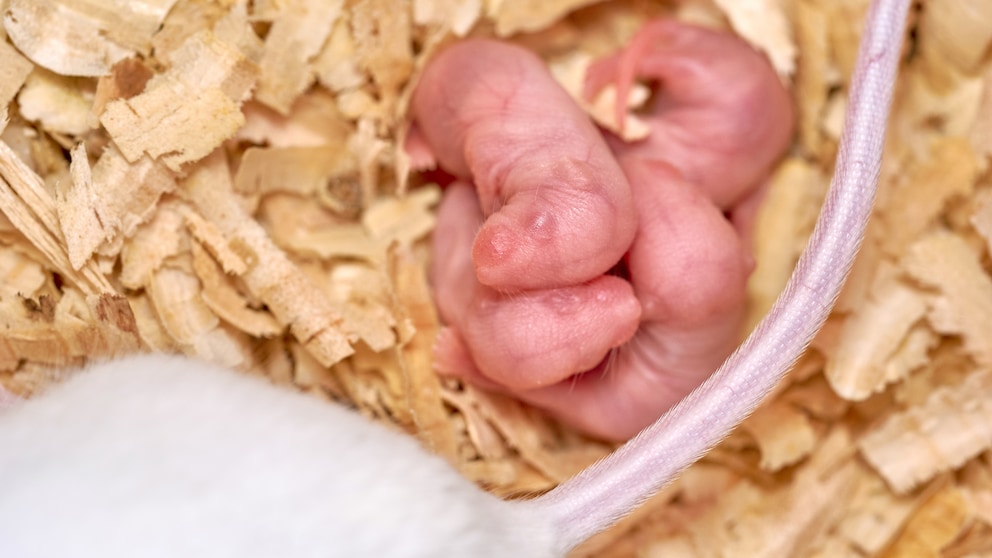
The so-called infanticide, or the killing of one’s own offspring, occurs more frequently in the animal kingdom than many people might think. It can happen especially among mice, rabbits, or pigs that animals attack and even eat their newborns. This behavior was long considered unnatural or a behavioral disorder. However, scientific studies and observations in the wild show that infanticide is a natural behavior in some animal species and even ranks among the leading causes of juvenile mortality. But why do animals kill their own offspring? PETBOOK explored this question.
Overview
Which Animals Kill Their Offspring?
The most well-known example of infanticide is probably lions. When male animals take over a pride, they may kill all young animals up to about nine months old. However, this never involves their own offspring. In fact, infanticide occurs throughout the animal kingdom, such as in pigs, brown bears, baboons, chimpanzees, and numerous rodents.
Why Do Animals Kill Their Offspring?
As cruel as it sounds, animals often gain an advantage by killing their offspring. In a scientific review on infanticide, Sarah Blaffer Hrdy from Harvard University identified four reasons for this behavior:
1. Offspring Used as a (Food) Resource
When conditions are poor, such as a lack of food or habitat, female animals of some species may kill their own newborn offspring. They often even eat them. This behavior is known in pigs, rabbits, and mice. This phenomenon can sometimes be observed in zoo animals or even pets.
It is difficult to pinpoint the exact factors involved. Scientists suspect that females can assess the likelihood of their offspring’s survival. If conditions seem poor, the young are killed, sometimes even eaten.
2. Eliminating Competitors in the Fight for Resources
Researchers found that infanticide can lead neighboring females to leave the territory. This gives other females access to coveted resources such as nesting sites or burrows.
Another important resource is mother’s milk. Females may kill the young of others to prevent them from stealing their milk. In socially living animals, where group members often care for the young together, eliminating young animals also increases the likelihood that their own surviving offspring will receive more attention.
3. Eliminating Sick or Disabled Offspring
It is often observed in the animal kingdom that mothers behave aggressively toward offspring that are sick, particularly weak, or even disabled. This makes sense, as the likelihood of premature or disabled young surviving in the wild is extremely low. For the parents and healthy offspring, it is advantageous to kill such young rather than waste resources on them.
4. Advantage in Access to Individuals of the Opposite Sex
When females are busy caring for young, they usually have no interest in reproducing. For males, it can be advantageous to kill the offspring of a male competitor so that the female becomes available as a mating partner sooner. One of the most well-known examples of this is lions. When male animals take over a pride, they kill all young animals up to about nine months old.
Also interesting: Up to 100 times a day! 8 fascinating facts about lion mating behavior
There are also females that use this “tactic.” In the wattled jacana (Jacana jacana), a bird species from South America, the males care for the brood while the females defend the territory. If a hen is displaced from the territory by a competitor, she kills the competitor’s offspring. The now childless and jobless male is again available to mate with the new female.
These Animals Eat Their Own Kind—for Good Reason

Up to 100 Times a Day! 8 Facts About Lion Mating
What Happens in the Brain When Animals Eat Their Young
Sarah Blaffer Hrdy from Harvard University not only examined the reasons for infanticide in her work but also initiated further studies on the brain structures of animals that commit infanticide. Researchers found a specific group of nerve cells in the brain that control the aggressive behavior of adult mice toward their offspring.
These are active in virgin males, but also in females that are very stressed. They trigger so-called “anti-parental” interactions, meaning the attacking and even killing of offspring. It can be observed that females of many species attack or neglect their young under stressful circumstances such as food scarcity.
Infanticide Is Not Always the Cause
The intention to kill the offspring is not always behind it when parents injure their young. Inexperienced mothers can accidentally bite off a limb of their young when severing the umbilical cord after birth.
Rough handling of offspring can also be due to a behavioral disorder if the animal itself was separated too early from its own mother during a critical imprinting phase.
- The Harvard Gazette, “Biological triggers for infant abuse” (accessed on 08/23/2026)
- Max Planck Society, “Infanticide by mammalian mothers” (accessed on 08/23/2026)
- “Sueddeutsche.de”, “Child Killers” (accessed on 08/23/2026)