



September 9, 2025, 8:40 am | Read time: 6 minutes
In some countries around the world, there are a variety of snake species—some of them are highly venomous. Snakes also live in Germany. PETBOOK introduces the different species and explains the proper behavior when encountering a snake in our region.
If you’re afraid of snakes, this news might not be very comforting: There are seven snake species in the wild in Germany. However, there’s no need to worry. The snakes native to our area are partially venomous but generally cannot kill a person. Moreover, they are rarely encountered because their natural habitat is dwindling. If you come across a snake in the wild in Germany, you can consider yourself quite lucky.
Snakes in Germany: These 7 Species Exist
Common European Viper (Vipera berus)
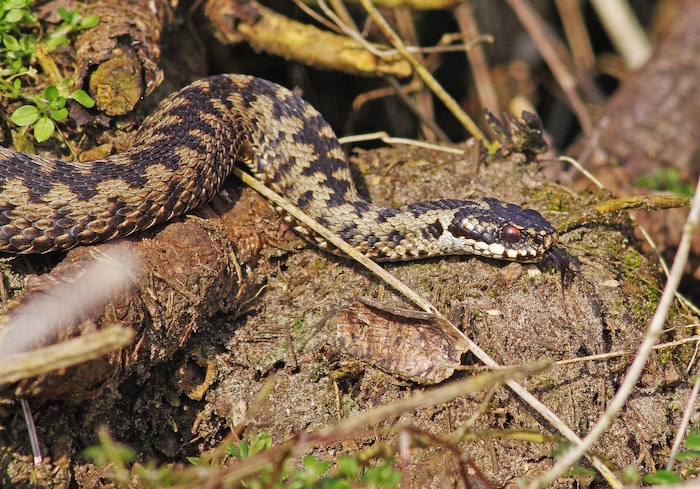
The common European viper belongs to the viper family, and like all members of this snake family, its bite is venomous. However, it is usually not fatal for a healthy person. The venom contains enzymes that can cause blood to clot and damage organs. In case of doubt, it’s always best to see a doctor after a snake bite for safety. The common European viper is mainly found in southern Germany, but it also appears in northern Germany. 1
Aesculapian Snake (Elaphe longissima)
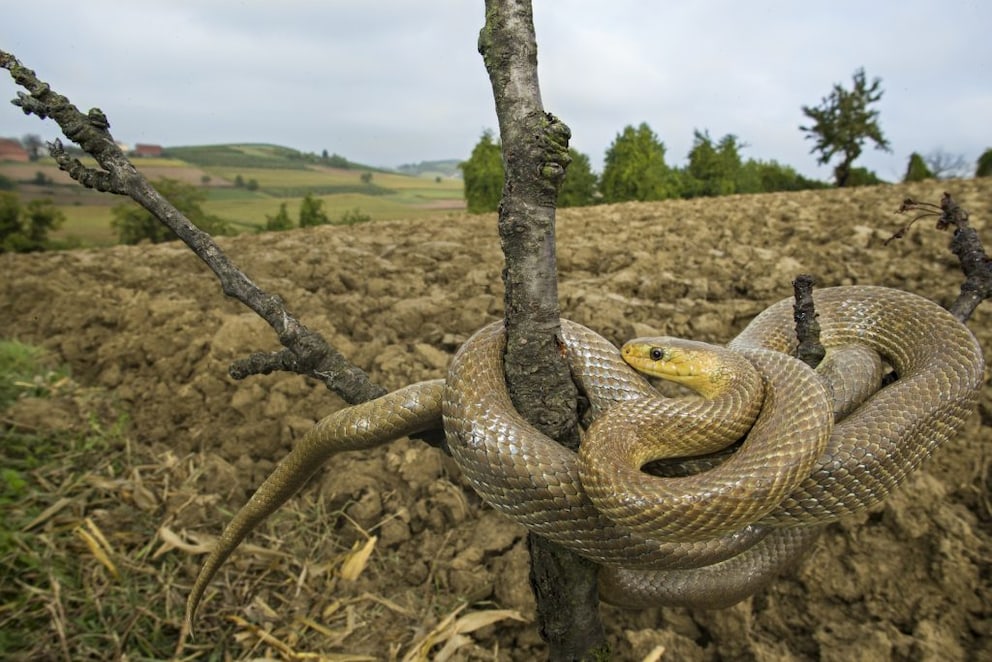
If you’ve ever looked closely at the pharmacy symbol, you’ll notice a small snake on it. This traces back to Greek mythology and depicts the Aesculapian snake, which also occurs in Germany. The snake, which can grow up to 1.6 meters long, is—like all colubrids—completely non-venomous and can live up to 30 years. Unfortunately, in our regions, Aesculapian snakes rarely reach such an age. They often fall prey to birds of prey or perish in traffic.
Also interesting: What to Do if You Discover a Snake in the Garden?
Asp Viper (Vipera aspis)
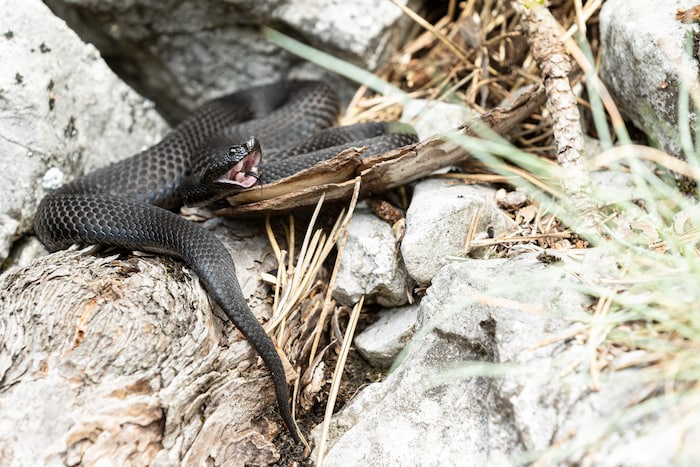
The asp viper is also venomous, but, like the common European viper, it generally cannot kill a person. This viper species requires particularly warm conditions and is therefore found only in the southernmost parts of Germany, such as the Black Forest. The asp viper is highly endangered here because the sunny clearings and meadows it needs for warming are now scarce. As a result, the snakes rarely reach their maximum age of 20 years in the wild.
Grass Snake (Natrix natrix)
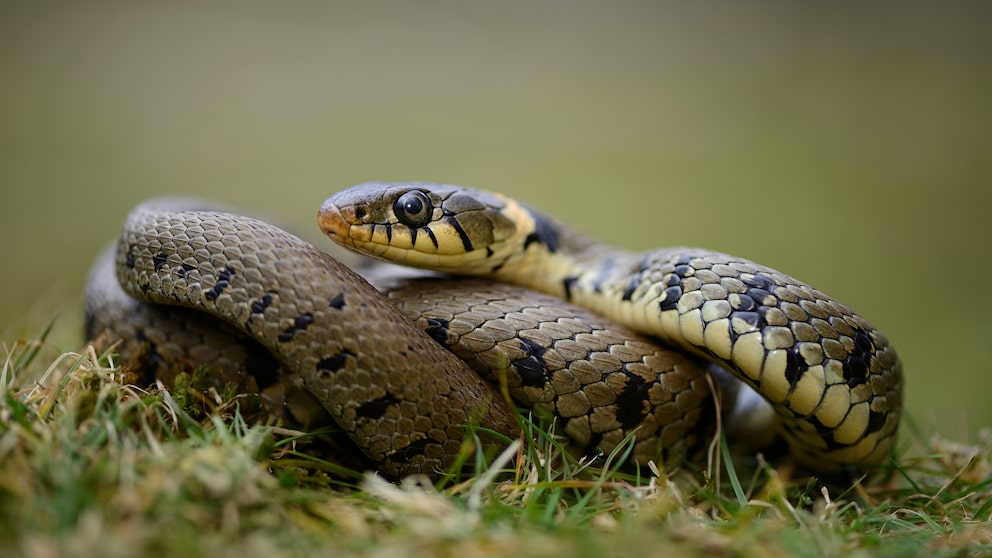
Grass snakes are among the snake species in Germany that are still relatively common. However, their habitat is also shrinking, threatening the snake’s survival. They live partly in water and partly on land. In danger, they usually escape to the nearest body of water. Here, they prey on small fish, frogs, and on land, amphibians and other small animals. With lengths of up to two meters, the grass snake is one of the largest snake species living in our area.
Dice Snake (Natrix tessellata)
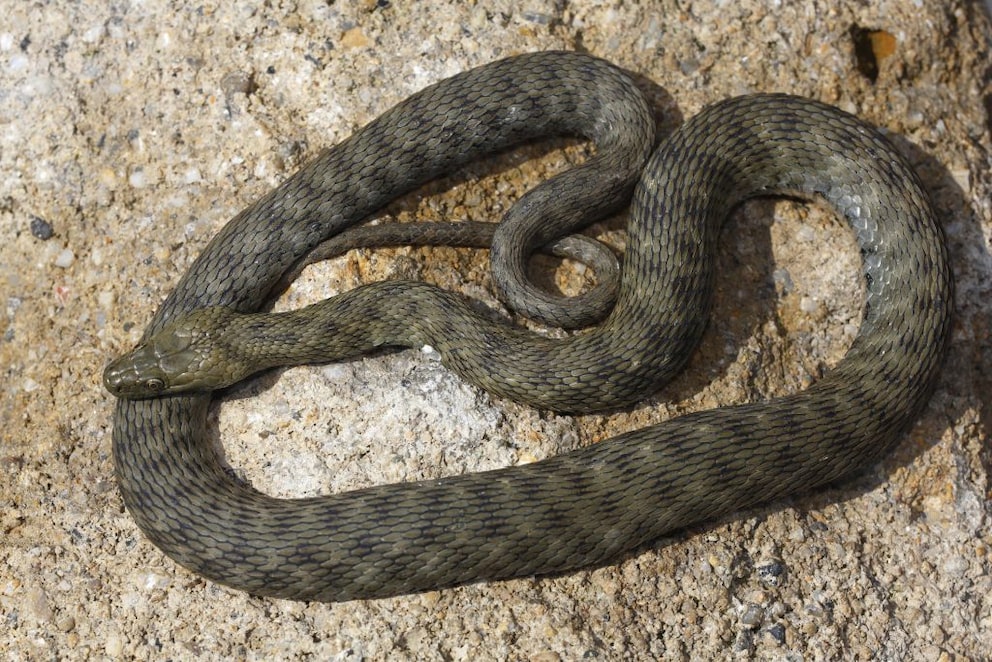
True to its name, the dice snake has a brown-black dice pattern on its back. Unfortunately, the non-venomous snake can now be admired only very rarely in Germany. The dice snake lives in water and requires protected shore areas for reproduction and egg-laying, which are now rare in our region. They feed on fish, frogs, and amphibians that live in the water. Occasionally, animals sitting on the shore are also considered prey.
Smooth Snake (Coronella austriaca)
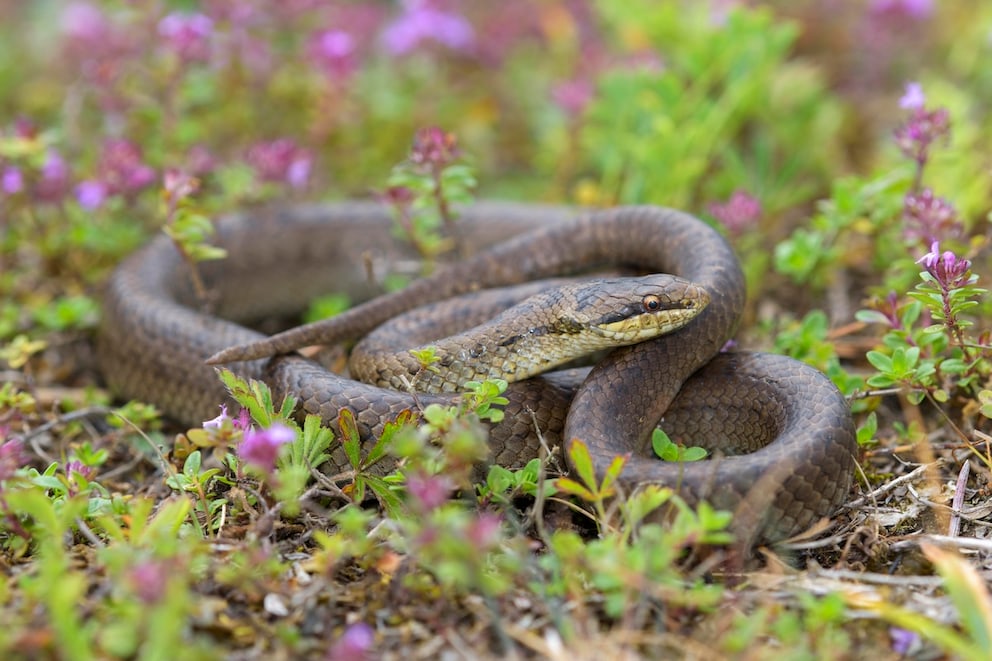
The smooth snake is also called the smooth snake. Unfortunately, it is now much less common than its relative, the grass snake. The non-venomous snake is the smallest in Germany. It rarely grows over 70 centimeters long. The young of this snake species are born alive and are immediately completely independent. The smooth snake is aptly named: It strangles its prey, which includes other young snakes, with its strong muscles before they finally end up in the snake’s mouth.
Barred Grass Snake (Natrix helvetica)
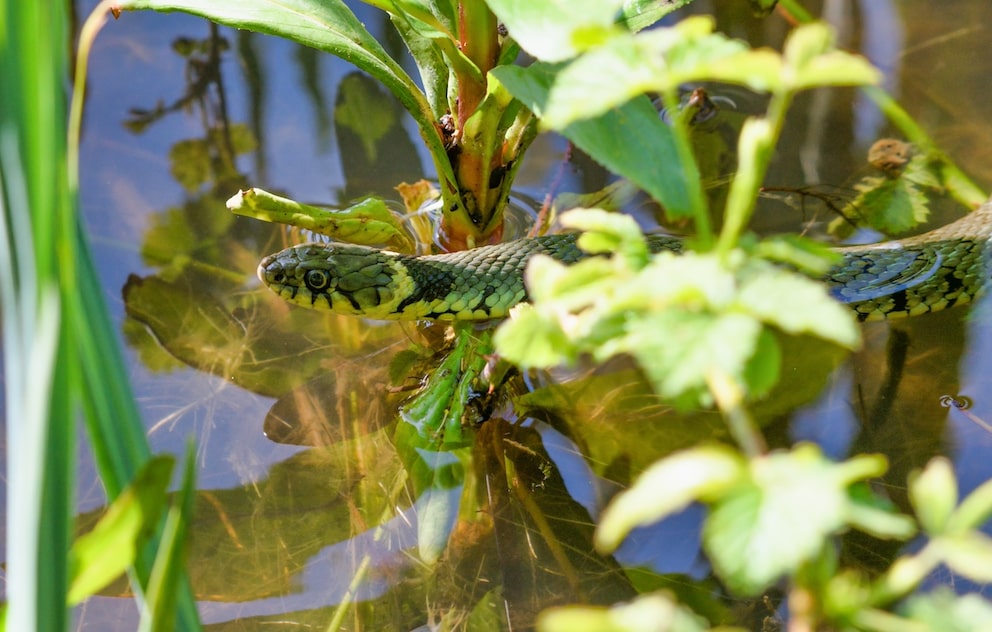
Since 2017, the barred grass snake has been considered a separate species. Until then, it was always seen as a variant of the grass snake. However, the two species have much in common: Both are non-venomous and only emit a foul-smelling secretion when threatened, which is meant to drive attackers away. The name of the barred grass snake comes from the black stripes on the sides of the snake’s body.
Venomous or Not?
Authorities are often alerted when people find snakes in their gardens because they fear it might be a venomous species. In fact, it’s not easy for laypeople to distinguish snakes based on their coloration. At least for the seven snake species in Germany, there is one feature that can differentiate the two venomous snake species from the non-venomous ones: the eyes. 2
While our native colubrids have round pupils, the pupils of the common European viper and asp viper are slit-shaped. So if you discover a snake in the wild, you should look at its eyes. If you see a slit, it’s best to keep your distance. Round black button eyes, on the other hand, indicate that it’s a colubrid. These can bite, but they do so only when acutely threatened (such as when you try to grab them) and do not possess venom.
Snakes That Live in the Garden and How to Identify Them
Rare but Deadly: How Dangerous Is the “Hell Viper”?
Slow Worm—Not a Snake, but Often Mistaken
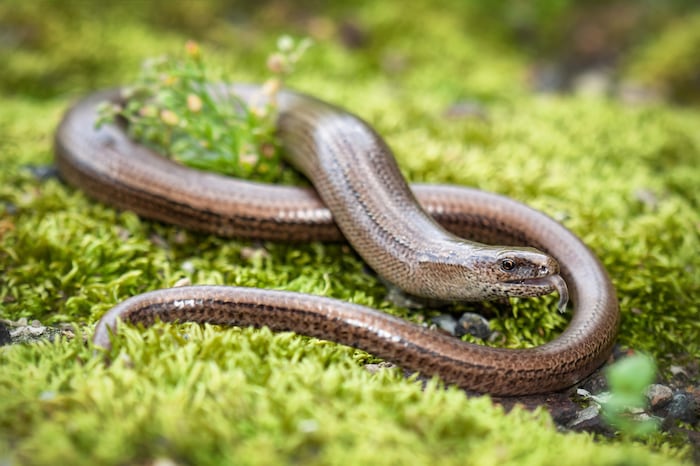
With its long, legless body, the slow worm resembles a snake, but it actually belongs to the lizards—specifically to the family of anguids. This family includes over 70 species. Not all of them look like snakes. Some have fully functional legs with five toes each, while others have only small stumps instead. 3
Just like snakes, these have regressed over the course of evolution—probably because they could move faster and more silently on land or in water. Additionally, the resemblance to real snakes gives slow worms an advantage. Not only humans but also animals and predators mistake the lizards for venomous counterparts and prefer to keep their distance.
Behavioral Guidelines with Snakes in Germany
Snakes in Germany are not aggressive and generally avoid encounters with humans. If you do come across a snake, you should remain calm and give the animal a wide berth. First, this prevents the snake from panicking unnecessarily and being disturbed in its current activity. Second, laypeople can hardly distinguish between different snake species. If it happens to be a venomous viper and it bites in defense, health complications could arise. Those living in a nature-rich area should teach children early on that snakes are neither pets nor toys and should be left alone, not least to avoid disturbing the snake.