


December 17, 2025, 10:07 am | Read time: 6 minutes
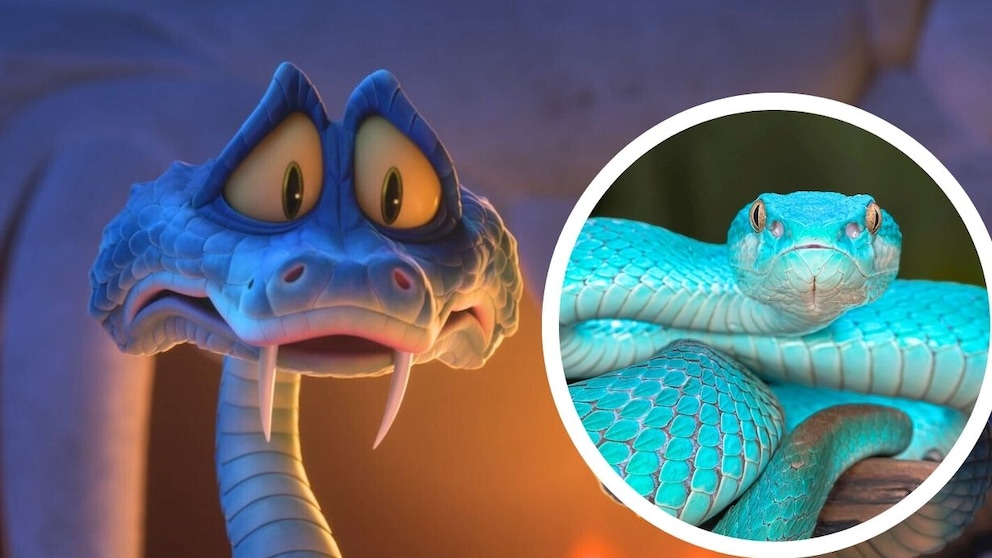
With Gary De’Snake, Disney has created its first snake hero in “Zootopia 2,” capturing hearts worldwide. But behind the charming film character lies a highly venomous, beautiful—and absolutely wild—species of snake: the Indonesian Pit Viper (Trimeresurus insularis). In China, the hype around Gary is already sparking a dangerous trend: more and more people are buying this venomous snake as a pet. PETBOOK editor and biologist Saskia Schneider explains why this is extremely dangerous—and why the real viper is still fascinating.
In the Film, Gary Wants to Save the Reputation of All Reptiles
Since the release of “Zootopia 2,” one new character has particularly captivated audiences: Gary De’Snake, an optimistic, selfless, and remarkably lovable animated hero.
Gary is the first reptilian protagonist in the entire Zootopia series—and he deliberately breaks old stereotypes. Previously, snakes in Disney films were more often portrayed as threats (Kaa from “The Jungle Book,” Sir Hiss from “Robin Hood”). In contrast, Gary is a good-natured, naive, and unwaveringly optimistic snake character. He is friendly, talkative, and deeply loyal to his family. His mission is to save the reputation of all reptiles. This narrative twist emotionally binds millions of viewers to the character and sparks sympathy for real snakes in many places—but this is where the problem begins. 1
Demand for the Viper Soared Immediately After the Film’s Release
In China, this portrayal influenced many viewers’ perceptions so much that the demand for the Indonesian Pit Viper soared immediately after the film’s release. A young reptile owner, Qi Weihao, told the U.S. television network “CNN” that the snake’s portrayal encouraged him to finally get a blue viper. “Gary is so positive and responsible—he shows that reptiles don’t have to be scary,” he said. But this species of viper is anything but harmless. 2
Gary Is a Rare Blue Color Variant of the Viper
The Indonesian Pit Viper is one of the most visually striking snakes in Southeast Asia. Its elegant body shape, distinctive triangular head, vertical pupils, and fine, almost metallic-looking scale structure give it a unique appearance. These snakes are typically green. However, there is a rare blue color variant that occurs only in a few island populations and shimmers almost unrealistically in natural forest light. It is considered particularly spectacular. Disney’s choice of this rare coloration fits the intention to make Gary visually stand out from the mass of Zootopia characters. 3
The Snake Species Spends Most of Its Time in Trees
In reality, Trimeresurus insularis inhabits the tropical forests of Indonesia and Timor-Leste. The snake feels particularly at home in humid rainforests. However, it is also found in drier monsoon forests and occasionally even appears in gardens or plantations. It spends almost its entire life in the trees, resting motionless among leaves and branches, and is nearly invisible thanks to its camouflage.
The nights bring life to the forests, as this is when the viper begins to hunt. Its presence is often only guessed at, making encounters with it difficult—not only for prey but also for humans.
What the Vipers Eat
The Indonesian Pit Viper is a venomous snake that hunts its prey with high precision. It relies on its heat-sensing pits, which allow it to detect the body heat of small mammals, birds, or lizards, even when no light reaches the forest. The snake waits patiently, sometimes for hours, until an unwary animal comes close.
The attack is silent and lightning-fast, with a quick bite enough to paralyze the victim. The efficiency of this hunting behavior contributes to its importance in the ecosystem, as it regulates small prey populations and maintains the natural balance.
Why the Indonesian Pit Viper Is Considered Dangerous
As fascinating as this snake looks, its venom should be taken seriously. It is a hemotoxin and can cause severe tissue damage, intense pain, and bleeding disorders. In areas like Bali, it is the snake most frequently involved in bite incidents—not because it is aggressive, but because it is almost impossible to spot due to its camouflage. 4
Many bites occur because people accidentally step on a resting snake at night. The viper then defends itself reflexively, a behavior that is not aggression but pure self-defense. For those affected, such a bite can have life-threatening consequences and requires immediate medical attention.
Why Did the Filmmakers Choose This Particular Snake Species?
Trimeresurus insularis is a species that fascinates at first glance with its beauty and unique biology. The rare blue specimens appear almost magical, making them perfect for an animated character meant to stand out. At the same time, the visible heat pits provide an opportunity to equip Gary in the film with unique abilities that are both narratively and visually exciting. Choosing this species allows Disney to break the old image of the “evil snake” and rehabilitate an animal that, in reality, is more often misunderstood than actually dangerous.
This Snake Has the Longest Fangs in the World
The 7 Native Snake Species of Germany and How to Identify Them
“I Always Wanted a Blue Snake”
This human, sympathetic interpretation has triggered a development in China that increasingly worries experts. Shortly after the film’s release, major e-commerce platforms reported a significant increase in searches for Indonesian Pit Vipers. Dealers reported rising prices and increased sales, and suddenly, some even offered the animals with shipping, despite legal restrictions.
Reptile enthusiast Qi Weihao described his own motivation in an interview with “CNN” as a mix of admiration and identification: “I always wanted a blue snake, but after the film, it was clear that now was the right time,” he explained. At the same time, he warned strongly against acting rashly: “If you have no experience and no safe equipment, you should never get a venomous snake.”
His words reflect the growing concern that the new trend could endanger not only pet owners but also their surroundings. Authorities are already warning that an escaped venomous snake can quickly become a public danger—an assessment that state media clearly shares. It would not be the first time that Disney and Pixar productions have been bad for animals, as the ongoing hype around clownfish more than 20 years after “Finding Nemo” proves.
Conclusion: Snakes Deserve Respect—and Belong in Nature
The Indonesian Pit Viper is an impressive example of the beauty and finesse of tropical reptiles. Its vibrant colors, silent elegance, and spectacular sensory abilities make it an animal that deserves respect and admiration. However, its venomous nature, shyness, and highly specialized lifestyle make it completely unsuitable for private ownership.
Those inspired by Gary’s character should remember that the film character is a fantasy—a tool to evoke empathy, not to influence purchasing decisions. The real viper belongs in the forests of Southeast Asia, where it plays an important role in the ecosystem and is not at risk of being misunderstood as a “trend animal.” Its fascination is undeniable—but for that very reason, it should be left in nature, where it belongs.