

March 25, 2023, 7:56 am | Read time: 17 minutes
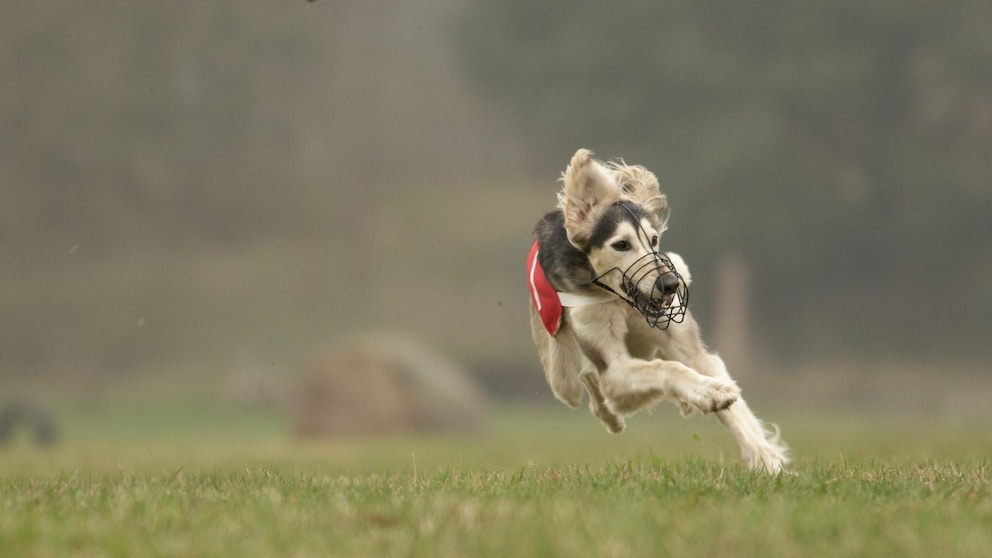
A muzzle prevents your beloved canine from biting, for instance, if it tries to defend itself by snapping in a crowded train. There are other reasons why a muzzle, which is mandatory in certain places in some German states, is a wise investment for dog owners. But what should you consider when buying a muzzle? And which models are recommended? PETBOOK has the answers to these questions.
Your dog has injured its front paw and keeps licking the wound after a vet visit? This can prevent the injury from healing. Especially if the owner cannot constantly watch the dog and stop it. In this situation, a muzzle can be a supportive measure to avoid hindering wound healing. Even if the dog is not yet accustomed to other dogs, it can be wise to put a muzzle on it at the dog park or in dog school to prevent it from injuring itself or other dogs–or people. Additionally, a muzzle can prevent dogs from eating poison bait while walking in areas known for such dangers, thus protecting them from life-threatening poisoning. Some dogs tend to bite in stressful situations–such as in crowded public transport or during a vet visit–to protect themselves. A muzzle prevents this.
Overview
Is a Muzzle Mandatory?
In Germany, there are various regulations regarding the wearing of muzzles for dogs. For example, in Brandenburg, all dogs must wear muzzles in public transport. In other states, this rule applies only to listed dogs or “dangerous dogs”–as they are called in North Rhine-Westphalia, also known as “fighting dogs.”
Listed dogs are on the list of potentially dangerous breeds due to their breeding, as they are said to be more prone to biting and aggression. Each state decides which dogs are considered fighting, listed, or dangerous and are included on the list of dangerous breeds.
These Dog Breeds Are Listed Dogs in Germany
[table “48” not found /]The four states of Mecklenburg-Western Pomerania, Lower Saxony, Schleswig-Holstein, and Thuringia have decided against classifying certain breeds as generally dangerous. In states where the “listed dog” concept applies, different regulations apply to the animals, which can also vary from municipality to municipality within the state. This also affects the muzzle requirement. Since there is no nationwide legal muzzle requirement, the states decide whether and which dogs must wear a muzzle and where.
Anyone who assumes that all listed dogs in the states must wear a muzzle outside their own home is technically wrong. While this is the case in some states like Hamburg–where listed dogs must “always be on a leash and wear a muzzle”–in others like Brandenburg, keeping them is generally prohibited. The regulations associated with the categorization usually apply not only to the breeds classified as fighting dogs but also to mixed breeds.
Information on whether and where your dog must wear a muzzle in your state or municipality can be found on the respective state’s website. Apart from that, the reasons already mentioned still support acquiring a muzzle–even if wearing one is not mandatory for your pet.
Also interesting: These Breeds Are Considered Listed Dogs in Germany
Buying a Muzzle for Your Dog: What Is Important
Choosing a muzzle is not easy. There are models in various designs and materials–from plastic, Biothane, and silicone to steel and wire to leather. Aesthetics should not play a role in the purchase. More important is that the dog feels comfortable wearing it. These quality criteria should be considered when buying.
Fit
One of the most important selection criteria is that the muzzle is comfortable for the dog. It should not chafe the lips or press on the nose. It should also not restrict the animal’s field of vision and allow the dog to perceive its surroundings without limitations. The main weight should rest on the bridge of the nose.
It should fit lightly and without chafing on the cheeks and throat. No weight or pressure should be applied to the nose pad, the area around the nostrils, or the muzzle, mouth, and snout. Additionally, the muzzle should have a one to two-centimeter distance from the nose pad and muzzle. The distance of the muzzle from the eyes also plays a role. It should not press into the animal’s eyes when it sniffs the ground and pushes its snout deep into the basket.
If the muzzle is worn for an extended period, padding on the snout–a so-called nose bridge–prevents pressure points and ensures the dog does not chafe.
Neck Strap
The neck strap ensures that the dog cannot remove the muzzle or that it sits securely and stably. The neck strap can also adjust where the muzzle sits on the nose and its distance from the eyes. It should be adjustable and not press. The strap is usually closed with a buckle or a click closure. Generally, buckle closures are a bit more cumbersome to close but do not come undone as easily as quicker click closures.
Forehead and/or Throat Strap
If the dog tends to pull the muzzle over its snout, a forehead strap running between the eyes to the back of the neck can provide more stability to the muzzle. It should be made of soft material like nylon that does not chafe.
The same function as a forehead strap has a throat strap that runs along the neck and is attached to the muzzle on the right and left. When using a muzzle with a throat strap, ensure it does not choke the dog or impair its breathing.
Adjustable
Many muzzles are available in different sizes to fit dogs with different snout circumferences and lengths. Additionally, all straps should be adjustable, allowing owners of dogs with regular head shapes to adjust the muzzle’s fit so that nothing presses, rubs, or restricts the animal’s field of vision. Of course, not every muzzle will fit every dog equally. The fit depends, among other things, on the size of the head and especially the length of the snout.
Also interesting: When Is a Muzzle Useful or Even Mandatory?
Water Intake and Panting Must Be Ensured
Muzzle loops are muzzle variants that fit snugly around the animal’s mouth as a loop made of nylon or leather. They are mainly used for short-term applications, such as during a vet visit, but are not suitable for long-term wear. Muzzle loops prevent the dog from panting–which can be dangerous. Dogs regulate their body temperature this way.
The veterinary association for animal protection states: “Through panting, a dog regulates its body temperature by evaporating saliva. Nylon muzzles and so-called muzzle loops do not allow this. They are therefore not suitable for training or use that exceeds a few minutes.”1 For this reason, we have not included muzzle loops in the overview of suitable muzzles. In contrast, a suitable muzzle is characterized by having a bite grid that gives the dog enough space to pant.
Additionally, the topic of “air permeability” is an important criterion when buying a muzzle. Air circulation must be ensured for the dog at all times when wearing a muzzle. The muzzle should therefore have as many openings as possible to allow the dog to drink water or eat treats. It is particularly necessary for the muzzle to sit deep enough in the snout area to allow the dog to pant heavily.
Weight
The lighter the muzzle’s weight, the more comfortable it is for the dog to wear it for an extended period. The material significantly determines the weight.
Material
A muzzle should offer high wearing comfort due to its fit and be lightweight yet robust. A thin, fragile muzzle can be quickly bitten through. Additionally, it should be easy to clean so that drool and treat residues can be easily washed off after use.
Plastic or Biothane
Muzzles made of plastic or Biothane meet this requirement. They are also durable and easy to clean. However, due to lower material stability, they are only somewhat bite-resistant and can break in collisions with people or other dogs–especially if they wear metal muzzles. They are particularly suitable for non-aggressive or less aggressive dogs during vet visits, for poison bait prevention, or train rides.
Leather or Silicone
Muzzles made of leather or silicone are recommended for short-term use, such as in public transport. While leather is softer and therefore comfortable to wear, it changes its texture when exposed to wind and weather and becomes hard and brittle over time. The strong smell of leather can also disturb the scent-sensitive animals.
Silicone is a soft material, which increases the muzzle’s wearing comfort for the dog. However, the dog may chew on it while wearing it, making the muzzle less secure. Muzzles made of fine leather or silicone are also not bite-resistant.
Steel or Wire
Muzzles made of steel or wire are particularly stable and therefore suitable for preventing dogs with higher aggression potential from biting. They can also withstand when the dog collides with others while playing in the dog park.
The grid bars are somewhat flexible and can be adjusted or bent if they press slightly on the cheeks. It is also relatively unlikely that the animals will chew through a stable metal muzzle. The weight, which is higher than a model made of Biothane or silicone, speaks against purchasing a metal muzzle.
Another important selection criterion to consider when buying: The muzzle should not pose any risk of injury to the four-legged friend. Besides the material, the muzzle’s workmanship is also important. It should not have sharp edges or protruding rivets that could injure the animals.
The following seven muzzle models meet the presented quality features but may not be suitable for breeds with short, flat noses like Bulldogs, Bull Terriers, and Pugs. After purchase, owners should observe how the dog accepts the muzzle. Whether the muzzle can be worn for an extended period depends not least on successful muzzle acclimatization.
Also interesting: How to Acclimate Your Dog to a Muzzle in 8 Steps
When Every Dog Needs a Muzzle

The Best Raincoat for Your Dog – 11 Products Compared
7 Recommended Models Compared for Your Four-Legged Friend
Now that you know what to look for when buying, let’s look at seven models. Below, you will learn what makes each muzzle unique and what features they offer.
Baskerville Ultra Muzzle
The Ultra Muzzle by Baskerville is attached to the dog’s collar with a loop. It is made of thermoplastic. The special feature of this material: It can be reshaped when heated in a water bath to fit the dog’s snout shape. A forehead strap running between the animal’s eyes can be optionally or additionally attached to prevent the dog from removing the muzzle.
[table “49” not found /]Although the muzzle is made of soft thermoplastic, it is additionally lined with neoprene inside. This provides extra comfort when wearing. The neck and forehead straps are adjustable for a perfect fit. Additionally, the muzzle is available in six different sizes. Weighing only 80 grams, this muzzle model can also be worn for an extended period.
Owners of very long-snouted dogs like German Shepherds should avoid purchasing this muzzle, as the fit is more suitable for dogs with shorter snouts. The muzzle can chafe the nose pad of long-snouted dogs, which is very painful for the animals. Limited adjustment is possible through the pre-punched straps.
Baskerville Ultra Muzzle Comfort Design
At 335 grams, the Baskerville Ultra Comfort Design is significantly heavier than the previously introduced Baskerville model. It is also made of stable and durable thermoplastic, which can be reshaped to fit broader muzzles, such as for Boxers.
According to the manufacturer, the muzzle should be placed in hot water for two minutes, then shaped so that there is a one-centimeter distance from the dog’s nose pad, and then cooled in cold water. This makes the muzzle usable for long-snouted dogs like Rottweilers.
[table “50” not found /]Thanks to the collar loop, the muzzle can be securely attached to the dog’s collar. A forehead strap can also be optionally attached to the head with this model. The muzzle’s fit allows the animal to pant and drink water without any problems. The wide, adjustable straps make it easy to adjust the muzzle’s shape.
The muzzle is available in six different sizes. According to the manufacturer, size one is suitable for Toy Poodles, and size six is suitable for Rottweilers and Labradors. However, these sizes are not exact, so the manufacturer recommends measuring the length of the snout from a point about two centimeters below the eyes to the tip of the nose and adding 0.6 centimeters to this value.
Owners should then measure the circumference of the snout and add 1.3 centimeters to the measured value. This is to ensure that the muzzle does not press against the dog’s nose and that the dog has enough space to pant.
Amathings Muzzle
At 100 grams, the Amathings muzzle is significantly lighter. It was specifically developed for long-snouted dogs like Greyhounds. It is made of easy-to-clean and lightweight plastic and has adjustable leather straps at the neck and throat.
[table “51” not found /]Since the muzzle is rounded at the bottom, this flat fit allows dogs to lie down comfortably. A padded nose bridge protector ensures no pressure points form when worn. It is attached to the muzzle with snap buttons. The model is available in six different colors.
On the downside, this Amathings muzzle is available in different colors but not in different sizes. Additionally, according to the manufacturer, a hole at the bottom allows the dog to drink easily while wearing the muzzle. However, whether the fit allows this is questionable.
Don Pare Muzzle Model 101
A muzzle with a similar fit is the Don Pare Model 101. With a basket length of 9 centimeters and a strap length of 12 centimeters, it is also suitable for long-snouted dogs. The basket’s distance from the eyes can be adjusted with adjustable leather straps. An additional chin strap provides extra support.
[table “52” not found /]The fit of the Don Pare Model 101 allows dogs to pant, drink water, and nibble on treats while wearing the muzzle. Weighing only 77 grams, this muzzle is very light. The padding in the nose area increases comfort for the four-legged friends. At €14.79, the price for this muzzle is in the lower range.
Like the Amathings model, the 101 is only available in one size. The plastic is firm and cannot be reshaped, unlike the Baskerville models. The overall workmanship seems less high-quality than other models. For example, the leather straps fray easily and are quite thin. The muzzle also lacks a forehead strap for additional stability.
Supet
Unlike the Don Pare model, the neck, forehead, and throat straps on the Supet muzzle are made of nylon and are flexibly adjustable. The basket is made of silicone and is available in six different sizes. Depending on the size, it is suitable for dogs with a snout length of 6 to 13 cm, according to the manufacturer.
[table “53” not found /]Since this Supet muzzle is made of soft silicone, it is comfortable to wear. Of course, the comfort depends not least on the size chosen by the owner. Again, the muzzle should give the dog enough room to pant. The forehead strap ensures that it cannot be easily removed if the size fits.
This muzzle is open at the nose and has large cutouts, which increases comfort but only partially prevents dogs from picking up poison bait. Since all straps are adjustable, a little patience is required to adjust the model to fit the four-legged friend perfectly.
Before first use, the basket should be aired out and cleaned well if the silicone emits an odor. This model is less suitable for dogs that tend to chew on muzzles, as the soft silicone can be quickly bitten through.
Bronzedog
The BronzeDog muzzle is made of sturdy wire. It is also suitable for dogs with increased aggression potential. The basket is held in place by leather throat and forehead straps.
Since these are pre-punched, the fit can be adjusted so that it does not restrict the dog’s field of vision and cannot be removed. The model is available in three sizes–M, L, and XL. According to the manufacturer, size M is suitable for dogs with a snout width of 10.2 cm and a length of 33 cm.
[table “54” not found /]Since the muzzle only rests on one spot and is padded on the snout, this muzzle is particularly comfortable. The grid shape also makes it easy to provide the dog with treats and water. The forehead strap makes it difficult for four-legged friends to remove this muzzle.
However, the straps of this muzzle are made of leather. This means that they can become porous and tear more quickly after getting wet–for example, in the rain or when cleaning. Compared to other models presented here, such as those from Baskerville, the straps are relatively thin.
Albury Muzzle by Hunter
The Albury model by Hunter offers special protection against poison bait. This is ensured by the removable plastic insert. It is attached to the muzzle with snap buttons and can be easily removed or cleaned and reinserted when not needed. The muzzle itself is made of thermoplastic, which means it can be reshaped under heat and adjusted to the dog’s head shape.
[table “55” not found /]The gaps between the basket’s bars are large enough to allow the dog to drink water and pant. All straps are made of nylon and can be continuously adjusted. The muzzle is available in six different sizes–for small breeds with a snout length of up to 5 cm to large dogs with a snout length of 10 centimeters.
On the downside, the material used is very soft, which means it can tear or be chewed quickly. The fit should also be considered. If the muzzle is ordered in the wrong size, it may sit directly under the eyes and hinder the dog from panting. Both are not only uncomfortable for the four-legged friend but can also be harmful to health.
Conclusion on Muzzles: Fit Matters
In some states or municipalities, wearing a muzzle is mandatory for certain dog breeds in public spaces. But even if there is no muzzle requirement, it is sensible for owners to invest in a high-quality muzzle–whether to protect their pet from poison bait, in crowded public transport, or in other stressful situations like vet visits or to get them used to other dogs and people.
Which model you ultimately choose also depends on the purpose. If your pet has a high aggression potential, investing in a stable metal model is worthwhile. In other cases, cheaper, lightweight silicone models are sufficient. When choosing the “right” muzzle, three important points are generally important: first, the fit–it must not press–especially not on the nose pad, in the eye area, or on the larynx–restrict vision, or disturb the dog from panting or even prevent it.
Second, the material should not chafe, be easy to clean, and be robust, and third, the weight. The basket should be as light as possible and generally rest lightly so that the dog does not find it bothersome. If these criteria are met and the four-legged friend is accustomed to the muzzle, it can also be worn for an extended period.
Source
- Veterinary Association for Animal Protection e.V., “Training Plan for Getting Used to Wearing a Muzzle on Dogs” (last accessed March 22, 2023)