

October 22, 2026, 4:11 am | Read time: 7 minutes
“My dog ate the couch yesterday”–with this call, a typical workday began for Katharina Marioth, a dog trainer since 2018. In her new monthly PETBOOK column, she shares bizarre requests, cases that have shaped her, and what’s going wrong in the dog scene.
My Dog Ate the Couch
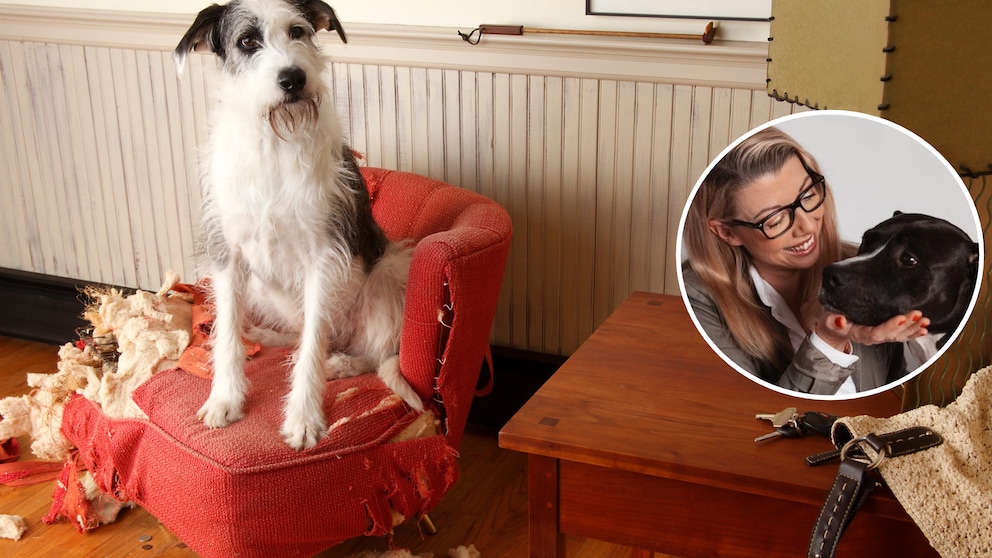
“Good morning, sorry for the early disturbance. My dog ate the couch yesterday. Can you come by today?” That’s how a workday started recently. I was just in the kitchen with my first coffee when the phone rang, and on the other end was a woman who sounded like she hadn’t slept. After a moment of silence, I asked the obvious: if the dog was still alive. He was, doing splendidly, and was lying contentedly in the hallway, surrounded by what used to be a sofa, as she assured me.
What to Expect in This Column
With this scene, I want to kick off a new series. From now on, I’ll share stories from my life as a dog trainer here once a month. It will be about the cases from which I’ve learned the most, requests so bizarre I couldn’t make them up, and moments that have stuck with me because they made me laugh or think.
I’ll talk about the beginnings when I didn’t yet know how much this profession would change my life, about my toughest case, about dogs that have impressed me terribly, and sometimes about people who worry me more than any dog. And I won’t hide what’s going wrong in the dog scene.
A Sofa Becomes a Sea of Foam
Back to the couch. I went there in the afternoon and met a young dog about eight months old, who greeted me with an enthusiasm you only see in young dogs who regret nothing, absolutely nothing. The family was both likable and clueless. Both parents worked full-time, and the dog was alone for nine hours a day. Apparently, he found something to do around noon. The sofa had become a sea of foam and fabric scraps. What I saw there wasn’t a bad animal, but a dog who simply hadn’t been shown what to do with his energy.
We reorganized the family’s day, arranged for a dog sitter at midday, and set up activities for the time alone. A few weeks later, the woman sent me a photo of the new sofa. The dog was lying obediently on his blanket next to it. I would have liked to write that he never chewed anything again, but I want to be honest in this column: The coffee table didn’t survive.
Also interesting: Dog destroys furniture? Expert: “It’s not revenge–it’s panic”
How a Dog Conquered My Folder
The fact that I hear sofa stories on the phone at a quarter to seven in the morning today has a longer backstory. Since 2018, I’ve been working as a dog trainer, initially alongside a completely different career. I remember my first appointment well: I had rewritten my concept several times, the documents were neatly sorted, and the dog in question looked at me for ten seconds and then demonstratively lay down on my folder. He apparently knew better than I did that theory wouldn’t play a big role that day. I learned more that afternoon than in some seminars, and I’m still grateful to the dog for that.
Calls You Can’t Make Up
Some calls stick with me for a long time because they truly surprise me. There was the man who wanted to know if you could train a dog not to bark in the rain. In the rain. Only in the rain. He was completely serious, and I had to restrain myself from laughing. It turned out that his dog had been responding to every patter on the roof with alarm since a thunderstorm in puppyhood, leading to very serious work on a genuine fear. The request sounded funny, but the problem was not.
Or the bride who planned for her dog to bring the rings to the altar at her summer wedding. The ring pillow was already ordered, the dress fit, but the dog, a spirited Beagle mix, apparently didn’t understand it was a solemn occasion. We practiced for three months. On the wedding day, he actually brought the rings to the destination, albeit at a run and with the expression of a dog who had just snagged a sausage. I sat in the back and cried, partly from emotion and a bit from laughter.
A Cat That Thinks It’s a Dog
And then there are the requests I have to read twice. An interested party emailed asking if my training would work for her cat, who thinks it’s a dog. It followed her everywhere, waited at the door, and came when called. I wrote back that I wasn’t the right contact for this case, but that I respect any cat that thinks it’s a dog. She thanked me warmly. I think she was the only client who was completely satisfied with my refusal.
Behind Every Problem Is a Person
Stories like these make the job seem easy, but I want to be honest: There are also days when I come home and don’t want to open the door for a long time. It’s rarely because of the dogs. Anyone in this profession quickly learns that behind almost every problem is a person who is overwhelmed, insecure, or poorly advised. I used to work in areas where I dealt with guests, business partners, and difficult situations daily, and a phrase from that time still accompanies me: The person who complains the loudest is usually the one who feels the least heard. This applies to hotel guests and dog owners.
What’s Going Wrong in the Dog Scene
This brings me to a topic I’ll repeatedly address in this series because it’s important to me: the scene. Anyone with a dog eventually encounters people with strong convictions. At the dog park, in the park, in online groups. You hear that the dog must know who the boss is. You get unsolicited advice on leash jerking, water bottles, and “the right tone.” And those who disagree often face a storm of indignation. I’ve seen owners become insecure who were essentially doing everything right, just because a tone in the group suddenly became sharper. It’s a strange mix of science, matters of faith, and personal vanity, and I want to shed light on this corner in this column, kindly but clearly.
Also interesting: There’s a shocking amount of animal suffering in greyhound racing

“I Had My Dream Dog Clearly in Mind—Then Came Ozzy”

Lukas Hintersteiner Became an Award-Winning Petfluencer Through a Bet with Pupils
Aggression Is a Symptom
A word about aggressive dogs, so you understand me correctly. I get inquiries about dogs that have bitten, growl at children, or act transformed on the leash, and I take each of these inquiries seriously. But when I work with such a dog, I almost always see an animal in distress: fear, pain, overwhelm, misunderstandings. Aggression is not a character trait but a symptom. Explaining this without downplaying the danger is one of the most challenging and important tasks I have.
What’s Next
You see, there’s a lot to tell, and I’m looking forward to sharing it with you. Next month, it’s about my toughest case so far. About a dog that almost drove me to despair and what he taught me. If you have a story yourself, whether it’s a bizarre question you’ve always wanted to ask or a dog that turned your life upside down, write to me. Maybe it will become one of the next episodes.
Until then, enjoy your dog, whether he’s lying on the sofa or, as in this case, in its individual parts.