


August 22, 2025, 2:46 pm | Read time: 3 minutes
Wasps sting first and ask questions later—or so it seems. PETBOOK editor and biologist Saskia Schneider explains why this is the case.
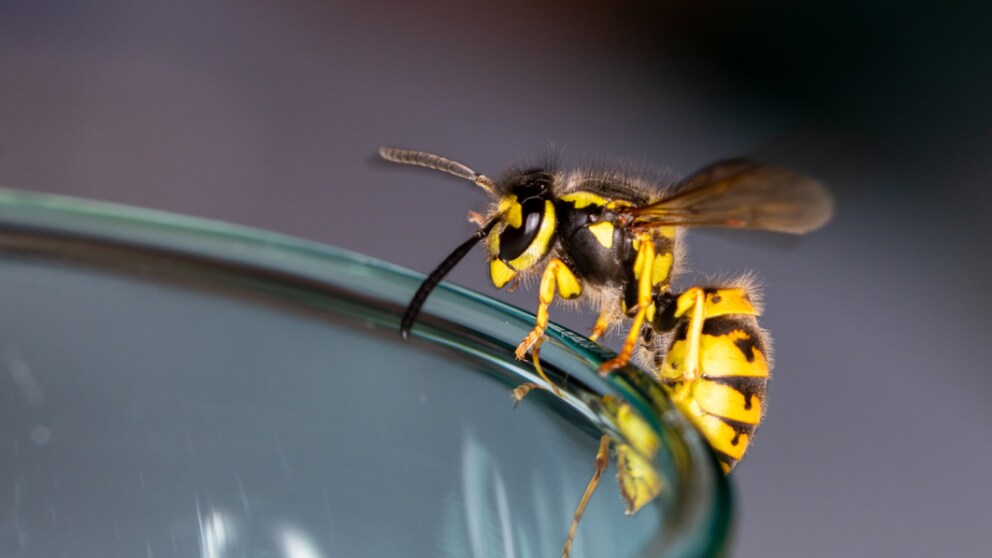
When we talk about wasps, we mainly mean the German wasp, Vespula germanica, and the common wasp, Vespula vulgaris. These two species are considered nuisances. This means they bother people at the breakfast table, trying to steal ham from the bread or nibble on the jam. Another trait makes them unpopular: Unlike honeybees or bumblebees, wasps are quick to use their sting—and there is indeed a specific reason for this.
Why Wasps Sting So Quickly
Honeybees also sting. However, they usually do so in acute danger to their own lives, such as when stepped on barefoot or when defending their colony. The latter situation mostly concerns beekeepers. Additionally, a honeybee often carefully considers whether to sting. Once it sinks its sting into human skin, it remains stuck due to barbs and is torn out along with the venom sac and sting apparatus. This causes the sting to continue digging into the victim’s skin, even if the bee has flown away. An effective defense method, but it comes at a price: The bee loses its life.
Wasps, on the other hand, can sting multiple times. Their sting is smooth and can be withdrawn without damage. They risk only being swatted during the act. Their tactic: quick and multiple stings. If a wasp is truly enraged, it’s not uncommon for it to sting its “victim” several times. But why do wasps get into a stinging frenzy so quickly?
Do Hornets or Wasps Actually Make Honey?
Why Wasps Relentlessly Pursue and Sting Some People
Frantic Movements Make Wasps Wild
Wasps have many enemies. Birds, hornets, and even mice or badgers use the insects as a protein-rich snack. In this case, attack is the best defense. And before the wasp checks whether a rapidly approaching object might be an enemy, it prefers to sting quickly. Therefore, one should avoid frantic movements near wasps. Above all, one should not swat at the insects. This signals to the wasp: “I am being attacked,” and it will sting at the next opportunity.
Certain smells can also cause wasps to sting more quickly. Some cosmetics and certain foods or wines may contain fragrances similar to the wasp’s alarm pheromone. This is released when stinging and signals to fellow wasps: “Here is the enemy.” I explain more about this in this article: Why Wasps Relentlessly Pursue—and Sting—Some People.
By the way: Bumblebees can—contrary to popular belief—indeed sting and do so multiple times. Unlike wasps, bumblebees have developed other defense strategies. For example, they raise a leg as a threat or roll onto their back to present their sting to the opponent.
Can All Wasps Sting?
No. Generally, only female wasps—like bees and bumblebees—sting. The venomous sting evolved from the ovipositor and thus exists only in female animals. Besides social wasps, species that live solitarily—not in large colonies—can also sting. However, this happens rather rarely. Typically, people mainly encounter social wasp species, such as:
- German wasp (Vespula germanica)
- Common wasp (Vespula vulgaris)
- European hornet (Vespa crabro)
- Saxon wasp (Dolichovespula saxonica)
- Median wasp (Dolichovespula media)
- House field wasp (Polistes dominula)
How to behave correctly when you have wasps visiting in the garden or during a meal, and how to get rid of the insects, is explained by the colleagues at MyHOMEBOOK.
About the Author
Dr. Saskia Schneider is a biologist with a Ph.D. During her studies at the Free University of Berlin, she focused primarily on zoology and animal behavior.