


June 26, 2026, 4:36 pm | Read time: 5 minutes
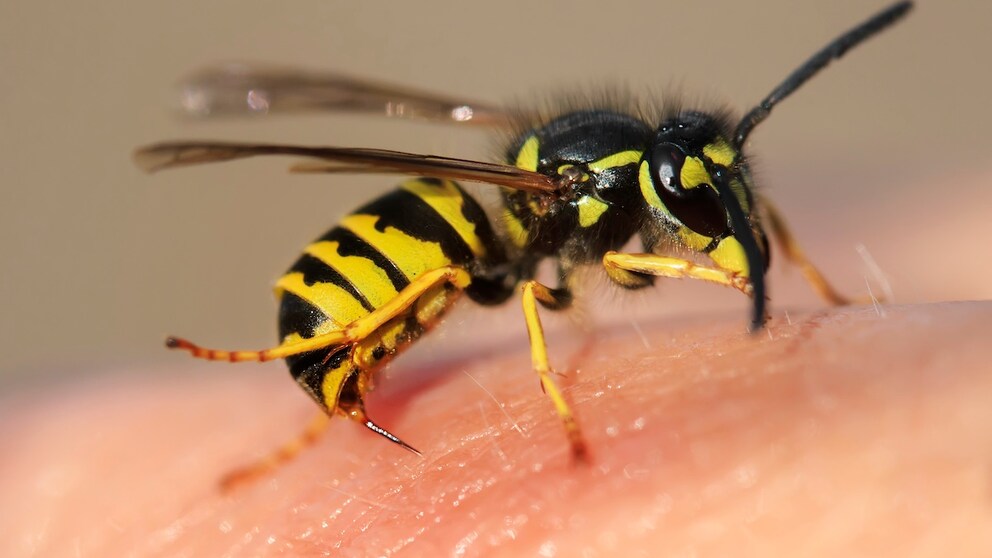
Wasps are probably among the least popular insects. Not only do they nibble on ham or jam–compared to bees, they sting relatively quickly. Some people seem to fall victim to them more often. They are practically pursued by wasps. PETBOOK editor and biologist Saskia Schneider reveals why this happens.
Why do wasps bother us at all?
In Germany, there are several hundred species of wasps–but people are usually only bothered by two species:
- the German wasp (Vespula germanica) and
- the common wasp (Vespula vulgaris).
While many other wasp species primarily catch insects for their offspring or satisfy their sugar needs with flowers, the German and common wasps do not shy away from snatching meat or sausage from the breakfast table. Later in the year, you will find these insects more frequently on sugary foods such as fruit cakes or lemonade. I have explained why this is in detail here: This is why wasps are more attracted to meat and sausage in summer.
Unfortunately, it doesn’t stop at nibbling. Often enough, people are stung during visits to the table or on the picnic blanket–even if they are not eating anything and remain calm. But why?
Why Wasps Sting So Quickly
Why Some Bees Are More Prone to Sting Than Others
This is why some people are practically pursued by wasps
Wasps usually pursue people when they have something edible or a sweet drink in their hand. It helps to put down the sausage or drink can and slowly move away. Sometimes, however, wasps also follow people who have nothing to eat with them. This is often due to certain scents they carry.
Sweet scents in cosmetics
Perfume and cosmetics such as hair gel, skin, and sunscreen can contain scents that attract wasps. Wasps are drawn to these scents:
- Floral scents: Even though they are not major pollinators, wasps visit flowers to satisfy their sugar needs with nectar. Therefore, they are attracted to floral scents.
- Fruity scents: The fruit sugar of ripe fruits also provides wasps with energy, which is why they find fruity scents irresistible.
There are also many other scent components that can be attractive to wasps and that we might not even notice in perfumes and cosmetics. This includes the scent of fermented fruit or certain carbohydrates.
Alarm scents in cosmetics and alcoholic beverages
When wasps sting, they release a so-called alarm pheromone. This is a specific scent that signals to other wasps in the area: “Warning, danger here–here is the enemy!” These pheromones usually consist of several scent components, not all of which have been identified to date. According to an Italian review study from 2010, one of the main components of the common wasp’s alarm pheromone is N-(3-Methylbutyl)acetamide.
This compound has also been detected in certain foods, especially alcoholic beverages, including wine. It is also possible that these or similar scent molecules are present in cosmetics. This is likely one of the main reasons why wasps specifically target and sting some people, even if they remain completely calm. 1
Bright colors
Colorful clothing can also be a reason why wasps pursue some people. Wasps perceive yellow and green tones well. However, unlike humans, they can also see ultraviolet light waves. Thus, white clothing can also attract wasps. Red, on the other hand, is uninteresting to them, as they do not perceive this color–it appears more like a kind of black to the insects.
Body odor
Then there are people who have a certain body odor that attracts wasps or even causes them to sting. Whether it’s due to body sweat or certain pheromones is still unclear. As a beekeeper, I repeatedly observe that some individuals are practically pursued by our honeybees–but also by wasps–even when the colonies are otherwise gentle.
How do I protect myself if a wasp is following me?
Since food is usually the main reason wasps follow people, it is often enough to put down your drink or sandwich and store it in a wasp-proof manner. Important: Stay calm; frantic movements can cause wasps to sting. Unlike honeybees, which die after stinging, wasps have little to lose. They are therefore much more willing to use their stinger.
Most people find it particularly unpleasant when insects fly directly into their face. This happens because wasps detect the scents of food in our breath. It helps to slowly place your hand between your face and the wasp and then try to slowly push the insects away–without touching them. Blowing is not a good idea, as the CO₂ content in our breath can also prompt wasps to sting.
A water spray can also help to drive away wasps. The idea is that the insects get the impression that it is raining and leave. Unfortunately, this is short-sighted, as wasps are not stupid. They return relatively quickly. In the end, you have two options:
- Find areas that are wasp-proof, or
- offer the insects an even more attractive source where they can feed–a kind of sacrificial plate.
Warning: Feeding wasps risks attracting even more to the table–you have to be able to handle that. Additionally, wasps remember the location and time of feeding and reliably return daily.
Otherwise, try to avoid hair gel, perfumes, or strongly scented creams if you notice that you are often pursued by wasps even without food or sweet drinks in hand. More tips on how to keep wasps away can be found with the colleagues at myHOMEBOOK.

My brother-in-law is a wasp magnet
“While grilling, I observed some time ago that wasps seem to have a preference for certain people. In this case, it was my brother-in-law. While everyone sat at the table and helped themselves, he was more occupied with keeping wasps away. When he retreated to the arbor to eat in peace, the wasps disappeared. When he came back out to get more, they suddenly reappeared. Very curious.”