


May 18, 2026, 3:06 pm | Read time: 5 minutes
Anyone observing wasps or hornets at flowers might quickly wonder: Do these insects also make honey? After all, they live in large colonies—like honeybees. But although wasps and hornets do consume sweet plant juices, they do not store honey. PETBOOK editor and biologist Saskia Schneider explains why this is the case and how their brood is fed differently from bees.
Wasps and Hornets Also Visit Flowers
Everyone knows honeybees: They fly from flower to flower, collect nectar, and turn it into honey. But those who look closely in the summer will also spot wasps or even hornets at flowers. It’s no wonder many people ask: Do wasps and hornets also make honey?
The short answer is: No. While wasps do consume nectar, they do not produce honey. Therefore, a wasp nest or hornet colony contains neither honeycombs nor storage chambers full of sweet reserves. Understanding why this is becomes clearer when considering why honeybees store supplies in the first place.
Nectar Yes, Honey No—Why Wasps and Hornets Don’t Store Supplies
For bees, honey is primarily a winter reserve. Honeybee colonies survive the winter as a whole state. Thousands of animals need to be fed for months, even though nothing blooms outside. That’s why bees collect enormous amounts of nectar and process it into durable honey.
Bumblebees also store small amounts of honey, even though only the mated young queens overwinter. There, honey mainly serves as an energy reserve for the colony during the season.
Wasps and hornets, on the other hand, follow a completely different strategy. Their colonies die off in the fall. Only the young queens survive the winter and establish a new nest the following spring. Large food reserves would therefore be pointless.
This is also evident in the structure of their nests. Bees and bumblebees have different cells: some for brood, others as storage chambers for pollen or honey. In wasp and hornet nests, this separation does not exist. Every single cell is a brood cell. An egg is laid there, which later develops into a larva. There’s no space for honey reserves.
Additionally, wasps and hornets feed their brood very differently from bees.
How Wasps and Hornets Feed
Bees collect large amounts of pollen because their larvae need a lot of protein for growth. Wasps and hornets, on the other hand, meet this protein requirement through animal food. They hunt other insects or use carrion as a protein source.
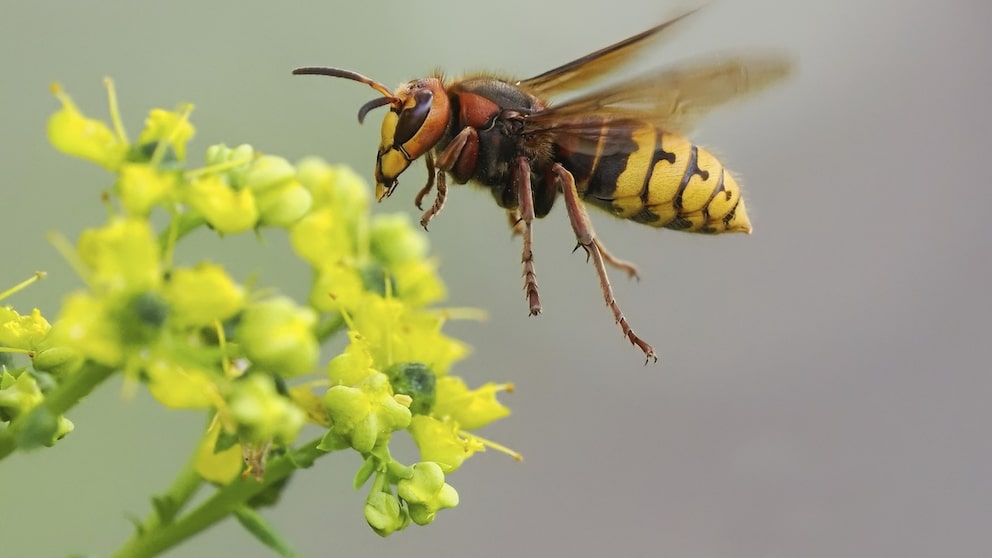
Hornets, in particular, are impressive hunters. They catch flies, horseflies, or other insects, chew them into a paste, and feed this to their larvae. The brood receives protein-rich “meat food” instead of pollen paste.
The problem is: Animal food is difficult to store. A storage full of insects would quickly spoil. Wasps would have to practically preserve their prey to prevent it from rotting in the nest. Therefore, they only collect as much food as is currently needed.
The adult insects themselves have a completely different diet from that of their larvae. Adult wasps and hornets no longer grow. They primarily need energy for flying—and they get this from sugar. That’s why they drink nectar or other sweet liquids.
Why Can’t I Buy Bumblebee Honey?
Why Are Bees Suddenly Attacking People? Expert Explains Reasons
Why Wasps Go for Jam Especially in Late Summer
Many people know this: In midsummer, no coffee table seems safe from wasps. Cake, lemonade, or jam attracts the insects like magic. But why does this happen in late summer, especially?
The reason lies in nature’s food supply. In spring and early summer, wasps usually find enough flowers and other sugar sources like fruits. Toward the end of summer, however, the supply becomes scarcer. At the same time, the wasp colonies are in their largest developmental phase—there are particularly many hungry animals.
Now wasps begin to search for alternative sugar sources. They become significantly more daring and also approach human food. Even honeybee colonies are sometimes raided if easily accessible honey is tempting. However, this only applies to the German wasp (Vespula germanica) and the common wasp (Vespula vulgaris). Other wasp species or hornets usually behave much more reservedly than the well-known “cake wasps.”
In nature, ivy plays a particularly important role. The late-blooming plant is one of the last major nectar sources of the year. Beekeepers refer to this as a “flow,” a time with a particularly rich flower supply. Those who observe blooming ivy in the fall often see numerous wasps, bees, and other insects simultaneously. For many wasps, this nectar is now vital for survival.
Conclusion: No Honey, but Still Useful
While wasps and hornets occasionally visit flowers, they do not produce honey. Unlike honeybees, they do not store supplies because their colonies do not survive the winter. Instead, they use their nest cells exclusively for brood.
By the way, wasps provide their brood daily with about 250 grams of insects, including flies, mosquitoes, caterpillars, and aphids. So they are not only annoying but also quite useful.1
Those who look closer will discover fascinating social insects behind the often bad reputation of wasps, with a completely different lifestyle from that of honeybees.
About the Author
Dr. Saskia Schneider is a biologist with a Ph.D. During her studies at the Free University of Berlin, she focused primarily on zoology and animal behavior. From 2018 to 2022, she worked as an editor at the German Bee Journal, a trade magazine for beekeepers, and has kept her own bee colonies in the Botanical Garden in Berlin for over 15 years.