


March 16, 2026, 3:27 pm | Read time: 6 minutes
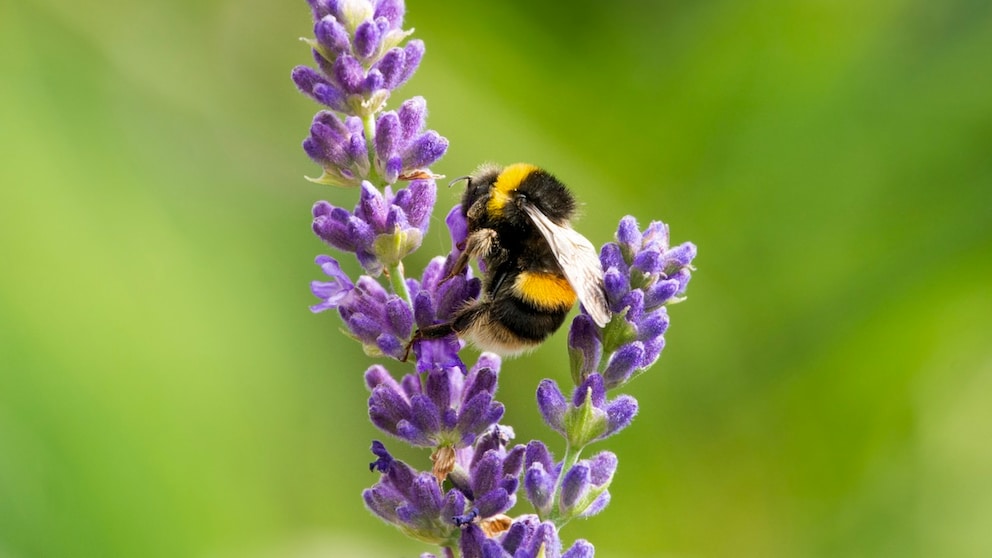
Bumblebees, with their large, plush bodies, are particularly popular among insects. Many people observe these creatures diligently visiting flowers in the garden and might wonder: Why isn’t there bumblebee honey? PETBOOK editor and biologist Saskia Schneider has been beekeeping for over 15 years and knows: Bumblebees do make honey. She also explains why you can’t buy it.
What Exactly Is Honey?
According to the official definition, honey is a natural sweet substance produced by honeybees. Strictly speaking, only honeybees produce honey. It serves as a reserve for the bee colony—especially in winter. It’s much more than just “thickened nectar.” Honey is the result of a surprisingly complex process involving an entire bee colony.
The foundation is primarily two sugar-rich sources from nature: flower nectar and honeydew. Nectar is the sweet plant juice that flowers use to attract pollinators. Honeydew, on the other hand, is produced when plant-sucking insects—such as aphids—excrete excess sugar.
Forager bees collect these sweet liquids and transport them in their so-called honey stomach back to the hive. That’s where the actual “honey production” begins. The worker bees pass the nectar among themselves, enrich it with enzymes, and remove water from it. The result is a durable food product that mainly consists of fructose and glucose but also contains enzymes, acids, minerals, and aromatic substances.1,2,3
Do Bumblebees Also Make Honey?
Bumblebees also collect nectar and convert it into honey within their colonies, similar to honeybees. While honeybees store their reserves in thousands of honeycomb cells and produce an average of 40 kilograms per year, bumblebees do this on a much smaller scale.
They store the sweet liquid in small honey pots, which are built from wax or repurposed from old brood cells. The main difference lies in their lifestyle. Bumblebee colonies are much smaller than bee colonies, usually consisting of only 50 to 500 individuals. Additionally, only the young bumblebee queen survives the winter—all other bees die in the fall.4,5
Can You Eat Bumblebee Honey?
Theoretically, yes. And if you’re wondering what bumblebee honey tastes like, I can only say: mostly sweet. Similar to bee honey, the flavor nuances mainly come from the nectar of the plants the bumblebees collect from. However, you won’t be able to discern “varieties” like with bee honey.
This is partly because bumblebees are not as flower-constant as bees. When honeybees discover a good nectar source, they actively promote it within the colony with a dance. If it’s worth it, they’ll even travel longer distances for it.
Bumblebees don’t exhibit this behavior to the same extent and have far fewer individuals. As a result, nectar from different plants often ends up in the same pot. However, there can be taste differences depending on the season, as different plants bloom in spring than in summer.
Why You Can’t Buy Bumblebee Honey
While honeybee colonies can consist of several tens of thousands of individuals, a bumblebee colony only has a few hundred. Therefore, bumblebees don’t need large reserves. The “bumblebee honey” they produce is usually quickly consumed, primarily to feed the larvae. For us humans, practically nothing is left.6
But what if bumblebees were bred for performance like honeybees? Even then, selling it wouldn’t be worthwhile. The harvest alone would be extremely cumbersome. Honeybee colonies are large enough for beekeepers to control where the honey is stored. They simply remove the full combs and harvest them one by one.
A bumblebee nest is much smaller, and honey pots are located between brood cells. You would have to open each small pot individually and extract the honey. To do this, you would either have to banish the bumblebees from the colony or face strong resistance. Additionally, you would likely destroy the colony in the process. The harvest would very likely involve animal suffering.
Bumblebee Honey Would Likely Be Unaffordable
Moreover, bumblebee colonies do not overwinter. You would have to invest each year anew and build up the colonies. And then it would be questionable whether a significant amount of honey per colony would even be produced. For honeybees, you can expect an average of 20 to 40 kilograms per colony. For bumblebees, there are no figures, but it is estimated to be probably not even 100 grams.
This means: Even if someone were ambitious enough to breed bumblebee colonies for honey yield and endure all the hardships of harvesting, the effort would be disproportionate, and bumblebee honey would likely be unaffordable. Moreover, according to the definition, it couldn’t even legally be called honey, as this term is reserved exclusively for the product of the honeybee.
Do Hornets or Wasps Actually Make Honey?
Beekeeping: What You Need to Get Started
These Bees Make Honey
Besides bumblebees, there are other bee species that make honey—and whose honey can even be bought in some countries. Here’s a brief overview:7
Giant Honeybee (Apis dorsata)
This species from South and Southeast Asia is about the size of a hornet. Their colonies can include up to 100,000 bees. Instead of closed nests, they build huge open combs on trees that can be over a meter large. Multiple colonies can inhabit the same tree—so-called “bee trees.” If the nest is threatened, the bees defend it very aggressively.
Cliff Honeybee (Apis laboriosa)
The largest honeybee in the world lives even more spectacularly. It builds its combs on steep cliffs in the Himalayas, often at altitudes of several thousand meters. The honey of this species is famous—and sometimes even intoxicating: If the bees collect nectar from certain rhododendron species, the honey can contain hallucinogenic substances. In Nepal, it is traditionally harvested in risky climbing operations.
Dwarf Honeybee (Apis florea)
The opposite of these giants is the dwarf honeybee, which is only about 11 millimeters long. It builds a single small comb, usually on a branch. A large part of the colony forms a kind of living protective mantle around the nest. Despite their small size, up to 20,000 bees can live in a colony.
Stingless Bees (Meliponini)
Many tropical bees without stingers also produce honey. These species live mainly in South America, Africa, and Southeast Asia. Their honey is usually more liquid and aromatic than that of our honeybee, as it contains more water and is often stored in combs made of wax and plant resin. In some regions, this honey is traditionally collected and even used medicinally.8,9
Conclusion: Bumblebee Honey Is for Bumblebees
All this shows: Honey is not an exclusive product of our native honeybee. Various bee species have learned over the course of evolution to preserve nectar and store it as an energy source.
Honey is much more than a food product. For the bees themselves, it is a survival strategy—and the fuel for some of the most important pollinators on our planet. But as for bumblebees: it’s intended solely for the animals.
About the Author
Dr. Saskia Schneider holds a Ph.D. in biology and focused on the behavior of honeybees in her dissertation. She has been keeping her own bee colonies at the Botanical Garden in Berlin for over 15 years.