

March 30, 2023, 2:43 pm | Read time: 6 minutes
Anyone with a garden often dreams of having their own bees to produce honey. But how demanding is beekeeping really, and what do beginners need to keep these industrious insects? PETBOOK provides an overview.
As soon as the first warming rays of spring awaken early bloomers, they are on the move: Bees buzz through the air and visit flowers from spring to fall to collect nectar and pollen. Many hobby gardeners feel fortunate when bees and other pollinators visit their blooming beds and trees. Without pollination, the fruit and vegetable harvest would be sparse. It’s a natural thought to keep bees and eventually harvest your own honey.
Overview
Keeping Bees: What Do I Need?
Knowledge
Bees are living creatures. Just like other pets and livestock, no one should simply place a hive, which is what a beehive is called, with a bee colony in the garden and trust that nature will take care of everything. To protect your bees from diseases and harvest honey, it’s ideal to attend a beginner’s beekeeping course. These are offered by beekeeping associations, for example. Here, beginners learn what materials they need and where to get them. Additionally, these associations often have contacts who can assist beginners with bee-related issues. Ideally, you should spend a year beekeeping alongside an experienced beekeeper to learn all the work steps and processes throughout the year. Afterward, you can better assess whether you’re truly ready for your own bees.
Hive (Bee Housing)
The hive is the beehive, the housing for the bee colony. There are a variety of models and methods, each with its own advantages and disadvantages. Experienced beekeepers can offer tips and help with setting up the hive. Not only is the location important for the bees’ well-being and a good honey yield, but beginners should also consider their neighbors. Could they be disturbed by the bees’ “flight path”? Each bee colony requires a hive, and two hives can fit in a 100-square-meter area. A hive typically includes:
- a base with a ventilation grid and floor insert
- two to three supers (individual elements of the hive that allow you to expand or reduce the hive piece by piece)
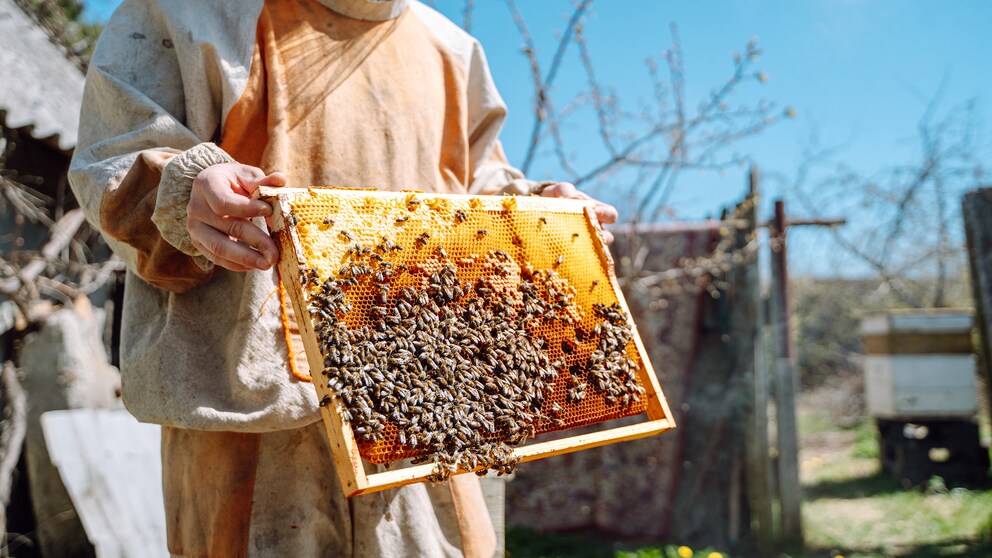
- frames
- a queen excluder
- a cover
- a metal roof
Work Clothing
Today’s bees are bred for gentleness, yet removing the frames (where bees build their combs and store honey) can still result in a sting or two. Everyone must decide for themselves: Some accept stings as part of beekeeping, while others wear a veil to prevent stings on the face. A full protective suit is recommended, especially for those with allergies. Gloves should be avoided if possible, as they reduce sensitivity when handling and can lead to crushing bees.
Tools (Smoker and Hive Tool)
To ease work with bee colonies, there are many tools available. However, you really only need a smoker and a hive tool. The smoker is filled with smoking material and lit when working with the bees, such as during disease treatment or when removing frames for honey extraction. The smoke calms the bees, reducing the likelihood of stings. The hive tool assists in removing the wooden frames where bees build their combs. Although these frames are movable, bees often seal them with wax, making them difficult to remove.
Extractor and Honey Jars (Optional)
When starting beekeeping, you often begin with young bee colonies that don’t produce honey in the first year. Even in the following year, honey harvesting is usually not the main focus, and the few honeycombs you might harvest can be collected as so-called crushed honey. For this, you only need a knife to cut out the combs and a sieve to separate the honey from the wax.
Those looking to enter large-scale honey production will need a honey extractor. Often, a used model is sufficient for beginners, or you can borrow one from other beekeepers. Membership in an association is beneficial, as they often support beginners with materials for free. The honey must also be bottled afterward. There are standard honey jars in which honey can be sold. If you’re producing honey for personal use or gifting it to friends and neighbors, you can use other jars. It’s important that the jars are sterilized and germ-free. They must also have a label with all required legal information (such as expiration date, honey batch, variety, and beekeeper’s address)–even if the honey is only given to friends or relatives.
Keeping Bees: What Else Should I Consider?
Legal Considerations
In principle, anyone who wants to can keep bees. There is (currently) no mandatory basic training or beekeeping license. However, beekeeping courses, specialized literature, and contact with a nearby beekeeping association are recommended, as there are often questions, especially at the beginning and when problems arise, that only experienced beekeepers can answer. Additionally, as a beekeeper, you are obligated to care for the health of your colonies. This includes treatment against parasites, which every beekeeper must perform. Failure to fulfill this duty can result in penalties from the veterinary office.
Furthermore, anyone keeping bees must report this to the responsible veterinary office. This is because bees can become ill, and these diseases can spread to other colonies. Veterinarians need to know exactly where and how many colonies are located. Liability insurance is also strongly recommended. If an accident occurs because your bees sting someone, it can be costly for the beekeeper. Those in an association affiliated with the German Beekeepers Association are automatically insured.
Costs
Beekeeping is not a cheap hobby; the basic equipment alone costs around 2,000 euros. Over time, materials will need to be replaced, and there are costs for further education or beekeeping courses, as well as chemicals for bee treatment. To cover costs by selling honey, you need to sell a significant amount over a long period.
Time Commitment
Besides costs, many new beekeepers underestimate the time commitment required for beekeeping. First, materials must be assembled, followed by weekly inspections of the bees. Additionally, time must be allocated for winter preparation and honey harvesting. Those who wish to sell their honey must also market and possibly ship it.
Neighbors
Not every neighbor appreciates a bee colony close to their property. Concerns about increased sting risk, especially for children or pets, may arise. It’s best for future beekeepers to inform their neighbors before acquiring bees. When setting up, consider that bees need a flight radius of up to five meters to enter and exit the hive undisturbed. If the flight path crosses the neighbor’s terrace, it could quickly lead to disputes.