

September 20, 2025, 6:37 am | Read time: 6 minutes
Beeswax can particularly help the skin absorb and retain moisture. PETBOOK consulted an expert on what other properties make this active ingredient a popular component in cosmetics and how it is produced.
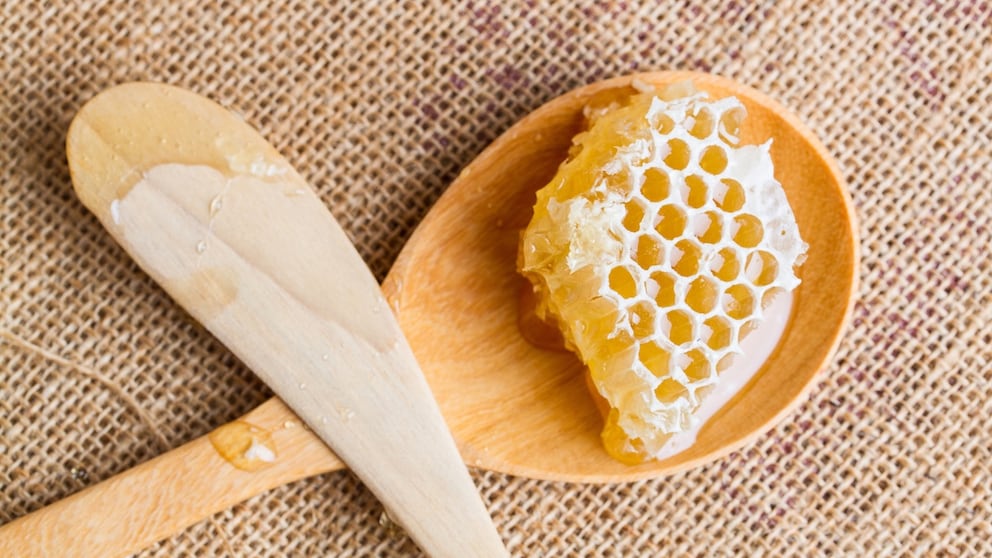
What exactly is beeswax (cera flava)? Simply put, it is a yellow wax produced by honeybees. They produce the wax themselves from glands in their abdomen. Chemically, it is a fat. However, at room temperature, it is hard and quite stable. “So stable that bees build their honeycombs from it,” explains biologist and beekeeper Saskia Schneider. In these combs, they store not only nectar, which they convert into honey, but also pollen, and the cells serve as nurseries for the larvae.
Difference Between Yellow and White Wax
“Many believe beeswax is yellow—but that’s not true,” Schneider explains. Freshly secreted wax is white. “Only after many bee feet have walked over it does the beeswax turn yellow due to pigments—called carotenoids—from flower pollen.” Special flavonoids from propolis—a type of resin bees use to seal their hive, which also has antiseptic properties—can also darken the wax.
Those who want to use beeswax for cosmetics should ensure they use freshly produced wax, according to the expert. This can be identified by its white color and the label “Cera alba.” Although it is much more expensive than the beeswax typically offered as wax sheets for beekeeping needs, it may contain residues of treatment agents used by beekeepers to combat a honeybee parasite.
There is also the so-called “capping wax.” This is produced when bees seal the stored honey with a wax cap. This is usually freshly produced wax and is therefore also suitable for cosmetic products, although it has a yellowish color because pollen in the honey can transfer pigments to the wax. It is marketed under the term “Cera Flava.”
How Is Beeswax Harvested?
Natural beeswax is obtained from freshly built combs or capping wax. The wax is heated as slowly and gently as possible. The melting point of beeswax is at least 65 degrees Celsius. At this temperature, the wax becomes liquid and can then be emulsified with other active ingredients.
Is Beeswax Always Organic?
The term “organic” also applies to beeswax. However, one must differentiate. Unlike honey, wax is not a food product, as Schneider explains. Therefore, there is no organic seal like we know from fruits, vegetables, or other products. Nevertheless, there is beeswax from organically certified beekeeping.
For a beekeeper to call themselves an “organic beekeeper,” they must meet certain criteria. Among other things, their colonies must be located near ecological or non-cultivated areas. They may only feed their bees with products from organic farming (usually starch syrup) and may only treat their bee colonies with certain medications. However, this does not automatically mean that the wax from these beekeepers is organically certified. Beekeepers must have this officially confirmed through examinations. Consumers can recognize this by various seals such as “Bioland” or “Demeter.”
Animal Welfare & Sustainability
The topics of animal welfare and sustainability should not stop at the cosmetics shelf. There are no plant-based alternatives for beeswax and its derivatives, making its use often indispensable. Beeswax is not vegan, as it is a product derived from living animals, and care should be taken to ensure that the ingredient is sourced from responsible animal husbandry.
Sustainable cosmetics refer to products that do not harm the environment and are produced in harmony with nature. Here, too, the organic seal offers good guidance. However, most beekeeping operations in Germany are small family businesses that take very responsible care of their colonies. So, buying wax from Germany is a good choice even without an organic seal.
Popular Cosmetic Products with Beeswax
Beeswax has been valued for its properties for thousands of years. There is evidence that wild bee wax was collected as early as 14,000 years ago. Later, the ancient Egyptians used it as an additive in cosmetics. Today, beeswax is primarily used in natural cosmetics as a good alternative to paraffin, which we know mainly from candles. It is found mainly in lipsticks and mascara, but also in sun care, baby, and skincare products.
Attributed Effects of Beeswax
Beeswax forms a breathable protective layer on the skin, which has a soothing and relieving effect on skin irritation and dryness. A special property of beeswax is its ability to absorb water molecules from the air, release them to the skin, and simultaneously bind them in the skin. These properties can help keep the skin hydrated, soft, and supple.
Beeswax also has antibacterial properties that can help protect the skin from pathogenic microorganisms. Therefore, it is used for certain skin problems, such as dry lips, psoriasis, and atopic dermatitis, as well as for treating burns and wounds.
As a source of vitamin A, it also accelerates skin regeneration. Another advantage is its natural scent. Due to its light honey scent, it is often unnecessary to add additional, often synthetic, fragrances to the products.
Why Can’t I Buy Bumblebee Honey?
Suddenly Seeing Yellow Spots on Your Car and Laundry? This Animal Is to Blame
Possible Risks of the Active Ingredient
Although an allergy to beeswax is extremely rare, it can contain traces of pollen and propolis, to which many people develop an allergy. If such an allergy is known, the corresponding products should be tested on a small area first, such as the inside of the wrist.
If swelling, redness, itching, or burning occurs, one should refrain from using it. Since beeswax is a natural product, it does not mean that if one tolerates a product with beeswax well, other products are also safe to use. Especially with a known allergy to pollen or propolis, you should always test cosmetics with beeswax before applying them extensively and regularly.
Pay Attention to Proper Skin Cleansing After Using Beeswax
Since beeswax forms a kind of protective film on the skin, the products should be regularly removed, especially if used on the face. Otherwise, deposits could form that may impair the effectiveness of other skincare products.
For cleansing, it is best to use oil-based products, as beeswax does not dissolve in water. There are special cleansing oils or emulsions that reliably and thoroughly remove fatty cosmetics.

About the Expert
Dr. Saskia Schneider is a biologist with a doctorate who focused on the behavior of honeybees in her dissertation. From 2018 to 2022, she worked as an editor at the “Deutsches Bienenjournal,” a trade magazine for beekeepers, and has been keeping her own bee colonies in the Botanical Garden in Berlin for over 15 years.