


February 27, 2026, 5:01 am | Read time: 5 minutes
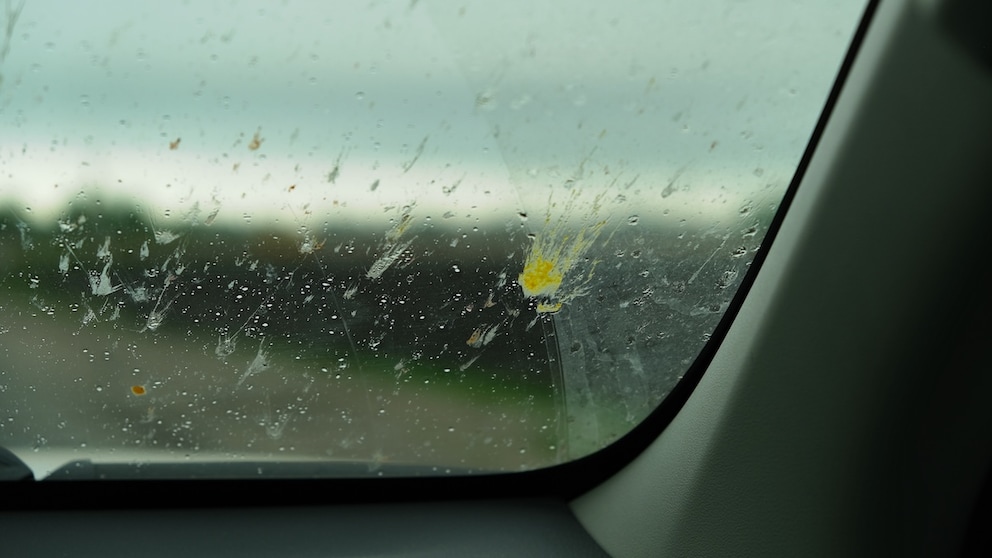
In spring, there’s a phenomenon that often puzzles people: Suddenly, there are many small spots and sometimes even droppings on the car. It’s not birds behind this, but other small animals that urgently needed to do their business. PETBOOK editor and biologist Saskia Schneider explains which animals are responsible and why this phenomenon occurs suddenly and en masse in spring.
What’s Behind the Yellow Spots on the Car
While drivers often have to deal with bird droppings on their vehicles year-round, nature ups the ante in spring: Especially on the first warm summer day of the year, some cars are suddenly covered with many small yellow spots.
Even in the past—before cars existed—this phenomenon was known when laundry was hung out during the first sunny weather. Those unlucky enough had to wash again because a small animal—specifically an insect—had only one thing in mind with the first spring temperatures: urgently doing its business.
Bees Have to “Hold It” for Several Months
When temperatures first rise above ten degrees Celsius in the year, and the sun shines, it’s not just us who head outdoors—honeybees also become active and take their first flight to relieve themselves. Beekeepers refer to this as the “cleansing flight,” which provides much amusement each year—unless it’s your car or laundry that’s affected.
Bees don’t first fly out to collect nectar and pollen but to empty their bowels. These are full because honeybees are clean animals and do their business outside. This means the bees that go into hibernation in November or December have to hold it until spring. Understandably, they seize the first opportunity to quickly “go for little Majas.”
Thousands of Bees Fly Out Simultaneously to Relieve Themselves
Normally, we humans wouldn’t notice this at all—most of the droppings land on grass or soil. However, those unlucky enough to park their car near bee colonies or hang laundry in the garden with a beekeeper as a neighbor get a special surprise.
Usually, the landing of one bee triggers a whole stream in the bee colony. These can still consist of around 5,000 bees in spring, all flying out on a single day to relieve themselves. Considering that beekeepers typically have several colonies (between 5 and 20), quite a few small droppings accumulate.
Bees Defecate in Flight—Causing Spots Below
Bee droppings consist partly of digested pollen, which is mainly responsible for the yellow color. Sugar components are also present. Healthy bees excrete mushy droppings. Depending on their health, the droppings can also be more liquid. 1
On cars, the droppings usually appear as spots because bees often defecate in flight. When the droppings hit the car, small yellow spots form upon impact. It can also happen that the insects land directly on the car—or the laundry—and do their business there.
Can the Droppings Damage the Car?
While droppings on white laundry can be relatively easily removed by washing, they can indeed damage car paint. The reason is enzymes like pancreatin in the excretions, which can destroy the paint surface, especially if the droppings remain on the car for a long time. Due to the effects of UV light and weather, the paint initially discolors. Later, it softens and cracks form. 2
This damage can often only be repaired with an expensive repaint, so car owners should act quickly to remove the droppings.
How to Remove Bee Droppings from the Car
If the droppings are fresh, they can simply be wiped away with a cloth. If they are already hard and baked on, it is recommended to pre-treat the affected areas with an insect cleaner before washing the car. This is also used for insects that hit the windshield while driving. 3
In general, it’s advisable to let the bee droppings soak beforehand so they can swell again. This makes them much easier to remove.

Expert Explains What Cosmetics with Beeswax Are Suitable For
Why Are Bees Suddenly Attacking People? Expert Explains Reasons
Other Causes of Yellow Spots on the Car
The cleansing flight is a phenomenon that occurs exclusively in spring. However, there are other situations where bees can leave droppings on cars. For instance, if the car is simply nearby, the insects briefly rest there and do their business. However, only one or two droppings usually land on the windshield or paint.
Even while driving, it can happen that bees hit by the car leave yellow spots. Upon impact, the bowel empties suddenly. It doesn’t necessarily have to be a honeybee. Wild bees or bumblebees also have yellow excretions.
Conclusion: Yellow Spots on the Car Announce Spring
As much as car owners may be annoyed by the yellow spots, they indicate a phenomenon that usually heralds spring. Nature is awakening, and alongside honeybees, the first bumblebee queens are now out collecting nectar and pollen from crocuses and winter aconites.
So if you find your car covered in yellow spots, take heart: A bee colony has survived the winter and is now ensuring, through its pollination, that we have many colorful fruits in summer and fall.
About the Author
Dr. Saskia Schneider holds a Ph.D. in biology and focused on the behavior of honeybees in her dissertation. From 2018 to 2022, she worked as an editor for the German Bee Journal, a trade magazine for beekeepers, and has kept her own bee colonies in the Botanical Garden in Berlin for over 15 years.