

July 21, 2026, 3:06 pm | Read time: 4 minutes
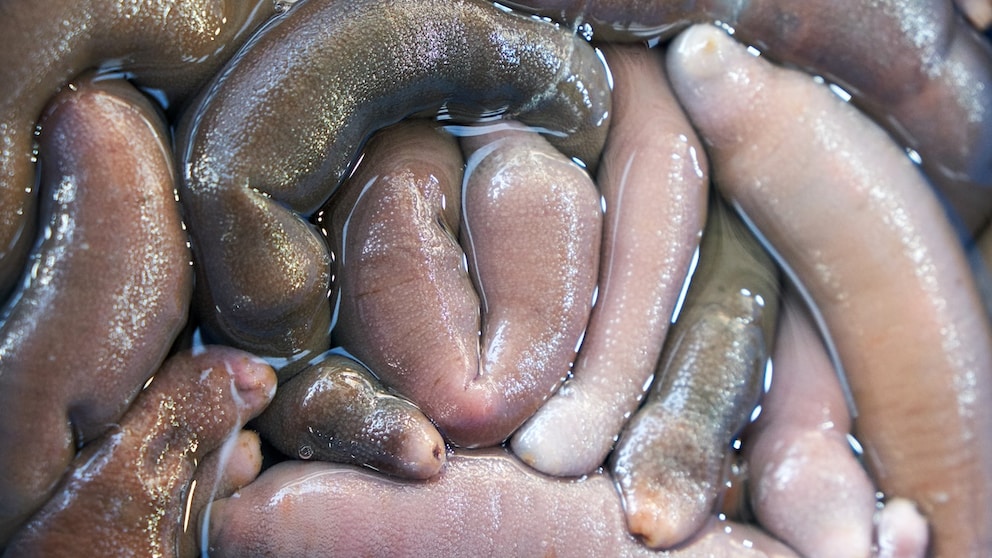
In Asia, it is considered a delicacy, but elsewhere it mainly causes puzzled looks: the so-called “penis fish” (Urechis unicinctus). The marine creature owes its curious nickname to its striking phallic shape. Recently, the worm made headlines after thousands of specimens washed up on the beaches of Patagonia in Argentina. However, despite its name, the “penis fish” is neither a fish nor particularly rare. PETBOOK explains what really lies behind this unusual marine animal.
The “Penis Fish” Is Actually a Worm
The scientific name of the animal is Urechis unicinctus. Despite its nickname, it does not belong to the fish but to the so-called spoon worms. For a long time, these animals were classified as their own group. Today, however, they are considered part of the annelids (segmented worms).1
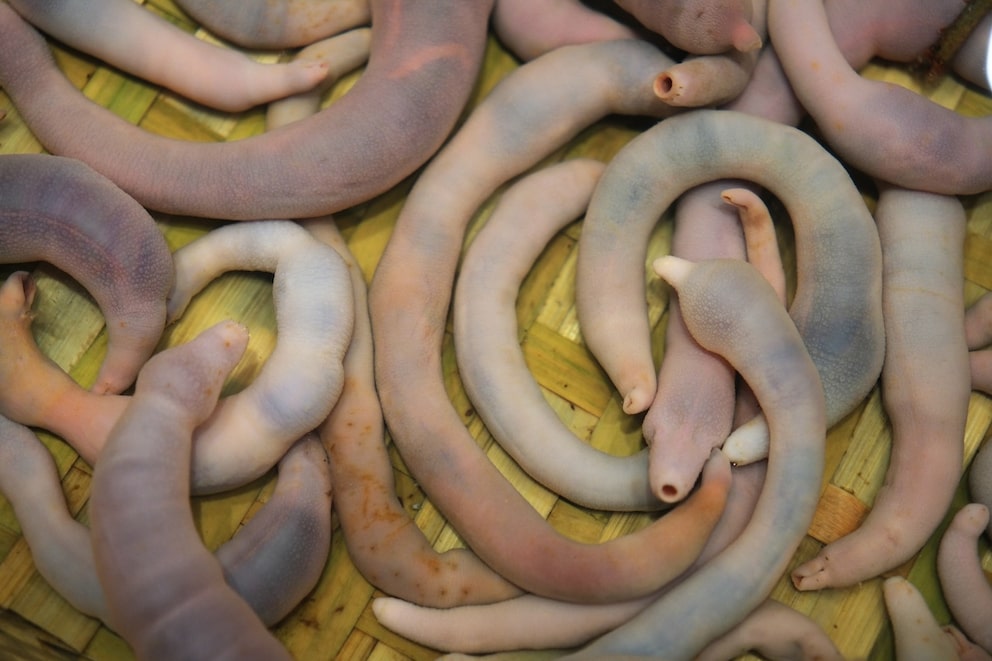
The sausage-shaped body varies in length from about 4 to 12 inches, depending on the species and age, and has a wrinkled, yellowish to pinkish skin. Unlike earthworms, the spoon worm lives exclusively in the sea.
Why It’s Called “Penis Fish”
The unusual nickname is practically self-explanatory. The cylindrical body of the spoon worm reminds many people of a male genital organ. This has made the worm particularly famous on social networks, where the marine creature regularly causes a stir.
In South Korea, the worm is known as Gaebul. The term is derived from the Korean words gae (“dog”) and bul (“male genitals”) and can be roughly translated as “dog penis.” Outside of Asia, the animal is therefore usually simply referred to as “penis fish” or “penis worm.”2
It Builds Real Homes Underwater
Most of the time, the “penis fish” is not seen at all. It lives buried in sandy or muddy sea floors, where it digs a U-shaped burrow. Through wave-like movements, the worm pumps seawater through its burrow and stretches a sticky mucus net inside. This net captures plankton, algae, bacteria, and other organic particles from the water. Once the net is sufficiently filled, the worm simply eats it along with its catch.
Its burrow not only serves the worm. Small fish, crabs, and other marine creatures often move in and benefit from protection and leftover food. Therefore, the worm is also known in English as the “Fat Innkeeper Worm.”
Why Thousands Sometimes End Up on the Beach
Normally, the animals remain well hidden under the seabed. However, it occasionally happens that thousands of them are washed up on beaches at the same time—most recently on the coast of Patagonia in Argentina.
For a long time, researchers assumed that strong storms or high waves tore the animals from their burrows. However, a Japanese study introduced another explanation. The scientists observed that the worms can actively swim. They may leave their burrows specifically for reproduction and are then carried ashore by tides and currents.
In Korea, the “Penis Fish” Is a Delicacy
While washed-up “penis fish” mainly attract curious looks in Europe, they regularly end up on the plate in Korea, China, and Japan. In South Korea, Gaebul is considered a delicacy.
Traditionally, they are served raw, usually with sesame oil, salt, or a spicy gochujang sauce. Their flesh is considered exceptionally chewy and slightly sweet. Some compare the taste to oysters, while others describe it as pleasantly salty with a natural sweetness.3

Giant Fish Weighs More Than a Car
Sea Cucumbers Throw Guts at Enemies–and Don’t Even Have a Brain
A Survival Artist with a Long History
Although the spoon worm is hardly known today, its way of life has existed for a long time. Fossilized U-shaped burrows show that similar spoon worms already inhabited the seabed around 300 million years ago. Individual animals can also live to be surprisingly old–up to 25 years.4
At the same time, the worms play an important role in the ecosystem. They loosen the seabed, filter organic material from the water, and provide numerous other animals with a protected habitat.
Is the “Penis Fish” Dangerous?
For humans, the “penis fish” is completely harmless. It has neither venom nor spines and does not attack people. Instead, it is on the menu of numerous animals. Its natural predators include flounders, rays, sharks, seagulls, otters—and humans.
Its curious name may attract attention, but the “penis fish” is primarily a fascinating marine creature that demonstrates how unusual and diverse life beneath the water’s surface can be.