

September 10, 2025, 4:23 pm | Read time: 5 minutes
What do penguins, Arctic foxes, and mammoths have in common? They are all masters of adapting to extreme cold. But how exactly did some animals withstand the icy temperatures of the Ice Age? Why did some grow into true giants, while others almost artfully optimized their body shapes? Nature follows fascinating rules that not only made mammoths so enormous. PETBOOK explains which ones.
How Animals Use Body Structure and Size to Defy the Cold
Have you ever noticed that animals in colder regions are generally larger than their counterparts in warmer areas? For example, Arctic foxes are typically larger than our native red fox. However, the red fox is larger than the fennec desert fox. The same goes for different penguin species: An emperor penguin from Antarctica is much larger than the Magellanic penguins of Argentina.
Carl Bergmann, a 19th-century anatomist and physicist, observed this phenomenon during his research travels. He found that animals living in cold regions are usually larger than their relatives in warmer areas. Larger animals lose less heat because their surface area is smaller relative to their body size. This observation became known in the history of natural sciences as “Bergmann’s Rule.” It mainly applies to warm-blooded animals–birds and mammals. It is not directly applicable to cold-blooded animals like reptiles.
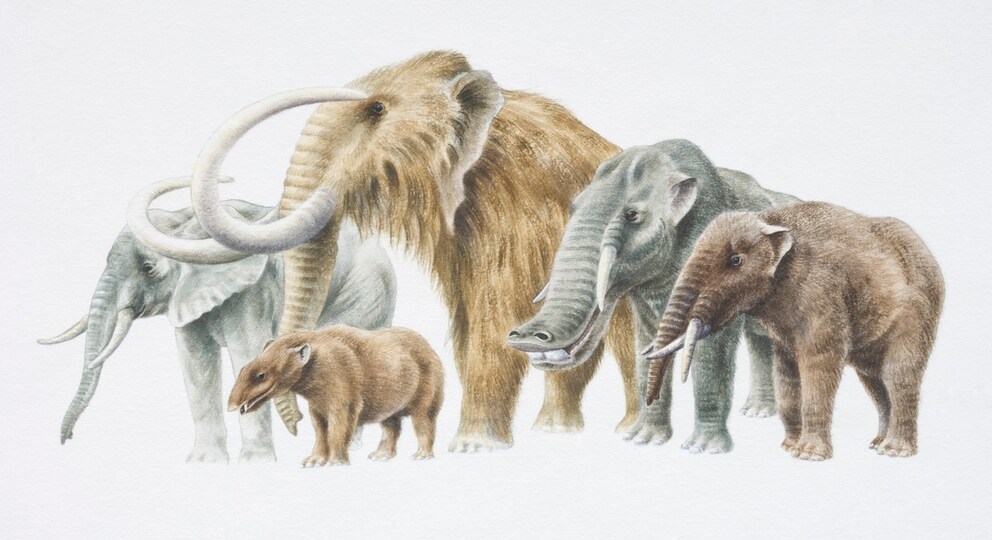
If you remember your biology class well–and especially the distinguishing feature between Asian and African elephants–you might guess that there is another intriguing rule. The so-called Allen’s Rule states that animals adapt to their habitat by developing smaller body appendages, such as ears, tails, or limbs, in cold regions to minimize heat loss.
In warm areas, it’s the opposite: Longer limbs facilitate heat dissipation. Extreme cold or temperature changes led to an evolutionary advantage for larger or better-insulated body forms over many generations. That’s why the African elephant has larger ears to cool down than its Asian relative. 1
Only the Harsh Climate Made Mammoth Ears Shrink
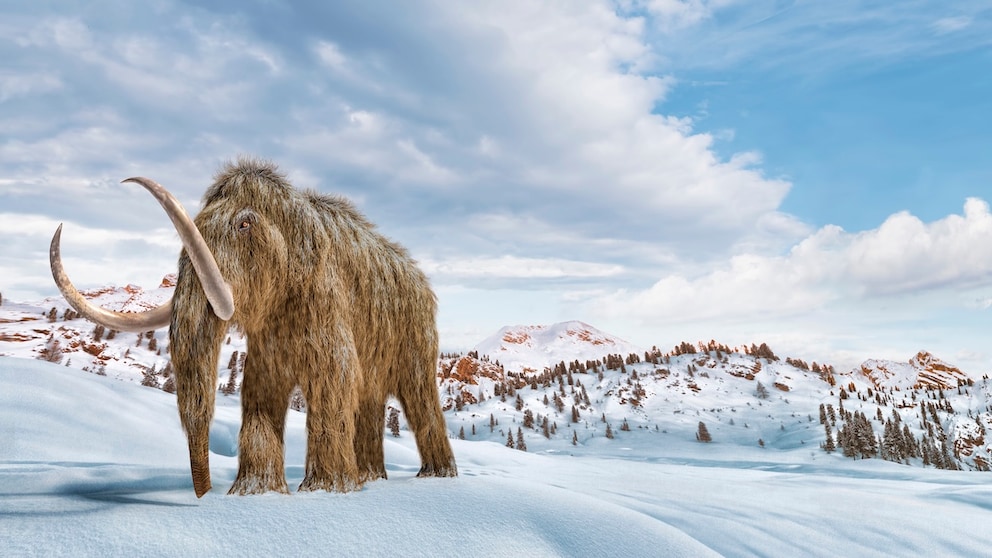
Woolly mammoths also adapted to the cold weather conditions, according to a 2023 study led by David Diéz-del-Molino, published in the journal “Current Biology.” Their research found that although mammoths were enormous, they had particularly small ears according to Allen’s Rule. The gene FLG (Filaggrin) was responsible for this. The change in the FLG gene occurred only after the species originated, less than 700,000 years ago.
This means the first mammoths probably had larger ears. Only later, as the climate became colder and harsher, did they adapt, and their ears became smaller. This way, they lost less heat and could survive better in the icy environment.2, 3
DNA Traces of Giant Mammoths and Rhinos in Southern Germany
Yes, you read that right. Up to the geographical height of Lake Constance, there were DNA occurrences of Ice Age elephants and woolly mammoths. The largest animals of the Pleistocene lived in our latitudes from 2.5 million years ago until the beginning of our current era (Holocene) and eventually became extinct around 10,000 years ago. The gigantic relatives of today’s pachyderms grew up to 5 meters tall and were covered with woolly, dense fur.
It is also documented that there were once rhinos in Germany. As part of a university cooperation project led by biologist Laura Epp, DNA samples were taken from fossilized hyena droppings (yes, those too) in southern Germany. The analysis showed that the remains contained DNA profiles of woolly rhinos.
The Ice Age giants with small ears lived in the steppes of Northern and Central Eurasia. For over 2.5 million years, animals like the woolly rhino roamed the Earth, well-equipped against the cold with thick skin and dense fur. However, they became extinct by the end of the Weichsel glaciation, around 11,000 years ago. Hunting reduced their numbers and drove them to more southern areas. A rise in temperature made these regions uninhabitable for them, as woolly rhinos had “self-optimized” for cold areas over the years. 4, 5

Are Woolly Mice the First Step on the Way to Reviving the Mammoth?

Polar Bears Adapt to Warmer Climate, Research Shows
Saber-Toothed Tiger with Cult Status
With a shoulder height of about 1.2 meters, the saber-toothed tiger (Smilodon fatalis) was also larger and heavier than today’s big cats. It lived during the Pleistocene era and hunted deer-like animals and tapirs until its extinction around 10,000 years ago. Its canine teeth, up to 20 centimeters long, made it an extremely effective hunter–well-equipped to catch prey.
The saber-toothed tiger was primarily native to the forested regions of present-day North America. In pop culture, it is probably best known today as “Diego,” the charming feline hero from the animated film “Ice Age,” although this portrayal offers a somewhat different image than the real Ice Age. 6
Conclusion
Whether giant mammoths, rhinos, or saber-toothed tigers–many animals adapted to the Ice Age climate through impressive body sizes and special features. However, humans and climate change have led to the disappearance of many species. Today, their remains, fossils, and DNA traces help us better understand the mechanisms of evolution–and hopefully prevent further mass extinctions.