

November 6, 2025, 9:43 am | Read time: 5 minutes
Whether on four paws, with fins, or wings, the animal kingdom moves at a rapid pace. Some animals seem to simply ignore the speed limit. But what is actually the fastest animal in the world? A comparison is not so easy, as the environment plays a crucial role: The rules in water, on land, and in the air are completely different.
The title of the fastest animal in the world is often attributed to the peregrine falcon. In numerous lists, it lands in first place, closely followed by the cheetah. However, comparing their performances directly would be like comparing apples and oranges, as they live under very different environmental conditions. The falcon reaches its breathtaking speed during a dive—aided by gravity and perfect aerodynamics. The cheetah, on the other hand, sprints across barren savannas and steppes using its own muscle power. And then there’s the world of fish, where true high-speed hunters are also on the move.
To determine which animal is truly the fastest, one must differentiate between air, land, and water. The conditions in these habitats differ so greatly that only a look into each category allows for a fair race.1
The Fastest Animal on Land
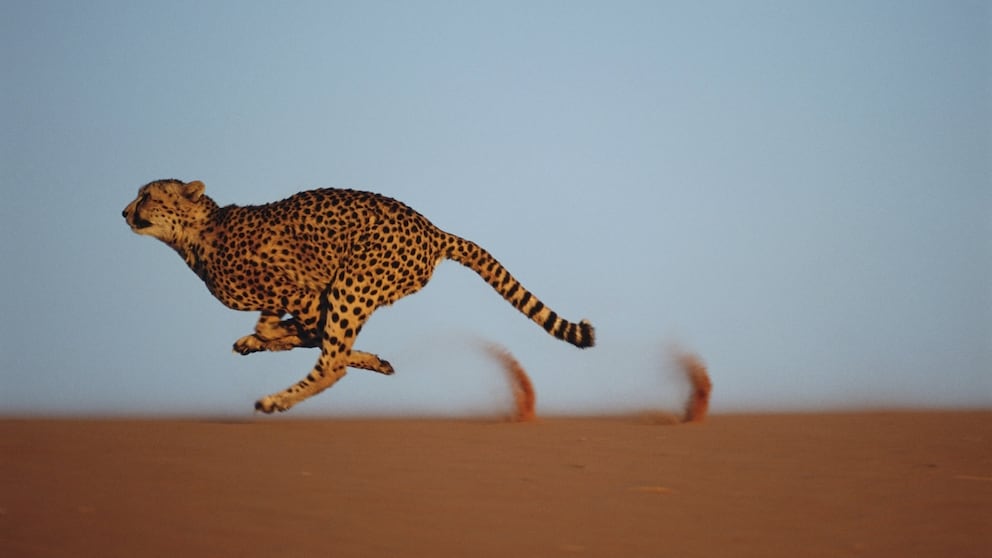
When it comes to pure muscle power and speed on the ground, there’s no getting past the cheetah. It is considered the fastest land animal on Earth, reaching impressive top speeds of up to 59 miles per hour. It is the only cat species that cannot fully retract its claws—an advantage that provides extra grip and traction during hunts.
Cheetahs have a shoulder height of about 31–37 inches and weigh an average of around 119 pounds. They appear very graceful and elegant. Their build allows them to reach enormous speeds in a very short time. Cheetahs can accelerate from 0 to 59 miles per hour in just three seconds.
They live in northern Iran, southern regions of Africa, isolated parts of East Africa, and even in small populations in the Sahara. There, they hunt gazelles, antelopes, young giraffes, and occasionally hares or ground-dwelling birds in grasslands and dry forests. When hunting, they observe their prey for hours to stealthily seize the right moment to attack.2
Also interesting: The 8 Slowest Animals in the World
Fastest Animal in Water
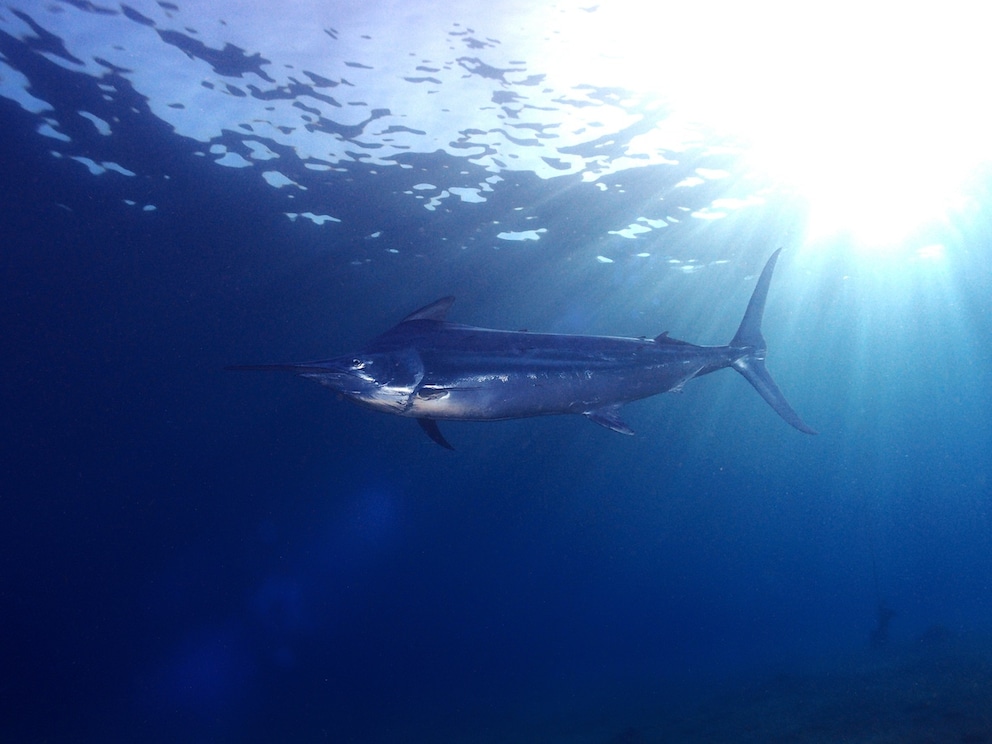
After the cheetah, which traverses the savanna at breathtaking speed, it’s worth looking into the oceans—because there are fast hunters here too. The black marlin is considered the fastest fish in the world, reaching speeds of up to 80 miles per hour when hunting in the open sea.
With its powerful, torpedo-shaped body and short, pointed snout, it cuts through the water with almost no resistance. Its stiff, sickle-shaped pectoral fins provide stability as it swiftly pursues smaller fish or squid in warm, tropical waters.
The black marlin is a true sprinter of the seas—built for short, explosive movements that make it the ultimate speed record holder among marine creatures. According to Statista, the second fastest animal in the sea is the sailfish (Istiophorus platypterus)—also known as the fanfish. Its namesake fin is typically taller than the highest point of its body.3, 4
Falcon Species in Germany and How to Identify Them
Did you know? Cheetahs chirp instead of roar
The Peregrine Falcon–the Trick King of the Skies
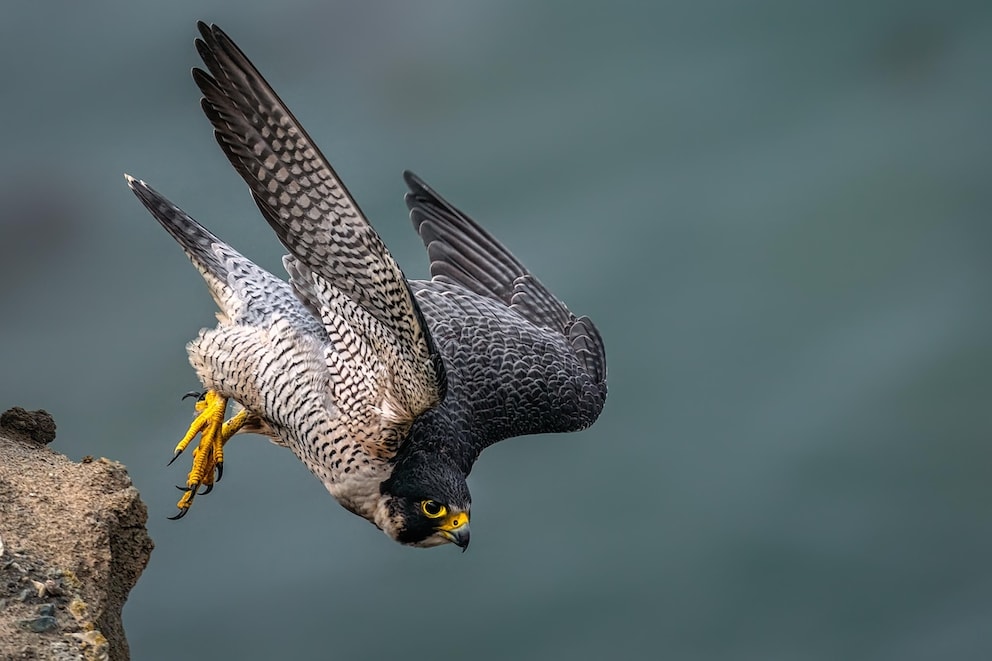
When it comes to speed in the air, the peregrine falcon clearly leads the way—or rather, the beak. With speeds of up to 200 miles per hour in a dive, it is the fastest animal in the world.
However, the peregrine falcon cheats a bit: Its top speed is not only due to muscle power but also to gravity. The falcon drops from great heights, diving at the perfect angle toward its prey and using gravity as a built-in turbo.
With its pointed wings and streamlined body, it is perfectly designed for hunting in the air. Its hunting method is spectacular: first a targeted strike, then the catch in flight.5
Why Animals Are So Fast
Speed is a matter of survival in the animal kingdom. Many animals are fast because they hunt prey or need to escape predators. The cheetah uses its speed to catch prey, the gazelle to escape, and the peregrine falcon to hunt successfully in a dive.
This capability is the result of evolutionary adaptations: aerodynamic body shapes, powerful muscles, and efficient energy use. Some species, like the peregrine falcon, also utilize physical forces such as gravity, while others—like the black marlin—glide through water with minimal friction due to their smooth, hydrodynamic skin.
Speed is thus no accident but the result of specialized body structures and lifestyles that have been continuously optimized over the course of evolution.
The Fastest Animals at a Glance:
- Peregrine Falcon: up to 200 miles per hour
- Brazilian Free-tailed Bat: 99 miles per hour
- Black Marlin: up to 80 miles per hour
- Cheetah: 56–75 miles per hour
- Sailfish/Fanfish: up to 75 miles per hour
- Pronghorn Antelope: up to 55 miles per hour
- Ostrich: up to 43 miles per hour