


September 25, 2026, 3:02 pm | Read time: 5 minutes
With their razor-sharp teeth, piranhas can tear larger chunks of flesh from their prey. In movies, the small predatory fish even attack humans, supposedly leaving only the skeleton behind. In reality, the animals native to South America are usually shy and peaceful. However, certain species can become dangerous, especially when hungry, stressed, or during breeding season. PETBOOK editor and biologist Saskia Schneider explains when piranhas actually attack humans and what lies behind their bloodthirsty reputation.
Overview
What Are Piranhas?
Piranhas refer to a group of bony fish from the family of serrasalmids (Serrasalmidae). Which genera and species are all considered piranhas is still highly debated among scientists. Depending on the source, 30 to 40 species are mentioned.
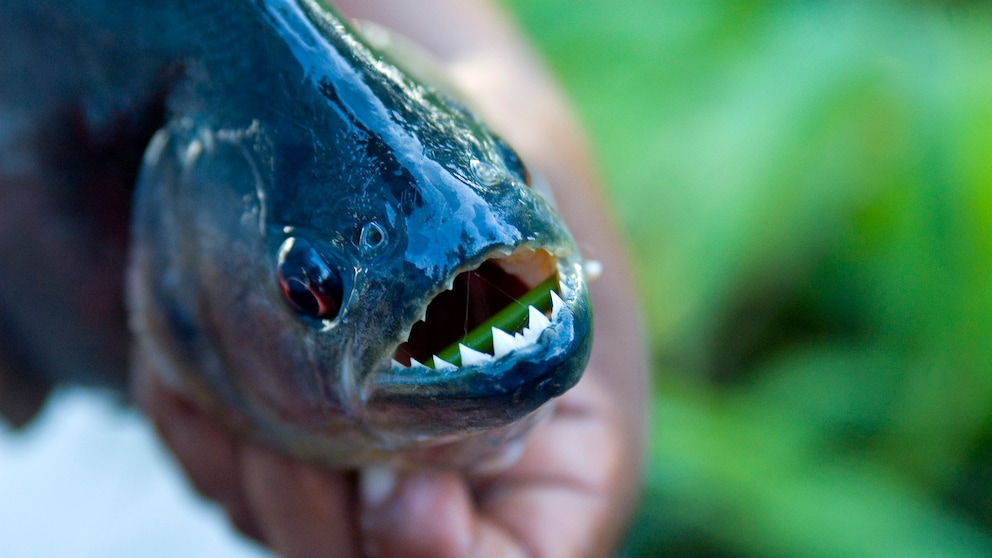
The most distinctive feature of piranhas is their teeth, which also give them their name, meaning “tooth-fish.” The teeth can grow up to four millimeters long. They form a continuous, saw-like cutting edge and are firmly anchored in the jawbone. This allows the fish to bite firmly and tear pieces from their prey.
Piranhas are schooling fish. It was once believed that they hunted in schools to overpower larger prey. Today, it is known that this is a defense mechanism. Like other fish, piranhas swim together in groups to be better protected from predators.
Also interesting: One of the world’s most dangerous sharks can also live in rivers
How Piranhas Hunt
The jaws of piranhas consist of razor-sharp teeth, which they use like a saw to cut into the flesh of their prey. They primarily hunt other fish and crustaceans. However, in densely populated waters, they may also attack larger vertebrates.
It is rare for the fish to swarm their victims. Piranhas are more solitary hunters. They lie in wait, initially fixating on their prey, then dart quickly toward it and bite into the flesh. Similar to sharks, the fish then begin to tear larger pieces from their victim through shaking movements, swim away quickly, and swallow their prey.
Not all piranhas feed on meat. French researchers discovered two species, Tometes lebaili and Tometes makue, that also feed vegetarian on plant parts.

These Sharks Live in the Mediterranean and How Dangerous They Are
The 13 Deadliest Animals in the World–Why Sharks Rank Last
Which Species Are Dangerous to Humans?
Piranhas are considered very dangerous and aggressive. In reality, however, only a few species can pose a serious threat to humans. Moreover, attacks are quite unlikely, as the fish are generally quite shy.
However, when stressed or when males are guarding their brood, piranhas can become quite aggressive, as Marco Hasselmann, head of the freshwater department at Aquarium Berlin, reveals in an online interview with the popular science magazine “Bild der Wissenschaft.” If they are very hungry, piranhas in a swarm can sometimes gnaw an animal down to the bones.
This applies only to a small portion of the approximately 30 to 40 piranha species. These include the following:
Red Piranha (Pygocentrus nattereri)
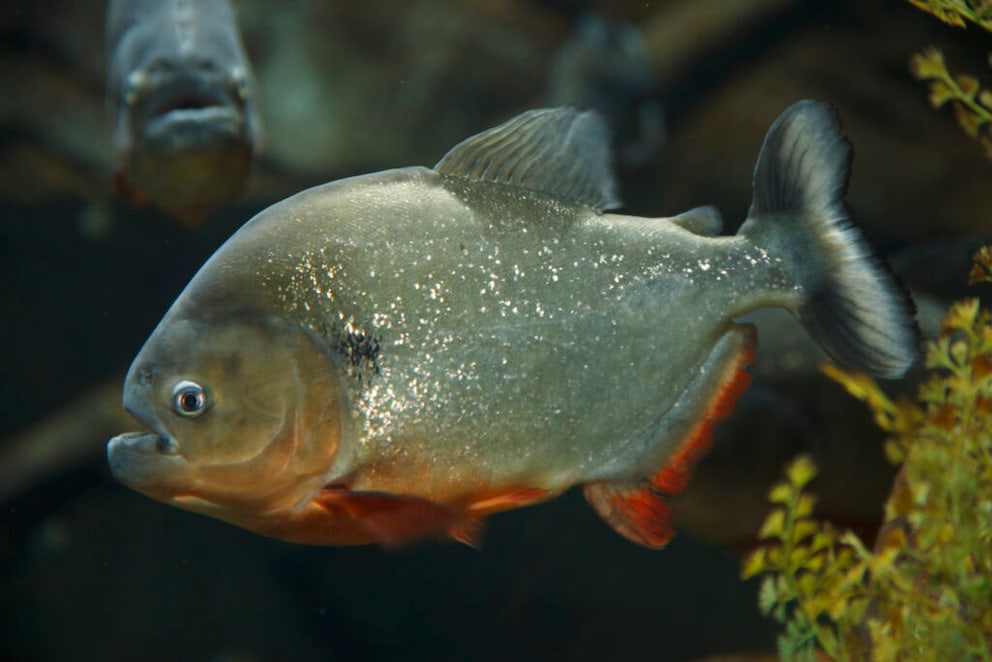
This species is one of the most popular among aquarists. So, this fish can’t be that dangerous, right? Not quite, as the Red Piranha, with its strong jaws, is quite capable of effortlessly tearing flesh from larger mammals–including humans. However, it specializes in dead prey and is a typical scavenger. Moreover, this piranha should be more afraid of us, as it is considered a popular food fish.
Piraya (Pygocentrus piraya)
The Piraya is considered the largest and most aggressive species. Thus, it can potentially be dangerous to humans. Typically, Pirayas mainly eat fish, invertebrates, and small mammals. However, they defend their territory quite aggressively against intruders, especially during breeding season, using their teeth.
Black Piranha (Serrasalmus rhombeus)
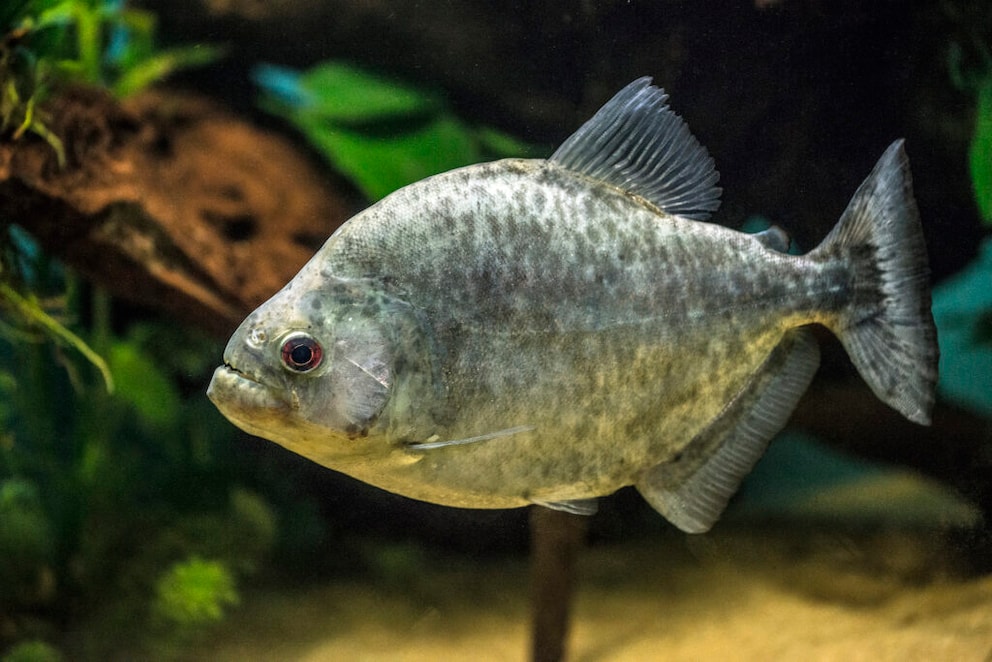
This species is also called the Red-Eye Piranha and is generally quite shy. However, it becomes dangerous during the dry season. Then, the waters where the fish live shrink more and more. More and more animals have less and less habitat and thus less prey. This causes the fish to experience hunger stress. If one enters such a body of water at this time, bites and injuries from the Black Piranha can occur, potentially resulting in the loss of a toe or finger.
Yellow Piranha (Serrasalmus maculatus)
This species is also a scavenger. Yellow Piranhas eat larger, dead mammals, including human corpses. However, there are also incidents where swimmers are bitten. This mainly occurs in dammed river sections, where many piranhas gather to defend their breeding areas.
Can Piranhas Eat Humans?
Contrary to frequent portrayals that piranhas would gnaw entire humans down to the skeleton within minutes, these fish only attack when stressed, defending their brood, or suffering extreme hunger. While it does happen that the fish gnaw entire humans, these are usually already deceased and involve scavenging species.
Nevertheless, piranha bites can be dangerous. The reason is that the fish leave relatively large wounds during their attack, which can quickly become infected and heal poorly.
The notion of bloodthirsty piranhas likely stems from the descriptions of early researchers and explorers who traveled to South America. They described, among other things, how slightly injured people in the water were attacked by the fish, as the blood supposedly drives them mad. A drop is said to lure thousands of them to the surface. While piranhas, like sharks, can detect minute amounts of blood in the water, these depictions are grossly exaggerated.
Rather, piranhas function as meat and scavenger eaters as health police in waters. This makes the fish an important part of the ecosystem, as decaying animals can contaminate the water in rivers and lakes and transmit diseases.
- Amazonas.de, “Most Dangerous Piranha Species” (accessed on 09/25/2026)
- Regenwald-schuetzen.org, “Piranhas – Infamous” (accessed on 09/25/2026)
- WELT.de, “Researchers Expose Piranhas as Cowards” (accessed on 09/25/2026)
- WWF, “Piranha in the Species Lexicon” (accessed on 09/25/2026)
- Geo.de, “Vegetarian Piranhas” (accessed on 09/25/2026)