

September 8, 2026, 10:39 am | Read time: 3 minutes
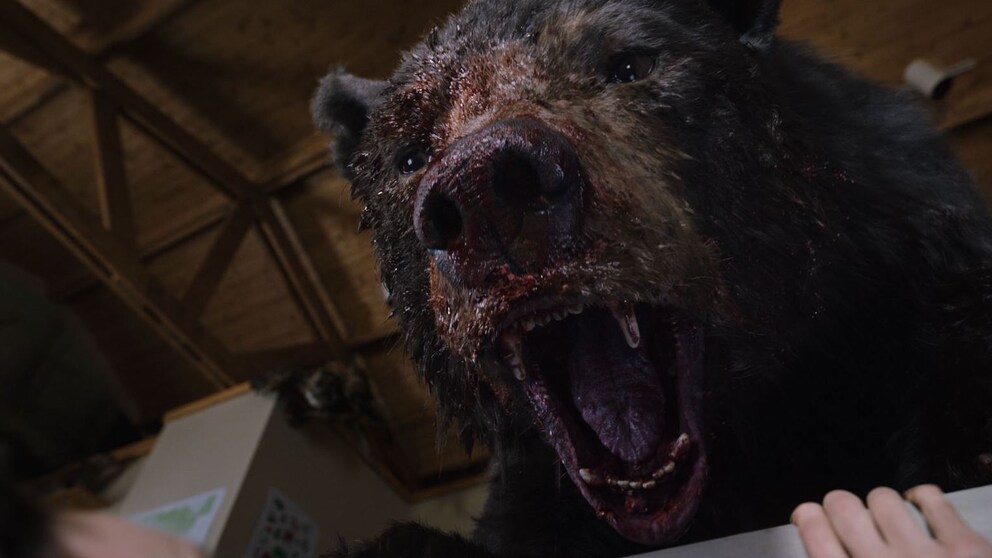
The plot of the 2023 horror comedy “Cocaine Bear” sounds as disturbing as it is unrealistic: A cocaine-fueled black bear terrorizes a national park in a drug-induced frenzy, leaving not only sheer panic but also a trail of destruction. However, what few people know is that the film is actually based on a true story. PETBOOK reveals the unsettling story behind it and where the authors’ imagination took over.
The Sad Story Behind “Cocaine Bear”
Who doesn’t know them: films and series with such an absurd plot that you can’t help but attribute it to the authors’ overactive imagination. The plot of the 2023 horror comedy “Cocaine Bear” fits right in: A drugged-up bear terrorizes tourists and rangers in a cocaine frenzy and hunts them down. But in fact, the film “Cocaine Bear” is based on a true story.
In September 1985, U.S. drug enforcement agent Andrew C. Thornton II switched sides and became a smuggler himself. However, this coup went terribly wrong. The small private plane, loaded with more than 400 kilos of cocaine and en route from Colombia to the U.S., crashed. It is believed that the Cessna 404 was overloaded. This is supported by the discovery of several kilos of cocaine that were jettisoned from the plane.
But even that couldn’t save the criminal ex-cop. His attempt to parachute out of the plane ended fatally, as the chute failed to open in time. The heavily armed man was found dead with several kilos of drugs and a large amount of cash in a driveway in Knoxville, Tennessee.

Did “Cocaine Bear” Really Die of a Drug Overdose?
However, this smuggling operation ended not only fatally for Thornton but also for a black bear that found several kilos of the jettisoned cocaine and gained sad notoriety under the names “Cocaine Bear” and “Pablo Escobear.” The animal had ingested some of the drugs and died of an overdose.
But from here, the story gets a bit murky. The hunter who found the black bear after the incident reportedly did not report his find. As a result, the authorities only learned of the tragic event several weeks later. When the bear’s body was discovered, all 40 cocaine bags lying around it were opened and empty. According to a coroner involved in the autopsy, “the bear’s stomach was literally packed to the brim with cocaine.”
Also of interest: “Cocaine Cat” – Big cat on drugs picked up by police

The 16 Most Famous Animals in World Literature
Deep-Sea Creature Washes Ashore
How Intense Were the Last Hours of “Cocaine Bear”?
Nevertheless, he estimated that the bear had only absorbed 3 to 4 grams of the substance into its bloodstream at the time of its death. Still, it could not be conclusively determined whether “Pablo Escobear” actually consumed 34 kilos of cocaine or if the drugs were taken elsewhere.
What can be said with some certainty is that the animal did not, like in the film “Cocaine Bear,” go on a drug-fueled rampage against hikers and rangers or climb trees as easily as a squirrel. These depictions are the product of the filmmakers’ imagination. The bear, which died of multiple organ failure, was stuffed and has since been on display at the KY for KY Fun Mall in Lexington, Kentucky.
Sources
- vodafone.de, “Cocaine Bear: The True Story Behind the Horror Film”, (Accessed on 04/11/2023)
- backpacker.com, “Cocaine Bear: The True Story Behind the Ultimate Party Animal”, (Accessed on 04/11/2023)
- tagesspiegel.de, “Cocaine Bear” in Cinema: Well-Powdered in the Wild, (Accessed on 04/11/2023)