

August 11, 2023, 4:16 pm | Read time: 11 minutes
Many authors of world literature have created fictional animals that remain memorable and are indispensable in popular culture. PETBOOK lists the most famous literary animals.
World literature is teeming with characters that have so shaped the zeitgeist that almost everyone knows them. Even if one has never read the work itself, names like Elizabeth Bennet, Faust, or Huckleberry Finn are familiar. But there are also very well-known thinking and feeling animals in literature that are so ubiquitous they are inseparable from pop culture. For this list, we have selected the 16 most famous fictional animals that became famous through literature before appearing in film and television.
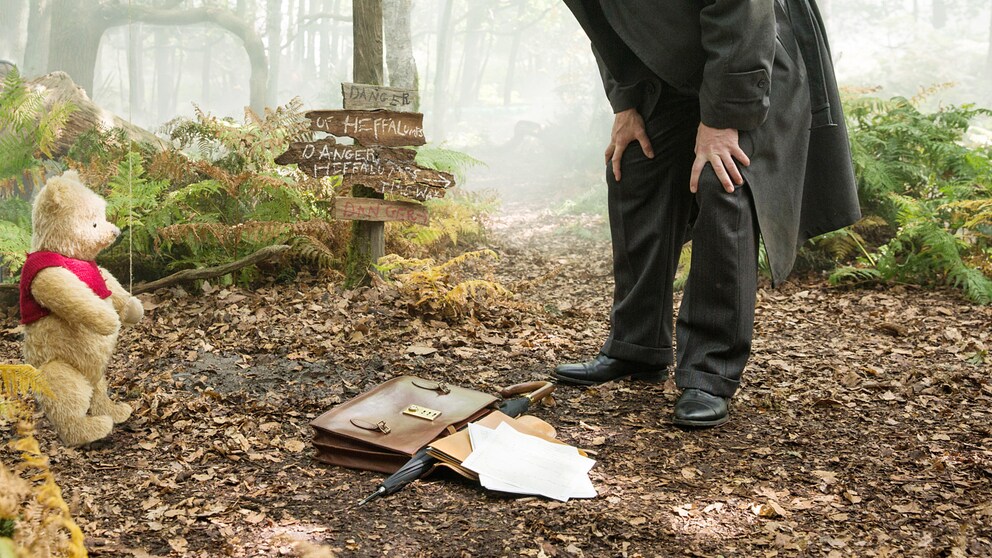
Winnie the Pooh, from A.A. Milne’s “Winnie-the-Pooh” to “The House at Pooh Corner” (1924 – 1928)
In the stories of Edward Bear, better known as Winnie the Pooh, we follow perhaps the most forgetful bear of all time, who also possesses very little intelligence. How could he? Pooh is stuffed with sawdust and therefore cannot be particularly smart. In a total of four volumes, Pooh and his friends have adventures in their home, the Hundred Acre Wood. But not only has Winnie the Pooh become immortal through countless adaptations and films. His best friend Piglet, the young pig constantly suffering from anxiety disorders, and his chronically depressed donkey friend Eeyore are almost as well-known as the titular bear. The stories originally told for A.A. Milne’s son Christopher Robin continue to delight children and adults nearly 100 years after their publication. The inclusivity of the friendship circle in the Hundred Acre Wood is also an allegory for acceptance and peaceful coexistence.
“The Whale or Moby Dick” by Herman Melville (1851)
The most famous white sperm whale in history also holds a firm place among the most famous animals in literature. Captain Ahab’s manic quest is impressively narrated by the young Ishmael, who wants to earn his living on a whaling ship. What makes Melville’s novel so significant, earning it a rightful place among the absolute classics, is the authenticity of 19th-century whaling. Melville himself visited the towns where whaling was practiced and vividly describes characters and horrific images that, in reality, led to whales being hunted nearly to extinction.
Hedwig from the “Harry Potter” books by J.K. Rowling (1997 – 2007)
In the “Harry Potter” books by Scottish author J.K. Rowling, many fantastical magical creatures leap through the narrative. But the most famous and beloved of all is Harry’s snowy owl, whom he names Hedwig. Through seven books, the owl accompanies him, sometimes giving him a wing slap or a peck when the teenager is mean to her. Yet Hedwig is also Harry’s first friend, accepting him as he is. However, when Harry comes of age, Hedwig dies in an attack by the feared Death Eaters. Rowling employed literary symbolism here, indicating that the now-adult Harry must manage without his constant companion, breaking the hearts of millions of readers.
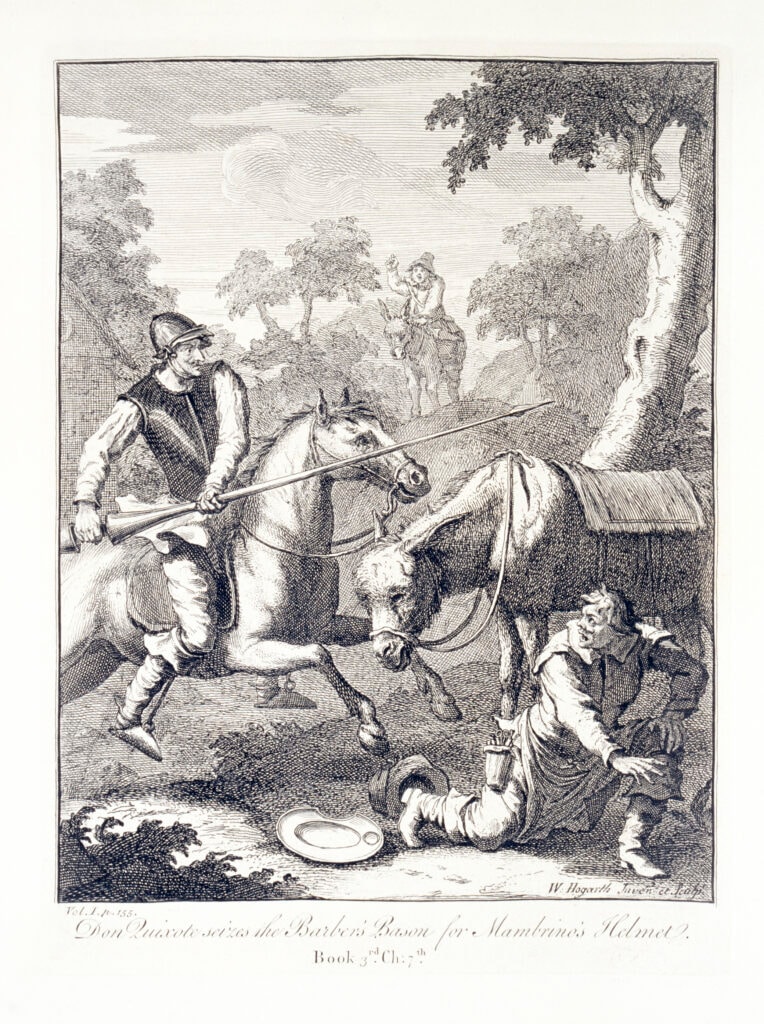
Rocinante from “Don Quixote de la Mancha” by Miguel de Cervantes (1605/1615)
The two-part novel about the hapless Don Quixote is undoubtedly one of the most famous novels in Spanish literature. It is associated with the Siglo de Oro (Golden Age) of the 16th and 17th centuries, when Spain began expanding its empire. Thus, the story of Don Quixote and his horse Rocinante was carried out into the world. Contrary to what the name might suggest, the horse is not a mare but a stallion. The name combines the words “rocín,” meaning ‘an aging workhorse,’ and “ante” (before or previously). The stallion Rocinante has seen better days and is considered a literary counterpart to the somewhat washed-up Don Quixote, who can no longer recognize reality. Some literary critics even believe that Rocinante existed only in his master’s imagination.
Gregor Samsa from “The Metamorphosis” by Franz Kafka (1915)
The cloth merchant and sole breadwinner Gregor Samsa wakes up one morning to find himself transformed into an unspecified, beetle-like creature. From then on, he can no longer help his family, who have taken him for granted, to pay off the father’s debts. Instead, he must be cared for and becomes increasingly despised by his closest confidants. In his characteristic, emotionless style, Franz Kafka describes in his most famous work how a person becomes a “vermin” and explores the theme of otherness.
Napoleon from “Animal Farm” by George Orwell (1945)
With his fable “Animal Farm,” English author George Orwell captured the spirit of the time just months after the end of World War II. In his parable about the rise of the Soviet Union, he used animal characters to explore the ideas of communism, which ultimately reflected socialism in its practiced form. In a society led by various pigs, naturally, a variety of animals appear. The most famous is Napoleon, who in this allegory represents the dictator Joseph Stalin. But the pigs Snowball (Leon Trotsky), Old Major (Karl Marx), and the horse Boxer, considered the voice of reason, are also well-known animals from the novel.

“The Very Hungry Caterpillar” by Eric Carle (1969)
“The Very Hungry Caterpillar” is arguably one of the most famous children’s books of all time. Almost every early reader encounters the ever-hungry caterpillar in kindergarten and elementary school. Not only does the children’s book introduce the first numbers, but it also provides an understanding that the voracious caterpillar will later transform into a beautiful butterfly. The story teaches that while first impressions are impactful, they are not always correct.
Baloo from “The Jungle Book” by Rudyard Kipling (1894)
“The Jungle Book” is Rudyard Kipling’s most famous novel, but the popularity of its characters is more attributable to the Disney film adaptation from 1967. The most successful animated film from the Hollywood studio made Baloo the bear a beloved companion for the foundling Mowgli. However, other animals such as the snake Kaa, the tiger Shere Khan, and the “black panther” Bagheera also appear. Although not without criticism for its colonial symbolism, the story of Mowgli’s coming of age is one of the most well-known representatives of world youth literature.
Also interesting: Black panthers don’t actually exist
Richard Parker from “Life of Pi” by Yann Martel (2001)
Since the successful film adaptation of the book in 2012, many are familiar with the shipwrecked, seasick tiger named Richard Parker. Together with the boy Piscine Molitor “Pi” Patel, the tiger survives 227 days in a lifeboat without identifying the human as food. However, questions soon arise about whether Richard Parker really existed or if Pi imagined him as a companion in his loneliness. The novel vividly depicts how partners of different species coexist but separate once their situation improves. Such occurrences are common in the animal kingdom. For this reason alone, Richard Parker is now among the most famous animals in literature.
Shadowfax from J.R.R. Tolkien’s “The Lord of the Rings” (1954-55)
The horse Shadowfax is the most famous animal from J.R.R. Tolkien’s epic fantasy novel “The Lord of the Rings.” It is the constant companion of the wizard Gandalf and rides faster than any other. It also comes from a special breed of horses and was initially a point of contention between Gandalf and King Théoden of the Rohirrim riders. However, Shadowfax independently chooses its rider and cannot be tamed by anyone. The wondrous creature, named Shadowfax in English, is likely inspired by the Norse deities Skinfaxi and Hrímfaxi. These mythical horse beings were believed to cause the sunrise and sunset.
Lassie from “Lassie Come-Home” by Eric Knight (1940)
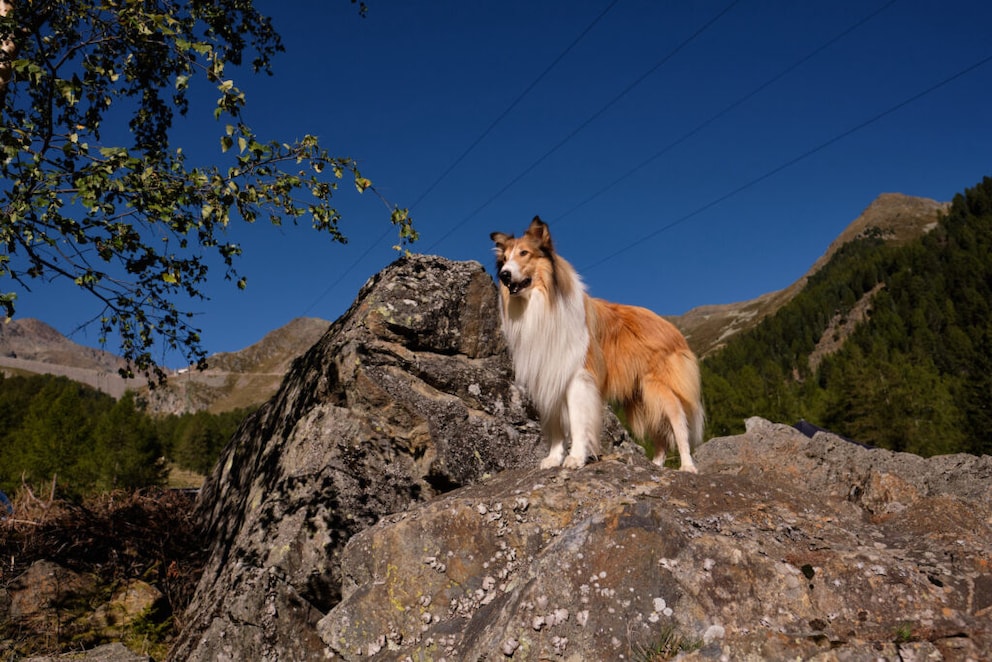
The collie Lassie is an indelible part of popular culture. Through films and series depicting a child’s love for their clever dog, this literary animal has become immortal. It all began with the book “Lassie Come-Home” by English author Eric Knight. Lassie is a prize-winning dog, but during the Great Depression, she is sold multiple times to earn money. Three times, the clever dog returns home, until she is sold to Scotland. A journey the dog, originally from a farm in Yorkshire, cannot make alone. Yet Lassie overcomes many obstacles to find her way home again. The book vividly portrays life with economic hardships for the rural population in 1930s England.
Also interesting: Lassie is back in theaters! 6 exciting facts about the cult collie
“Bambi: A Life in the Woods” by Felix Salten (1922)
A youth novel of a different kind is the story of the deer Bambi, who must quickly learn to grow up in a world without his mother. The original novel is far more brutal than the cute animated adaptations about the fawn. The influence of humans on the forest’s ecosystem is repeatedly highlighted, and the animals live in constant fear. But there are also conflicts among themselves until Bambi ultimately takes his place as “Prince of the Forest.” With its deeper message of protecting the forest and the animals’ habitat, Bambi earns its place among the most famous animals in literature.
The Cheshire Cat from “Alice in Wonderland” by Lewis Carroll (1865)
The Cheshire Cat from the novel “Alice in Wonderland” was not an invention of Lewis Carroll, but the author with a penchant for nonsense poetry made it one of the most famous animals in literature. First mentioned by name in 1788, a Cheshire Cat is an animal that can always show all its teeth when smiling. The origin of the creature likely lies in the rural English county of Cheshire, where animals could always lick milk and cream. However, the most famous of all Cheshire Cats became a guide for Alice in the chaos of Wonderland, helping her find her way when she got lost.
“Black Beauty” by Anna Sewell (1877)
The first autobiography of an animal rightfully holds its place among the great classics of literature. The reader follows Black Beauty from birth through various more or less pleasant stages. Initially, the story of Black Beauty was aimed more at adults and raised awareness for the proper, animal-friendly treatment of horses. Black Beauty is also a keen observer who, although he poorly understands the world of humans, describes a unique time portrait. Despite hard work and suffering, the animal never loses its sense of goodness in the world and meets others with respect and understanding.
The Sad and True Story Behind Winnie the Pooh

Polar Bears Take Over Former Soviet Research Station
Paddington Bear (1958 – 2017)
No list of the most famous animals in literature would be complete without Paddington Bear. In 15 books, the little bear from Peru has adventures and munches countless marmalade sandwiches in a society that has nothing to do with his rainforest home. The bear in the red hat and blue raincoat makes many humorous blunders, but the character is so beloved in Britain that he has his own statue and has even made royal history. The late monarch, Queen Elizabeth II, was a declared fan of Paddington, allowing the bear a visit to Buckingham Palace in literature and for the Queen’s 70th jubilee. Upon her death, countless people left marmalade sandwiches and Paddington figures.
Also interesting: Fergie on the Queen’s corgis: “They have stopped mourning”
Ghost from “A Song of Ice and Fire” by George R.R. Martin (1996 to 2011?)
The wolf Ghost is probably the most famous animal from the fantasy series by American author George R.R. Martin, which served as the basis for the globally successful TV series “Game of Thrones.” At the beginning of the story, all the children of the Stark family from Winterfell find a wolf pup, but only a few survive the bloody twists of the plot. Ghost is the companion of Jon Snow, initially considered the illegitimate child of Ned Stark. The two have such a strong bond that Ghost always comes to Jon when he needs him most. He is also described as very quiet and wise. He bears the name not least because of his white fur. So far, Ghost has appeared in all the books of the “A Song of Ice and Fire” saga, whose continuation fans have been waiting for over 10 years.
This list of the most famous animals in literature was curated by PETBOOK editor Louisa Stoeffler, who read all the mentioned works in their original language before or during her studies in English/American Studies, Spanish Philology, and Cultural Studies. Is there a famous literary animal missing from our list? Write to us at redaktion@petbook.de.