

November 13, 2025, 2:04 pm | Read time: 6 minutes
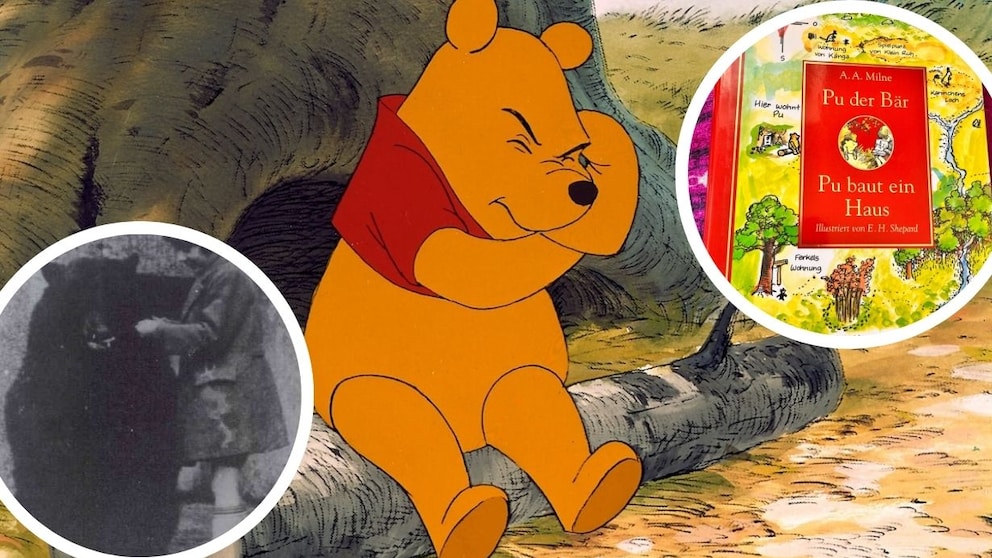
He’s round, cozy, loves honey above all else–and is one of the most famous children’s book characters in the world: Winnie the Pooh. But what few people know is that the yellow bear with the red shirt was actually inspired by a real animal. And the true story of this bear is touching–but also sad, as PETBOOK editor Louisa Stoeffler finds.
I love Winnie the Pooh–this naive, friendly, always somewhat sluggish honey fan who teaches us that you don’t have to be perfect to be loved. As a child, the Disney adaptations of the bear “with very little brain” were always what I watched when I was sick. And I must have read my Winnie the Pooh book 20 times and believe he rightly deserves to be one of the most significant animals in world literature. But what many don’t know: Behind the famous character by A.A. Milne, now nearly 100 years old, is a real bear–and her story is anything but honey-sweet.
How It All Began: A Soldier, a Bear Cub–and 20 Dollars
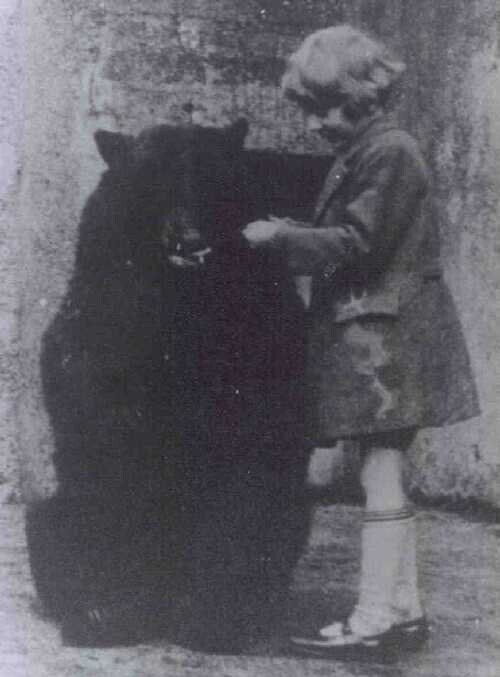
In 1914, Canadian veterinarian Harry Colebourn stands at a train station in White River, Ontario. On the platform, he sees a man with a small bear cub on a leash. It’s a female, motherless, frightened. Colebourn buys the young animal for 20 dollars–a fortune at the time–and names her “Winnipeg Bear,” after his hometown. In short: Winnie.
Harry is on his way to serve in World War I. And because he’s a veterinarian–and has a soft heart–he simply takes the little bear with him. Back then, he didn’t even need papers like an export permit or proof that Winnie was vaccinated against rabies to transport a wild animal. On the ship to England, it soon becomes clear: Winnie is the mascot of his unit, the 2nd Canadian Infantry Brigade. The soldiers love her, play with her, share their food. Winnie becomes tame, trusting–almost like a dog.
Christopher Robin and the Bear in the Zoo
But when Colebourn is sent to the front in France, Winnie naturally can’t go with him. With a heavy heart, he brings her to the London Zoo–initially “just temporarily.” But it quickly becomes clear: Winnie is also a crowd favorite here. Children are allowed to feed her, even ride on her. She prefers licking condensed milk and syrup–honey like her famous literary counterpart was unknown to her at the time.
One of the many young visitors to the zoo is Christopher Robin Milne, son of writer A. A. Milne. The boy is fascinated by Winnie–so much so that he names his own stuffed animal after her. He adds the name of a swan he had named “Pooh” to his teddy, as Milne writes in the book’s foreword.
Accordingly, there’s confusion in the first chapter of “Winnie-the-Pooh.” The bewildered father asks Christopher Robin: “But I thought it was a boy?” and then the bear couldn’t be named Winnie. The boy replies: “He’s called Winnie-the-Pooh. Don’t you know what ‘the’ means?” And with that, the topic of the unusual name is quickly settled. “Winnie-the-Pooh” was born.
Winnie the Pooh Becomes Famous–the Real Winnie Long Forgotten
A. A. Milne observed the affection between the real child and the bear–and began to write. In 1926, the first book about the “silly old bear,” Piglet, Eeyore, Kanga, Roo–all these characters are based on Christopher Robin’s real stuffed animals. Only Tigger comes later.
The real Winnie is visited by Harry Colebourn whenever he gets leave from the front. He sees how popular she is and decides: She should stay. A sacrifice out of love. Winnie lives in the zoo until her death in 1934. She is never free.
How do we know all this? The great-granddaughter of Winnie’s “keeper,” Lindsay Mattick, revived her great-grandfather Harry Colebourn’s story in a prize-winning children’s book in 2015: “Finding Winnie–The True Story of the World’s Most Famous Bear.”
The book tells–framed as a bedtime story Mattick reads to her son Cole–the true story of the little bear. As a sequel to “Finding Winnie,” she published the novel “Winnie’s Great War” in 2018–a imaginative retelling of the true story, this time from the bear’s perspective.
The 16 Most Famous Animals in World Literature
These Summer Sensation Animals Kept Germany on Its Toes
The Real Winnie–Loved and Imprisoned
While the fictional Pooh roams freely in the woods of the “Hundred Acre Wood,” the real Winnie lives her entire life in captivity. She is tame, friendly, patient with children–and becomes a living fairy tale figure for many.
But she spent her life in a concrete and barred enclosure. At the time, this was considered normal–animals in zoos were meant to entertain children and be “tamed.” Today we know: For wild animals, this means primarily stress, isolation, and loss of their natural behavior.
What happened to Winnie would clearly be considered animal cruelty today, and she herself would be seen as behaviorally disturbed. And efforts would be made to ensure she could live as naturally as possible. She was so human-dependent that it probably wouldn’t have been possible to release her into the wild. But at least she could have lived as species-appropriate as possible in a bear sanctuary, such as the one operated by the animal welfare organization Four Paws, Bear Forest Müritz, or another suitable facility.
All Bears Deserve a “Hundred Acre Wood”
Today it’s clear: Bears need forests, not concrete walls, not condensed milk, and not cuddles with small children. They need to dig, climb, swim, and hibernate–instincts that are hardly fulfilled in conventional zoos.
The story of Winnie the Pooh teaches us friendship, kindness, and gentleness. The real Winnie reminds us that we should live these values especially toward real animals. So that every bear can one day find their own Hundred Acre Wood. Those who love bears should invest in serious conservation projects rather than shooting a “selfie with a bear” through bars.