

June 18, 2026, 1:35 pm | Read time: 3 minutes
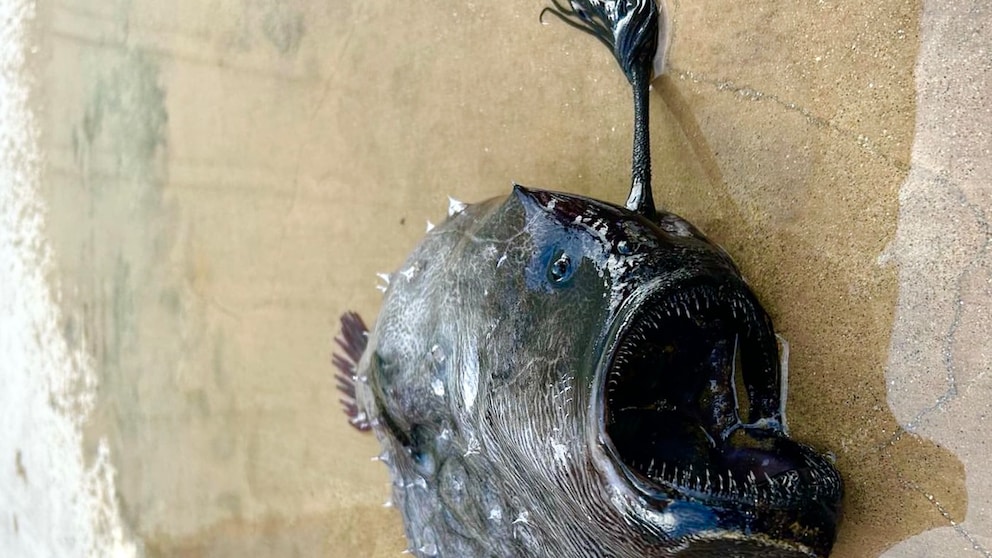
In October 2023, a jet-black fish with a huge mouth and sharp teeth was found on a beach in California. What seemed like a scene from a horror movie was a rare find from the deep sea. These creatures usually live several hundred meters deep, but this specimen was washed up to the coast. Experts then took a closer look at the unusual beach find.
Deep-Sea Creature Has No German Name
What was clear from the start–on Friday, October 13, 2023, of all days–was that the animal belongs to the anglerfish. The fish was washed ashore at Crystal Cove State Park near Laguna Beach in the U.S. state of California. Strangely, this whipnose anglerfish is not the first specimen spotted there.
These fish, which normally live at a sea depth between 600 and 1,000 meters, were first described there in 2021. The specific species Himantolophus sagamius, to which the creature belongs, does not have its own name in German. Translated from English, it would be called “Pacific Football Fish” because its body shape somewhat resembles an American football.
Also interesting: Fisherman pulls eerie creature from the deep–is it an unknown new shark species?

Football Fish Is Creepy in Many Ways
But it’s not just the appearance of this creature that’s terrifying; its hunting methods and mating also sound like something out of a horror film. After the first find in 2021, experts from the national park reported on Facebook about the species. Scientists recognized from the stalk rising between their eyes that both were females. Only they use the glowing tip to produce bioluminescence–meaning they essentially glow in the dark–to lure prey into a trap. The creatures then devour anything that doesn’t exceed their own body size with their huge mouths and sharp, translucent teeth.
However, this also includes willing mates of their own species. The females are 24 times larger than the males, which have only one purpose in this species. They attach themselves to the females with their teeth as “reproductive parasites” and are consumed by them until only their testes remain for reproduction.
Why the deep-sea fish have repeatedly washed up on this beach remains unclear. The California Department of Fish and Wildlife examined the specimen found in 2023 and then handed it over to the Natural History Museum of Los Angeles. There, the rare find is preserved and available for further scientific study.