


January 6, 2026, 11:51 am | Read time: 6 minutes
In a groundbreaking move with international significance, insects—specifically stingless bees from the Peruvian Amazon—have been granted legally enshrined rights for the first time. But what lies behind this historic decision, and what does it mean for the protection of biodiversity worldwide?
Amazon Bees Granted Legal Right to Exist
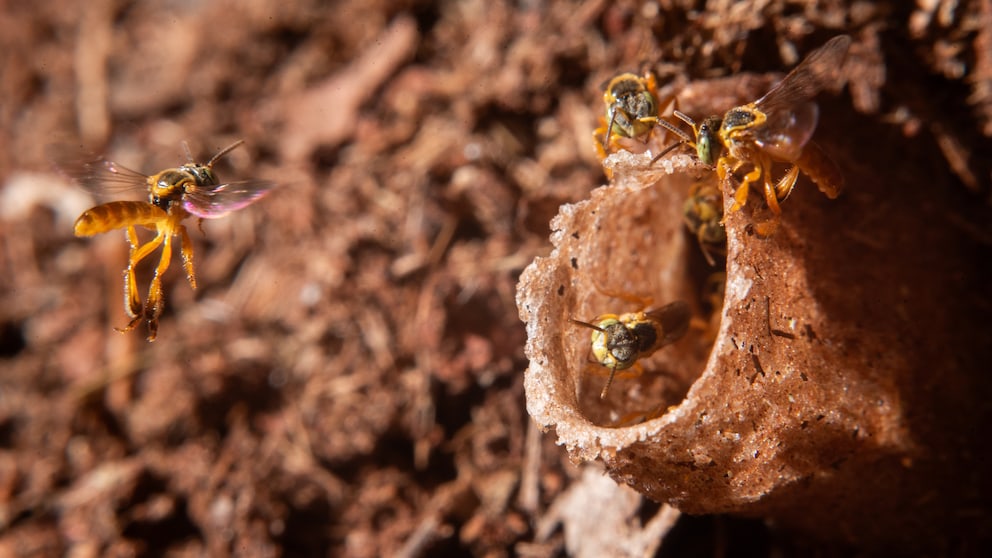
In two regions of the Peruvian Amazon, stingless bees—native species that lack stingers—have been legally recognized as protectable living beings. This was reported by the British daily “The Guardian.” They have been officially granted the right to exist, thrive, and live in a healthy environment. This is unprecedented worldwide.1
“This regulation marks a turning point in our relationship with nature: It makes stingless bees visible, recognizes them as legal subjects, and confirms their essential role in maintaining ecosystems,” “The Guardian” quotes Constanza Prieto, Latin America director of the Earth Law Center.
What Are Stingless Bees?
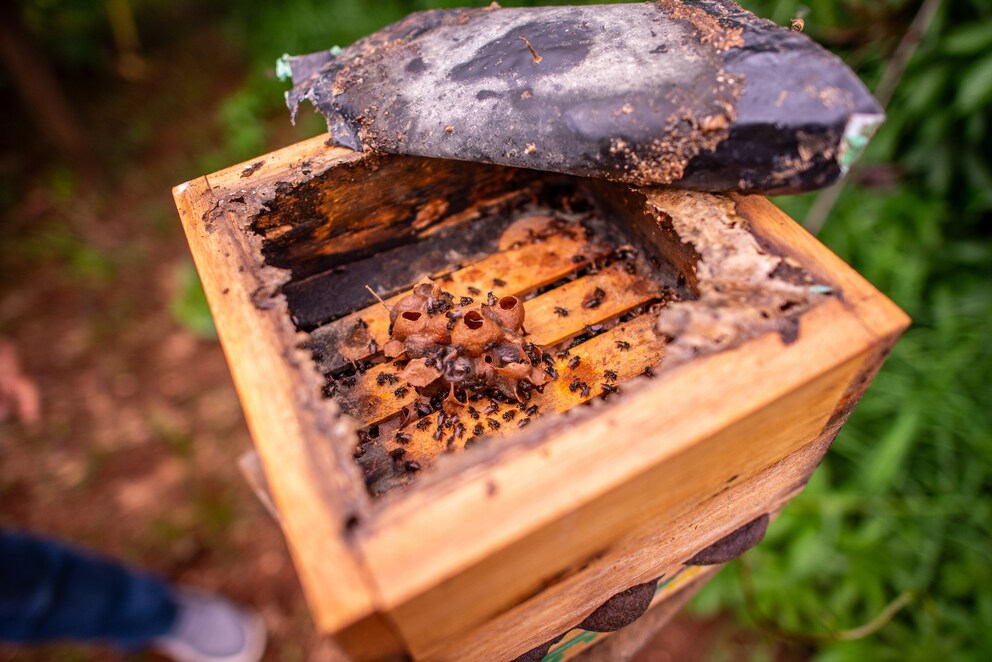
Stingless bees, scientifically known as Meliponini, belong to the “true bees” (Apidae) like our honeybee. They share several traits: forming social colonies, building wax nests, collecting pollen to feed their brood, and storing honey. However, their nests are much smaller than typical honeybee colonies, usually consisting of a few hundred individuals.
As the name suggests, these bees do not have stingers, but that doesn’t mean they are defenseless. They can bite with their strong jaws or release caustic and foul-smelling secretions.
More than 500 species are known worldwide. Many live in Australia, but stingless bees are also found in Central and South America. There, they have been cultivated by indigenous communities since pre-Columbian times and are considered key pollinators of rainforest flora. However, their survival is severely threatened by climate change, deforestation, pesticides, and displacement by European honeybees.
Why Stingless Bees Are So Important
The new legal status is the result of years of work by Rosa Vásquez Espinoza, founder of Amazon Research International. The chemist-botanist began studying stingless bees in 2020 when she examined honey samples from indigenous communities during the COVID-19 pandemic.
“I saw hundreds of medicinal molecules, molecules known to have some kind of biological medicinal effect,” “The Guardian” quotes Espinoza. “And the diversity was truly amazing—these molecules are known for their anti-inflammatory, antiviral, antibacterial, antioxidant, or even anticancer properties.”2
Bees Also Have Spiritual Significance
In her book “The Spirit of the Rainforest,” Espinoza describes how she documented traditional methods of beekeeping and honey harvesting with indigenous peoples. The stingless bees pollinate more than 80 percent of the plants there, including economically important ones like cocoa, coffee, and avocados.
For many indigenous groups, including the Asháninka and Kukama-Kukamiria, the bees also hold spiritual significance. “Within the stingless bee lives the indigenous traditional knowledge passed down since the time of our grandparents,” explained Apu César Ramos, president of EcoAshaninka. “The stingless bee has existed since ancient times and reflects our coexistence with the rainforest.”
Stingless Bees Are Becoming Rarer
From the start of her field research, Espinoza repeatedly heard the same observation: The bees are becoming rarer. “We actively spoke with various community members, and the first thing they said—and still say—was: ‘I don’t see my bees anymore. It used to take me 30 minutes to find them, now it takes hours.'”
It was also concerning that Espinoza detected pesticide residues in the honey, even though the bee colonies were kept far from industrial agriculture. But because stingless bees were long ignored scientifically, she initially lacked the resources for comprehensive research. “It was almost a vicious cycle. I can’t give you funding because you’re not on the list, but you can’t get on the list because you don’t have data. And you don’t have the resources to collect the data.”
It wasn’t until 2023 that the team could start a large-scale mapping project. It demonstrated the link between deforestation and the decline in bee populations—and served as the basis for a new 2024 law recognizing stingless bees as “native bee species of Peru.” This classification is crucial, as Peruvian law mandates the protection of native species.
Threat from “Killer Bees”
In addition to environmental toxins and habitat loss, there is another threat: the so-called Africanized honeybee. These were bred in Brazil in the 1950s to increase honey production in tropical areas. They are a cross between two subspecies of the honeybee Apis mellifera: the European and the African. These hybrids are more aggressive than our native honeybees—and also more aggressive than stingless bees. They are now beginning to displace the latter.
In the highland region of Junín, the research team met Asháninka elder Elizabeth, who reported a drastic displacement. Her bee colonies had been attacked by the Africanized bees, which assaulted her every time she visited her hives.
“I was really scared,” Espinoza recalled. “Because I had heard about it, but not to this extent. She had fear in her eyes, looked at me, and kept asking: ‘How do I get rid of them? I hate them. I want them to disappear.'”
Why Can’t I Buy Bumblebee Honey?

Beekeeper Falls Victim to Bee Attack
Legal Status with Far-Reaching Consequences
Elizabeth’s home community of Satipo was the first in the world to pass a regulation granting legal rights to stingless bees in October 2025. Shortly after, the community of Nauta in the Loreto region followed. The bees now enjoy rights to existence, healthy habitats, ecological stability, and even legal representation in case of threat or harm.
According to Prieto, the new law obliges authorities to implement targeted protection measures: “including reforestation and habitat restoration, strict regulation of pesticides and herbicides, adaptation to climate change, promotion of scientific research, and application of the precautionary principle in all decisions that could affect their existence.”
Law Considered a “Significant Advancement”
A global appeal by the organization Avaaz to extend the law to all of Peru has already been signed by more than 386,000 people. There is also growing interest from countries such as Bolivia, the Netherlands, and the United States in developing similar regulations to protect wild bees.
“The stingless bee gives us food and medicine, and it must be made known so that more people protect it,” said Ramos. “That’s why this law, which protects the bees and their rights, represents a significant advancement for us, as it gives value to the lived experience of our indigenous peoples and the rainforest.”