

May 7, 2026, 6:51 am | Read time: 4 minutes
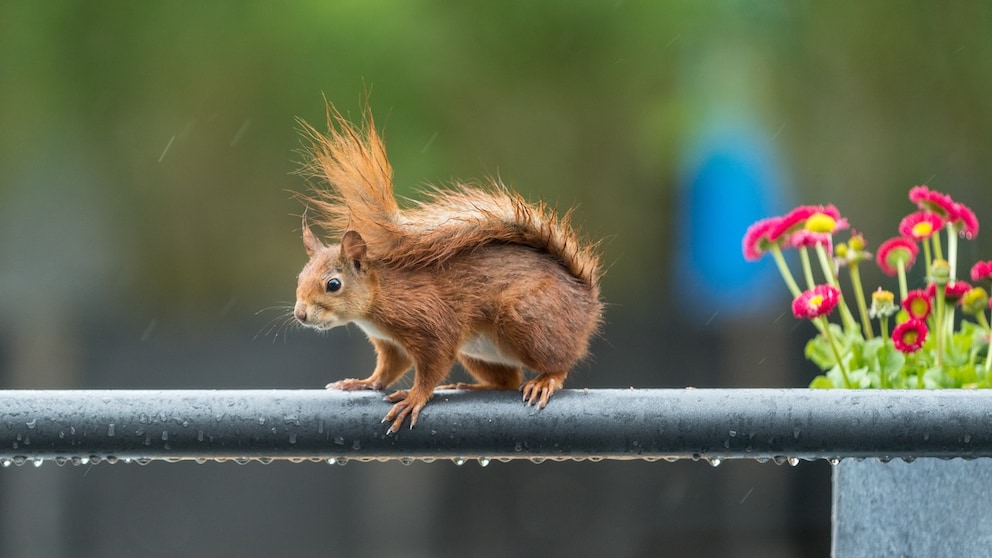
Squirrels are known in the animal kingdom not only for their climbing skills but also for their extremely bushy tails. PETBOOK reveals why the tail is so fluffy.
They climb trees seemingly effortlessly, leap daringly through the treetops—and look really cute doing it: squirrels. Besides their quick movements and bright red fur, one feature stands out immediately: the extremely bushy tail. It appears almost too voluminous in relation to their small bodies. A coincidence? Hardly. Like everything in the animal kingdom, the appearance of a squirrel’s tail has a well-thought-out purpose. What that is and why the little climbers’ tails are so conspicuously fluffy is revealed by PETBOOK in this article.
Squirrels as True All-Rounders in the Animal Kingdom
What at first glance seems like just a furry eye-catcher is actually a true multitasker with many functions. “On the one hand, the tail helps squirrels maintain balance and direction when climbing and jumping,” says Inga Olfen from the German Wildlife Foundation, “it also serves to communicate with fellow squirrels—for example, in territory defense or during courtship when several males vie for a female; during their so-called display run, they twitch their tails. In danger, the tail hairs stand up, and the animals flick their puffed-up tails back and forth.”
The bushy tail helps squirrels balance on narrow branches, supports them in jumping, and even serves as a kind of rudder in the air. It functions similarly to the tail rudder of an airplane—only much fluffier. Additionally, the tail protects the animal during falls: While it doesn’t weigh much, its surface can increase air resistance and thus reduce fall speed–a kind of built-in mini-parachute.
Source of Warmth, Visual Shield, and Warning System
Especially in the cold season, the tail has another function: It warms the squirrel. When it becomes uncomfortable and cold in winter, squirrels curl up and wrap their tails around their bodies like a blanket. This protects sensitive body parts like the nose, ears, or paws from the cold.
“When squirrels curl up in their nests, they cover themselves with their tails at low temperatures. If it’s very warm, the animals can release heat over the surface of the tail to protect themselves from overheating,” says Inga Olfen.
The tail not only protects in winter but also in rainy weather, acting as an improvised umbrella. Additionally, the tail plays a role in the animals’ body language: If it is suddenly raised, twitched, or thumped, it can be a warning signal to fellow squirrels or a threat display to potential predators.
The Squirrel Is the Garden Animal of the Year 2026

Does My Dog Need a Winter Coat?
Differences Between Species
Not all squirrels look the same—and even native squirrels are not always red. Just as there are differences in size and color, the tail also varies from species to species. One species that is almost “famous” for its particularly bushy tail is the European squirrel (Sciurus vulgaris).
In warmer regions or in subspecies like the American gray squirrel (Sciurus carolinensis), the tail is often somewhat less voluminous but no less important. Here, too, the tail serves numerous functions. The bushy tail varies in density depending on the season and region.
“There are differences in color, length, or density of the fur compared to other species, such as American species. However, the described functions should not be affected by this,” says Inga Olfen.
Perfectly Adapted by Evolution
The bushy tail of the squirrel has proven itself over generations—as a balancing aid, means of communication, protective blanket, and source of warmth. For squirrels, the tail is simply indispensable. And by the way: It not only makes the little rodents particularly cute but also the most elegant acrobats of our forests.
The bushy tail of the squirrel is far more than just a cute accessory. It is a multifunctional tool that helps the animals balance, jump, steer in the air, protect against falls, regulate temperature, camouflage, and communicate. Its development is an impressive testament to nature’s adaptability, making squirrels true survival artists in their habitat.