

April 27, 2026, 8:57 am | Read time: 4 minutes
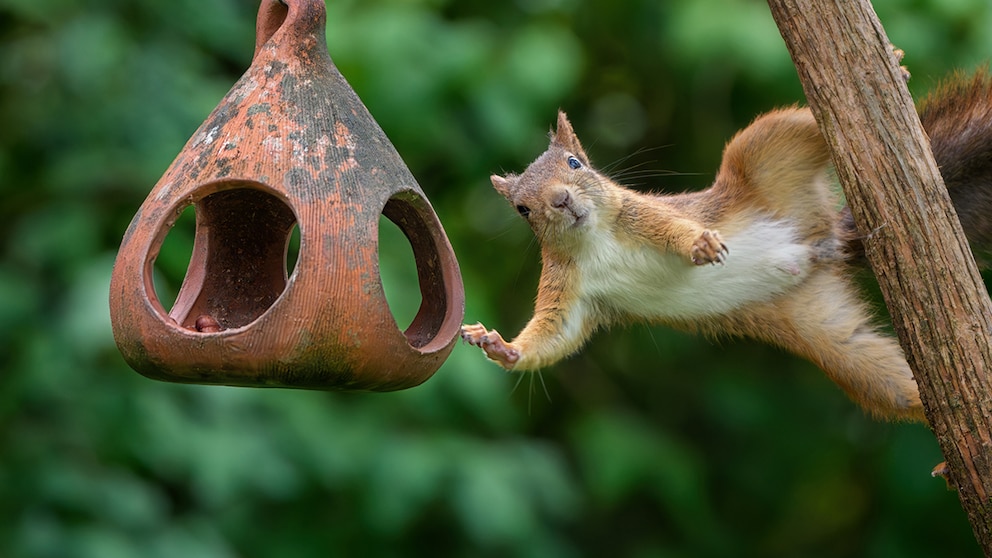
Bushy tail, quick jumps, and always a bit in a hurry. Few wild animals are as popular as the squirrel. Now, the little climbing artist has even been named “Garden Animal of the Year 2026,” likely earning many popularity points. But the squirrel has more than meets the eye behind those tufted ears.
The Squirrel Is Garden Animal of the Year 2026
The Heinz Sielmann Foundation has named the squirrel “Garden Animal of the Year 2026.” For several years, the foundation has aimed to highlight the importance of natural gardens for biodiversity with this initiative. The little red climber thus replaces the garden dormouse, which won the title in 2025.
In this year’s vote, the squirrel emerged as the clear winner. Out of a total of 13,055 votes, the popular garden guest received an impressive 4,435. This marks the second time since 2011 that it has been awarded Garden Animal of the Year. Following the squirrel were the blue tit with 20.47 percent and the noctule bat with 15.56 percent.
Is the Squirrel the Perfect Garden Favorite?
In forests, parks, cemeteries, and residential areas—wherever there are trees, squirrels are often nearby. They have become welcome guests in many gardens. With their button eyes, tufted ears, playful nature, and bushy tails, people enjoy watching them jump from branch to branch.1
The squirrel’s tail is much more than just cute to look at. It helps the small rodents run headfirst down tree trunks, make meter-wide jumps between branches, and execute quick direction changes. Besides serving as a balance aid and steering organ, it is even repurposed as a warming blanket in winter.
A Diligent Collector and Secret Gardener
Squirrels are primarily known for their food storage habits. In the fall, they hide nuts and seeds in the ground to retrieve them in winter. However, some nuts remain hidden in the soil. Bad for the squirrels, but good for nature. What they forget often grows into new plants later, contributing to the spread of trees and shrubs.
In the garden, they don’t cause much damage. While they dig, hide their food, and often help themselves to bird feeders, the impact is usually harmless. Their presence in the home garden is often a good sign, indicating that the garden offers enough structure, food, and retreat spaces.
A Diet That Packs a Punch
Contrary to what some might think, squirrels are not strictly herbivores. In addition to nuts, seeds, and fruits, insects are also on their menu. Bird eggs or young birds can also fall prey to the rodent.2
In fact, squirrels occasionally raid nests. This usually happens when food is scarce or energy needs are particularly high. For the bird world, this behavior is generally not a major problem. Many species compensate for these losses with multiple broods.
Do You Know How Old Squirrels Can Get?
Squirrels Use Their Tails as Umbrellas
Harmless, but Not a Cuddly Pet
Even though they can pose a threat to birds, they are harmless to humans. Squirrels often appear tame, especially where they are regularly fed. However, they remain wild animals. Those who try to touch them risk painful scratches or bites.
Moreover, rumors persist that the rodents transmit rabies. This is not true. Germany has been considered rabies-free for years. Nonetheless, this is not a reason to lure them carelessly. Too much proximity harms the animals. Regularly attracting or feeding them diminishes their natural shyness and exposes them to new dangers, such as traffic or pets.
Little Daredevils with Remarkable Abilities
Additionally, squirrels are remarkably resilient. Theoretically, they could even survive a fall from a great height. Because they are so light and spread their bodies while falling, they are significantly slowed down. Their impact speed remains low.
Climbing artists, food gatherers, garden helpers, and occasional predators—with their robust and adaptable nature, squirrels show why they rightfully hold the title “Garden Animal of the Year 2026.”