

June 9, 2026, 8:40 am | Read time: 4 minutes
The Nosferatu spider, originally native to the Mediterranean region, is spreading further in Germany. For 20 years now, specimens have been found in the south of the country, but it has now also been spotted in northern Germany. But how venomous is this spider really? Do I need to protect myself and my pets from bites? PETBOOK consulted experts.
What’s the Deal with the Spider?
The Nosferatu spider (Zoropsis spinimana)—also known as the curled hunting spider—is spreading further. It was first detected in southern Germany in 2005. There have now also been sightings in northern states, such as Berlin or Lower Saxony.
The species has spread along the Rhine, its tributaries, and in recent years also via other transport routes in Germany, said Hubert Höfer, deputy chairman of the Arachnological Society, which deals with arachnids in Central Europe, to the dpa.1
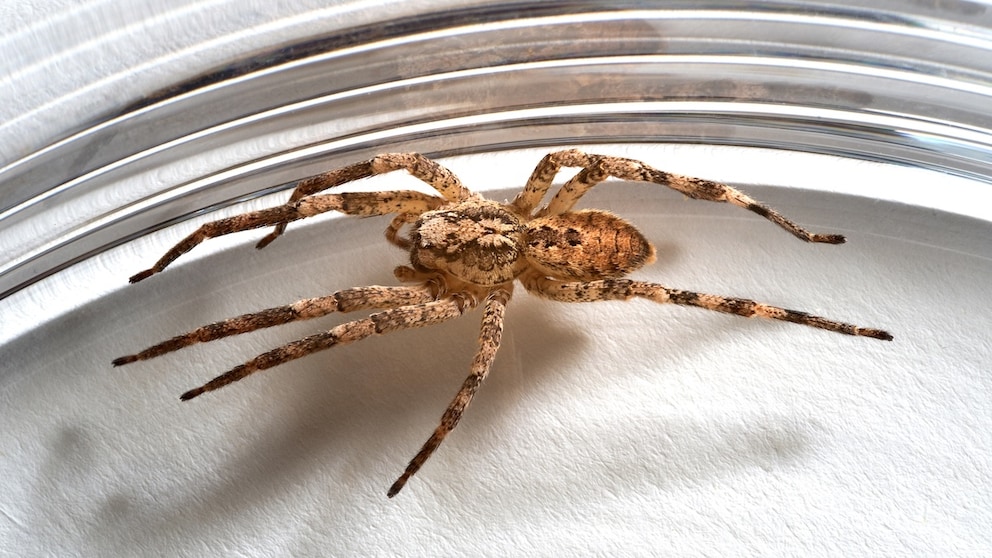
The spider species, not originally native to Germany, does not yet have an official name besides its Latin designation. It was named after the 1922 silent film “Nosferatu,” which, with a bit of imagination, can be seen in the spider’s back markings. The silent film and the modern version released in 2024 are loosely based on Bram Stoker’s vampire novel “Dracula.” Thus, the creepiness of the Nosferatu spider is already pre-programmed.
How to Recognize the Nosferatu Spider
But is the spider with the creep factor really dangerous to humans and animals? Physically, the spider is no larger than the common house spider; only the body is somewhat bulkier and about two centimeters long. The leg span is said to be up to five centimeters.
The Nosferatu spider belongs to the web spiders. However, instead of waiting quietly in its spun web for prey, it prefers to hunt itself. The spider is particularly active at night. “It lies in wait for prey and quickly pulls passing insects to its fangs with its front legs,” explains Sönke Hofmann, managing director of NABU Bremen.
However, the Nosferatu spider also weaves cocoons. It does this to raise its offspring. Interestingly, due to its adhesive hairs, the Nosferatu spider can also walk on vertical glass panes, allowing it to enter houses and apartments. 2
This native venomous spider can cause fever
This highly venomous spider now also lives in Germany
Is the Spider Venomous to Humans?
Julian Heiermann, team leader for nature conservation and environmental information at NABU, gives PETBOOK a clear answer to the question of how dangerous the Nosferatu spider really is. “According to our current knowledge, the bite is no more dangerous than the sting of a honeybee or wasp. Although the spider is strong enough to penetrate our skin at thinner points with its biting tools, the spider venom is similar and not more painful than a bee or wasp sting. However, allergic reactions could be possible in this context. The spider does not actively attack humans but can defend itself with bites if it is picked up or if one accidentally grabs the animal.”
When asked how the spider could spread in Germany, Heiermann told PETBOOK the following: “The Nosferatu spider was apparently introduced to Germany by traveling people or global goods transport. It is a heat-loving spider species that is likely to benefit from the ongoing climate warming in its distribution. Similar to the native house spider, the Nosferatu spider seems to feel very comfortable in our warm living spaces.”
Can the Nosferatu Spider Be Dangerous to My Pet?
NABU assumes that the bite of a Nosferatu spider has a similar effect on animals as it does on humans. One should not panic. When asked whether the Nosferatu spider also threatens native species, thus being considered invasive, NABU explains that there is currently no knowledge of this. However, animal rights activists are calling for all sightings of the spider species to be reported via their platform Naturgucker.de.