

July 21, 2026, 8:14 am | Read time: 8 minutes
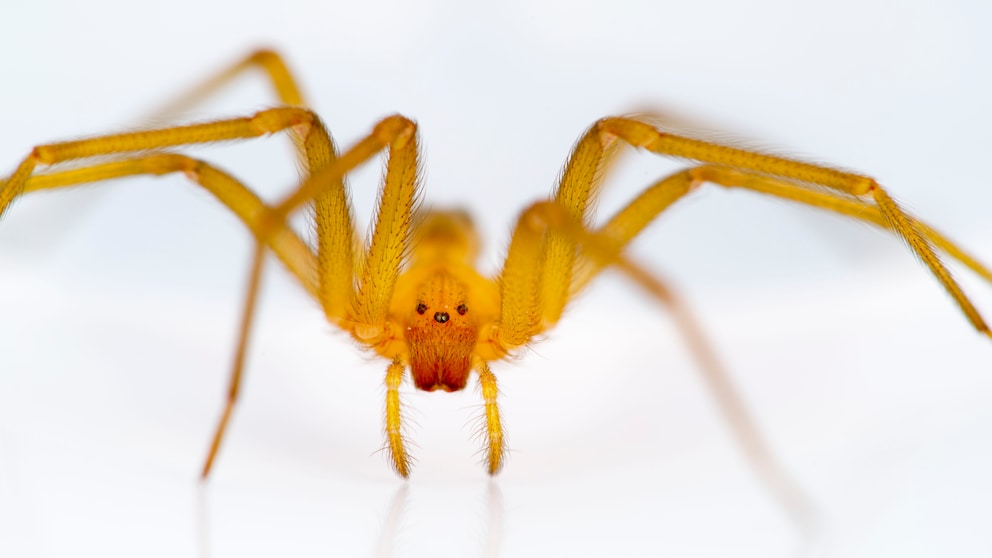
While the infamous Nosferatu spider has long become a permanent resident in Germany, a new arachnid is now causing a stir. Until now, spiders of the Loxosceles genus were only found in the Mediterranean region. The venom of these creatures is toxic and can lead to tissue death or skin necrosis if bitten. In the worst case, a bite can even be fatal. One of these creatures, the Chilean recluse spider, has now been discovered in Germany.
Overview
- Where do the creatures live?
- First sighting in Germany
- How did the highly venomous spider come to Germany?
- Is the Chilean recluse spider dangerous?
- How do I recognize a Loxosceles bite?
- How dangerous is the venom of Loxosceles spiders?
- No antidote yet
- Do the highly venomous spiders also come into houses?
- Is the fear of the spider justified?
- Sources
Where do the creatures live?
Spiders of the Loxosceles genus predominantly live in countries with mild climates. The Mediterranean recluse spider (Loxosceles rufescens) has thus already spread in the Mediterranean region. Due to its body shape, it is also called the brown violin spider.
In North America, Loxosceles reclusa, the brown recluse spider, is primarily found. It usually inhabits warmer areas, such as the Midwest and southern states. There are also occasional reports of sightings in Germany of this species.
As early as 2023, it was suspected that an even more dangerous relative from the Loxosceles family would soon find its way to Europe: Loxosceles laeta, also known as the Chilean recluse spider.
First sighting in Germany
Despite contrary reports, no clearly documented sighting of a recluse spider in Germany had been confirmed–until now. In the basement of the University of Tübingen, a craftsman discovered a striking specimen in the fall of 2025 and took a photo. This eventually reached Hubert Höfer, a spider expert and head of biosciences at the Natural History Museum in Karlsruhe.
“And he actually caught this creature, which is very, very valuable, because only through this male specimen that was caught could we make a definite identification,” Höfer explains in a report by the TV station “mdr.”
As it turned out, it was not the Loxosceles rufescens known from the Mediterranean or even the Loxosceles reclusa from North America, but the Chilean recluse spider: Loxosceles laeta. Fifteen specimens have now been found beneath the university.
How did the highly venomous spider come to Germany?
The creatures seem to have gone unnoticed there for an extended period. Their journey to Germany likely occurred via goods transport. “It usually takes time for something to establish from individual creatures that are introduced, and only a few species manage to do so,” Höfer explains.
Even though the discovery seems spectacular, a spread throughout Germany is unlikely due to their temperature requirements. The Chilean recluse spider is more domestic and prefers buildings.
There is also another location in Europe: the University of Helsinki, where the species has lived for over sixty years without spreading beyond the city limits. It has also rarely been noticed for bites there.
Is the Chilean recluse spider dangerous?
Its bite can be very dangerous to humans if left untreated and can even lead to death. The Chilean member of the Loxosceles family is native to the South American country, as its name suggests. In Spanish, the creature is called “araña de rincón chilena,” which is why it is also known as the Chilean recluse spider. The name is fitting, as these nocturnal creatures are very shy and like to hide in cabinets or drawers when they enter human homes.
Höfer describes the creature as follows: “This is not a spider that bites quickly when you get close; it is a very delicate creature. It avoids humans, is nocturnal, and doesn’t come out during the day.”
What should you do if you encounter a spider from the Loxosceles family?
PETBOOK asked Dr. Roland Mühlethaler, a strategic process management consultant at the German Nature Conservation Association (Nabu), what to do if you encounter a Loxosceles spider. “First, you would need to recognize it as such,” the expert notes. “However, it doesn’t have particularly distinctive features that easily differentiate it from other species.”
The species are nocturnal and not aggressive, so it is safe to observe them. “If you find a spider in the house and don’t want it there, please gently (cover it with a glass or cup, slide a piece of cardboard underneath) take it outside,” Mühlethaler further explains to PETBOOK.
Also interesting: Expedition discovers unknown spider species with “war paint” in Australia
How do I recognize a Loxosceles bite?
“In general, if you are bitten by a spider, you should catch it so that a definite identification is possible,” says Dr. Mühlethaler from Nabu. This way, the appropriate medical measures can be taken and, if necessary, the correct antidote administered.
“Unfortunately, Loxosceles venom has the unpleasant property of causing necrosis. The consequences of these necroses are what can lead to death in the worst-case scenario,” Roland Mühlethaler assesses the situation after a bite for PETBOOK. If bitten by a spider of this type, it is usually very painful and does not go unnoticed.
How dangerous is the venom of Loxosceles spiders?
The venom of Loxosceles spiders is dangerous to humans. If a bite is left untreated for a long time, it can lead to kidney failure, amputations, and death of the bitten person. However, bites from these spiders are relatively rare, and the mortality rate is reported to be three to four percent. Even in their distribution area, the species plays no significant medical role, according to the expert. That means there are hardly any reports of bite incidents.1
A bite from the brown violin spider can lead to painful skin lesions, also known as loxoscelism. The necrosis of the skin is very painful and can grow up to ten days after the bite.2 In 2021, several media outlets, including the American weekly “Newsweek”, reported on a teenager bitten in Ibiza who developed spreading necrosis in his fingers after a bite from the Mediterranean recluse spider. To stop the spread, two fingers were to be amputated.
The bite of the newly discovered Chilean wandering spider is even more dangerous. Within two to 18 hours, it also causes severe pain and necrosis of the surrounding skin, which “rots” away.
No antidote yet
What might further alarm people is that there is still no antidote for the bite. However, there are already medical advances. In a hospital in São Paulo, Brazil, doctors have tested the first antidote against the spider venom dangerous to humans over six years.
The doctors found that the antidote was most effective in preventing necrosis when administered to patients within 48 hours of the bite. Ninety-one point eight percent of those affected were also treated with the corticosteroid prednisolone after their hospital stay. This significantly reduced the development of Loxosceles skin lesions.3
Also interesting: How dangerous is the venomous Nosferatu spider really?
Do the highly venomous spiders also come into houses?
In their original distribution area, the species is widespread and often found in houses without posing a serious medical problem. “This is mainly because the creatures are shy and very rarely bite humans,” Mühlethaler explains the Loxosceles spiders for PETBOOK. Like most spider species, they fear humans. They only bite if they feel threatened or are accidentally squashed. This can happen, for example, if they hide in clothes that are then put on.
In Chile, it has become customary to vacuum all dark corners before going to bed and to shake out clothes thoroughly before putting them on. Therefore, bites and fatalities from spider bites are very rare in the South American country. People have become accustomed to the presence of these creatures.
Consulting expert Hubert Höfer, head of the biosciences department at the State Museum of Natural History Karlsruhe, who identified the sighted spider as Loxosceles laeta, also assesses the danger to humans as “very low.” This is according to a press release from the University of Tübingen. The creatures are nocturnal, avoid humans, and are not prone to biting.
Nosferatu Spider Now Found Across Germany–Here’s How Venomous It Is

This native venomous spider can cause fever
Do you need to report a sighting of the Loxosceles spider?
PETBOOK inquired with Nabu whether there is a similar reporting requirement for sightings of the immigrant spiders as there is for the Nosferatu spider (PETBOOK reported). So far, no action is planned for the recluse spiders, as Dr. Alexander Wirth, head of Data Science Nabu/naturgucker geG, reports.
However, any (spider) species can be reported via the Nosferatu campaign reporting form, says Dr. Wirth. “Simply enter the systematic name Loxosceles laeta or South American brown spider (a synonym for the Chilean recluse spider) and be sure to upload a good photo,” advises the expert. This is crucial because the Loxosceles species look very similar.
Is the fear of the spider justified?
“In general, one should refrain from spreading panic with such reports,” explains Roland Mühlethaler to PETBOOK. “Even we in Central Europe have lived peacefully with venomous creatures like honeybees or bumblebees for millennia. If we respect the creatures and leave them alone, rarely does anything happen. However, accidents are always possible, as in all aspects of our lives,” Dr. Roland Mühlethaler concludes for PETBOOK.