

June 9, 2026, 3:13 pm | Read time: 4 minutes
Many people react with alarm when a spider suddenly scurries across the wall or sits in the bathtub. Often, it is immediately caught, vacuumed up, or killed. Yet house spiders are generally harmless and even extremely useful housemates. What spiders eat is often beneficial to humans. After all, their diet includes other small creatures that people usually prefer even less in their homes.
What Do Spiders Eat?
Spiders primarily feed on animal prey. Their diet mainly consists of insects and other invertebrates. Depending on the species, this includes flies, mosquitoes, moths, aphids, fungus gnats, whiteflies, silverfish, or even other spiders. They release digestive juices onto their prey, which pre-digest and liquefy it. The spider then sucks up the food.1
Some species catch their prey in webs, others lie in wait camouflaged on flowers, or actively hunt on the ground and on plants. Not all spiders are the same: orb-weaver spiders, crab spiders, and jumping spiders use different strategies to obtain food.
Should You Kill House Spiders?
In homes and buildings, spiders perform a task that many underestimate due to their diet: they catch other creatures that can be much more bothersome to humans. The giant house spider, often simply called a house spider, catches mosquitoes, silverfish, and flour moths, for example. Other species found in buildings, such as the daddy long-legs spider, catch insects in their webs.
This is precisely why the German Environment Agency advises against fighting and killing spiders in the home. The creatures do not transmit diseases, do not cause damage to buildings, and are generally considered harmless in Germany. Instead, they help reduce the number of small insects in the house.
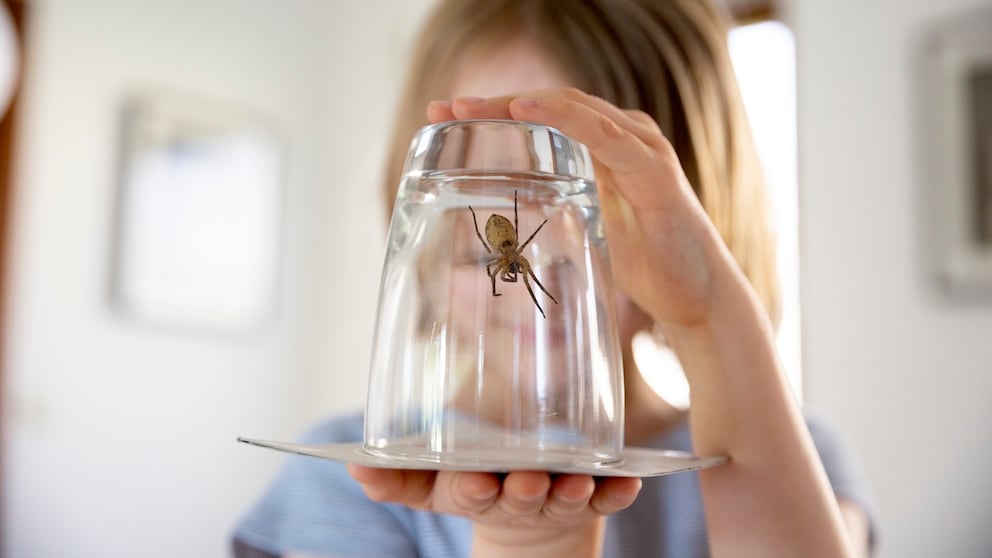
However, if you do not want a spider in your home, you should relocate it as gently as possible. With a glass and a piece of paper, it can be easily caught and moved to another location.
Spiders Consume Enormous Amounts of Prey Worldwide
The importance of spiders as predators is highlighted by estimates from scientists Martin Nyffeler of the University of Basel and Klaus Birkhofer of the University of Giessen. They calculated that spiders consume approximately 400 to 800 million tons of prey worldwide each year. For comparison, human consumption of meat and fish is in a similar range.2
Particularly large amounts of prey are consumed in forests, grasslands, and savannas. There, spiders play a crucial role in controlling insect populations. This does not mean that every single house spider in a home consumes vast amounts of insects. However, it does illustrate the overall significance of spiders for ecological balance.
How Toxic Is the Wolf Spider Really?

This native venomous spider can cause fever
Which Spiders Are Commonly Found in Homes?
In buildings, people frequently encounter the giant house spider. It is dark, long-legged, and often perceived as unpleasant. In the fall, the males are particularly noticeable as they roam in search of a mate, occasionally ending up in bathtubs or sinks.3
The daddy long-legs spider is also common. It builds irregular webs, often on ceilings, in basements, garages, or bathrooms. When disturbed, it begins to shake vigorously.
Harvestmen also occasionally enter buildings, but they are not true spiders. They are often colloquially confused with spiders, but biologically they form a separate order within arachnids.
In recent years, the Nosferatu spider has also been reported more frequently in Germany. It can pierce human skin with its mouthparts, but it rarely bites and usually only when directly threatened. Its venom is not considered dangerous to humans, though it can cause irritation similar to a wasp sting.
Are Spiders Dangerous?
Most spiders in Germany are harmless to humans. They are not aggressive and typically try to flee or play dead when they feel threatened. Bites are rare.
Only a few species, including some sac spiders and the Nosferatu spider, can even pierce human skin. Even then, severe venom effects are not expected from the species found in Germany.
It is important to note: This applies to wild house spiders in Germany. The assessment may differ for exotic spiders kept as pets. Anyone keeping tarantulas or other terrarium spiders should always be well-informed about the species, care, feeding, venom effects, and safe handling.