

May 28, 2026, 3:13 pm | Read time: 4 minutes
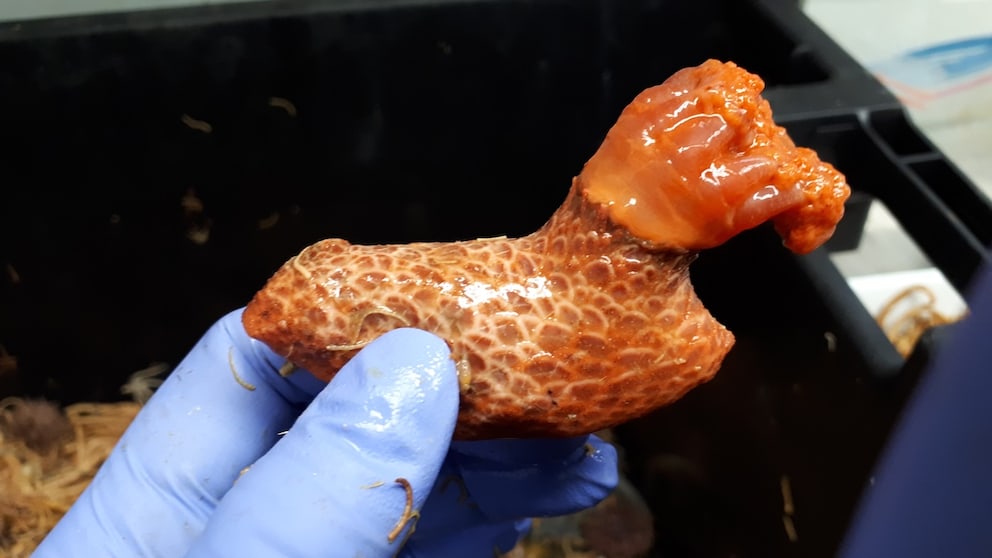
The “zombie” sea cucumber sounds like a creature from a science fiction film: severed body parts that continue to live, heal, and even respond to touch. But that’s exactly what researchers observed on the ocean floor. Tissue pieces of the sea cucumber Psolus fabricii remained biologically active for years—without a heart, brain, or complete body. What initially seems like a biological horror film could provide science with entirely new insights into healing and regeneration. PETBOOK explains the unusual discovery and why the “zombie” sea cucumber fascinates researchers worldwide.
Severed—and Still Alive
Normally, a severed body part is destined for decay. Even animals with remarkable regenerative abilities—such as lizards or starfish—may lose tails or arms, but the severed pieces usually die quickly. With the cold-water sea cucumber Psolus fabricii, it seems to be entirely different.
A research team led by Sara Jobson and Annie Mercier discovered something that surprised even the scientists: severed tissue pieces of the sea cucumber continued to live for years. And not only that—they healed their wounds, absorbed nutrients, restructured their tissue, and even responded to touch. What sounds like a mix of Frankenstein and zombie film actually took place on the ocean floor.1
The Wounds Healed on Their Own
Researchers examined tube feet, tentacles, and parts of the body wall. The tissues were not stored in sterile high-tech labs or special solutions but simply in natural seawater full of bacteria—a setting where delicate tissue would normally decompose quickly. But that didn’t happen.
The tube feet, in particular, amazed the team. These small adhesive appendages function for the sea cucumber like a combination of feet and hands. They help it hold on, climb, and move. Right after detachment, the tissue pieces were also severely injured. Nevertheless, a kind of biological repair program began shortly thereafter.
The damaged parts were shed by the sea cucumber, the wound edges contracted, and after about six days, the injuries were completely closed. Initially, the severed tube feet shrank somewhat—presumably a stress reaction to the injury. Later, however, the tissues began to grow again. After a few months, some pieces were even larger than right after detachment.
Also interesting: 12 fascinating facts about sea cucumbers
Zombie Tissue: Movement Despite Missing Body
The tissue pieces didn’t just lie around “dead.” They showed clear signs of activity, remaining biologically active. Researchers found evidence of cell division, immune reactions, and even metabolic processes. Immune cells specifically migrated to injured areas, cleared away damaged material, and apparently protected the tissue from germs in the seawater. At the same time, the internal structure of the explants changed. Muscle tissue gradually disappeared, while stable connective tissue increased.
Particularly astonishing: the tissue parts continued to absorb nutrients from their environment. Researchers demonstrated that they absorbed amino acids directly from the seawater—important building blocks for energy and repair.
The severed tentacles of the sea cucumber were also striking. Although they no longer had a complete body, heart, or brain, they continued to respond to touch. The tentacles could extend and retract accordingly.
The study does not show that the tentacles were independent living beings or acted consciously. However, it does show that the severed tissue can remain surprisingly active for a long time. It moves, responds to stimuli, and its nerve signals continue to function.
Sea Cucumbers Throw Guts at Enemies–and Don’t Even Have a Brain
Did You Know? Theoretically, Lobsters Could Be Immortal
Other Species Couldn’t Do That
The researchers wanted to know if other echinoderms could survive as long. Therefore, they also examined tissue from starfish, sea urchins, brittle stars, and other sea cucumber species.
Initially, many things looked remarkably similar: the wounds closed, damaged tissue was removed, and immune cells migrated to the injured areas. But in the long run, a clear difference emerged. No other tissue remained permanently as stable. The longest-lasting were certain tube feet of a starfish—about 104 days. In contrast, the tissue of the “zombie” sea cucumber remained biologically active for years.
Truly “Immortal”?
The researchers call the severed tissue pieces “LiPfe”—an abbreviation for “living immortal P. fabricii explants.” Translated, this means something like “living immortal tissue.” However, it’s not quite that clear-cut. By “immortal,” the researchers do not mean that the tissues are truly biologically immortal.
The tissues were observed for more than three years. During this time, they remained active, healed injuries, showed cell activity, and maintained their structure. Whether they could actually continue to live indefinitely without a brain and heart is unclear.
The fact is, this discovery shows how little we know about the biological capabilities of many marine animals. At the same time, the findings could help us better understand how tissue repairs itself, ages, or survives extreme stress. In the long term, researchers even hope for new insights for human medicine and regeneration research.