

June 22, 2026, 2:39 pm | Read time: 6 minutes
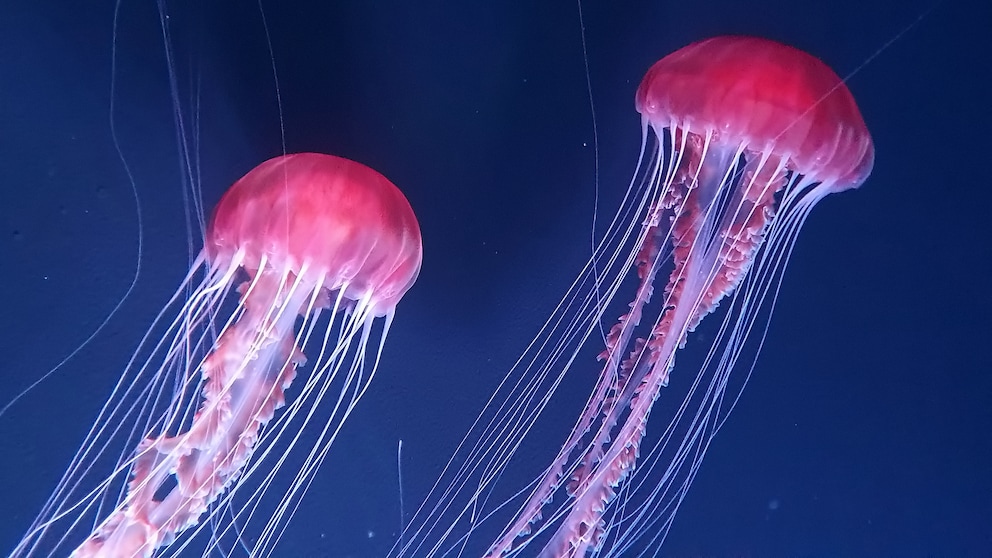
Jellyfish are among the oldest animals on Earth, often appearing like creatures from another planet with their floating bodies. However, not all encounters with these fascinating marine creatures end harmlessly. In the Mediterranean, vacationers are increasingly encountering various jellyfish species—a trend experts link to the warming of the seas. While most species are harmless to humans, some can cause painful injuries or even pose health risks. PETBOOK reveals which jellyfish are most common in the Mediterranean, which species vacationers should be aware of, and what to do after a jellyfish sting.
Overview
Which Jellyfish in the Mediterranean Are Dangerous?
Worldwide, there are more than 2,500 jellyfish species. Most are harmless to humans, but some possess stinging toxins that can cause painful skin reactions or, in rare cases, be dangerous. Jellyfish sightings in the Mediterranean can spoil vacations for beachgoers. In popular travel destinations such as Greece, Croatia, Italy, or Spain, beaches have occasionally been closed due to large jellyfish gatherings.
Therefore, the basic rule is: If you swim in the sea, follow the top rule: Do not touch any marine creatures! The animals will try to defend themselves, which can be quite unpleasant. Jellyfish typically sting, and in the worst case, this can have life-threatening consequences.
Pelagia noctiluca (Mauve Stinger)
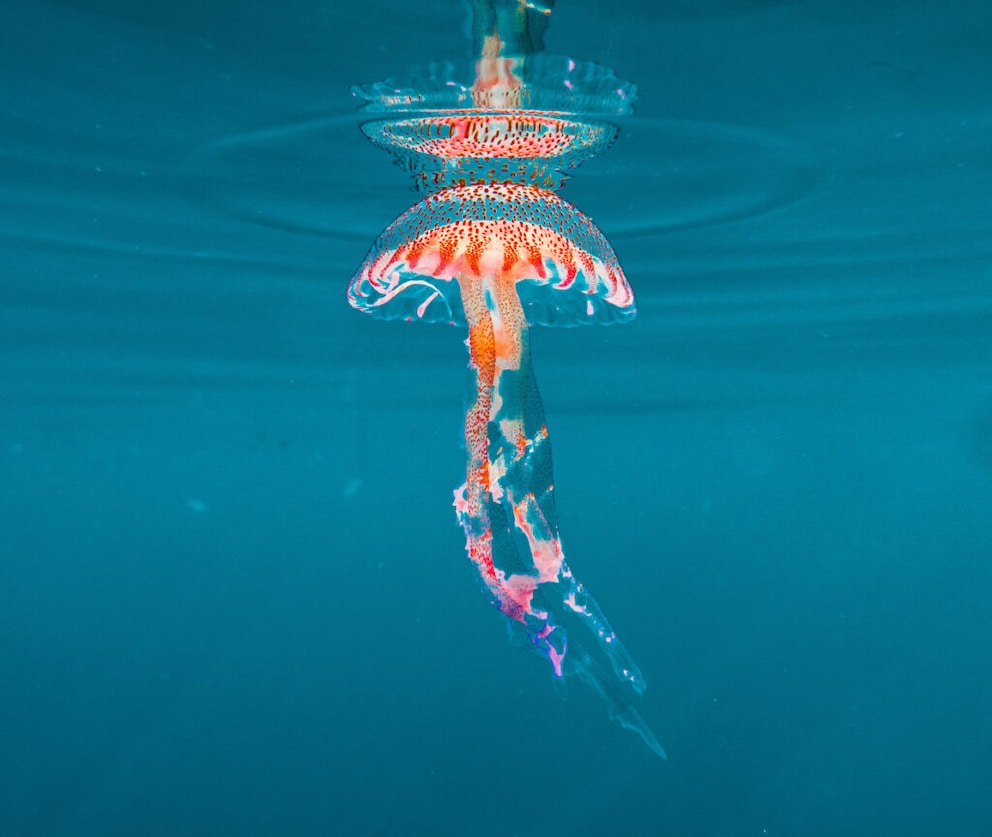
It glows beautifully pink and purple in the dark, but contact with it can be painful. This jellyfish, also known as the fire jellyfish, usually appears in swarms, and its migrating populations can stretch for kilometers. Its bell has a diameter of only 10 to 12 cm. Generally, it is a small jellyfish species, but it has very long tentacles that can grow up to a meter long.
These tentacles cause extremely painful stings, leading to blisters and severe itching on the skin. Allergy sufferers may experience headaches, nausea, and vomiting. Reports of mass occurrences are increasing in the Mediterranean, especially in Greece.1
Cyanea capillata (Lion’s Mane Jellyfish)
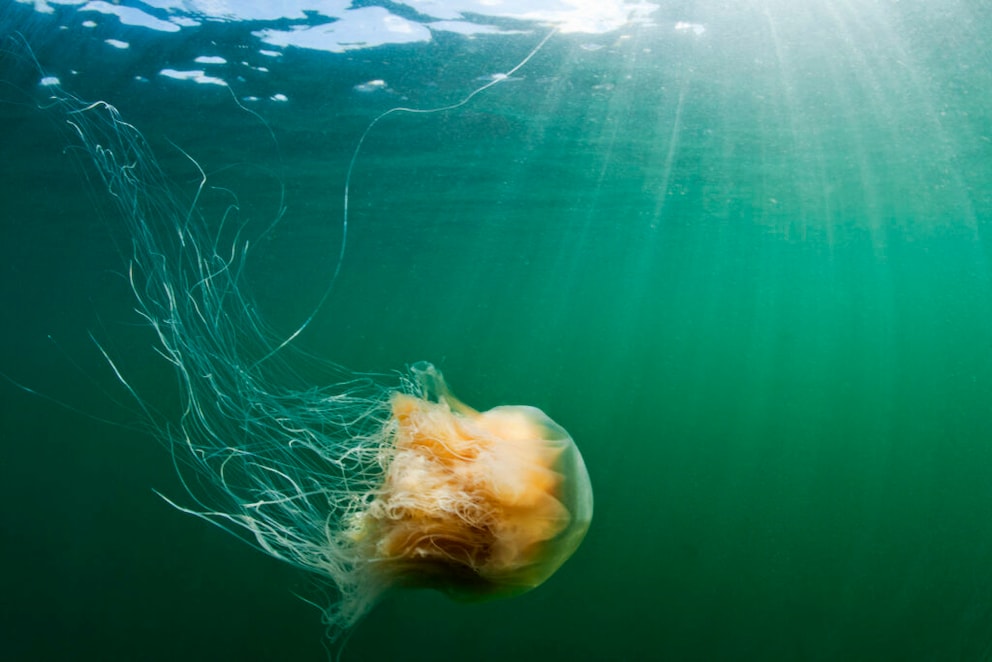
Coastal residents colloquially refer to it as the fire jellyfish or lion’s mane jellyfish, and it belongs to the jellyfish family. Its many yellow stingers give it an appearance reminiscent of a lion’s mane. The diameter of its bell can reach up to a meter and appears yellow to dark red.
Its 70 to 150 marginal tentacles can grow up to 30 meters long! Contact with its fine tentacle threads causes the skin to burn and swell, resembling a burn. This large jellyfish can also be found in the North and Baltic Seas.2
Physalia physalis (Portuguese Man o’ War)
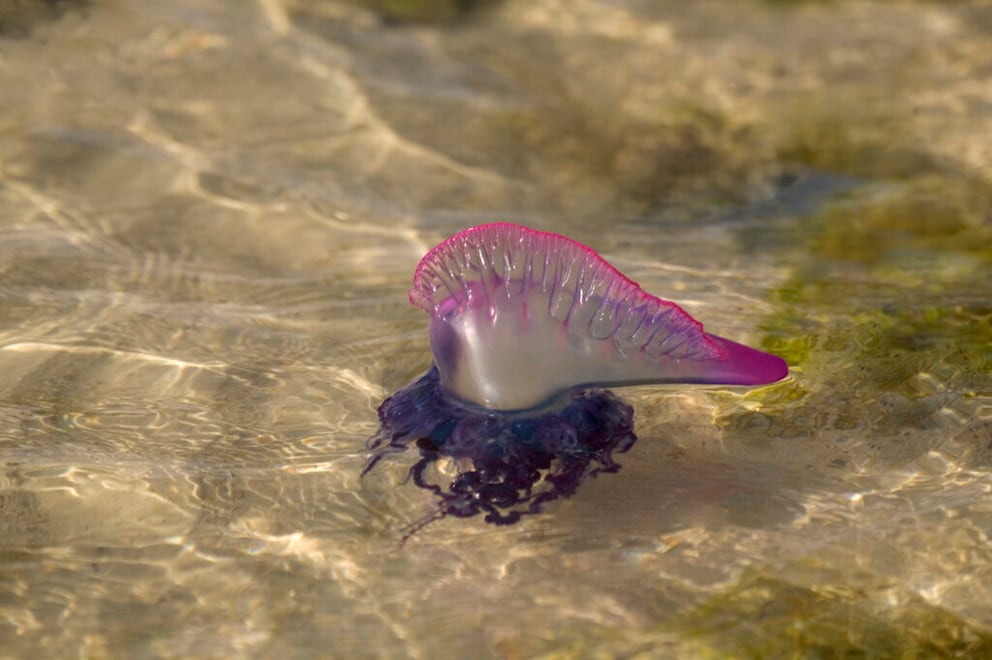
Strictly speaking, it is not a jellyfish but a siphonophore. However, because it is extremely poisonous, we want to warn against encountering it. It resembles a jellyfish externally but is composed of numerous polyps. The center is a 30 cm gas bladder with a comb-like sail. This transparent, bluish organism floats on the water’s surface and has been spotted off the coasts of Mallorca and Formentera. Its many blue-violet and white tentacles can grow up to 50 meters long.3
These tentacles contain poisonous stingers, and contact with them feels like the lash of a whip. A healthy adult can survive the “burns,” but for allergy sufferers or weakened individuals, it can be fatal in rare cases (usually resulting in cardiovascular shock). Doctors recommend removing the stinging cells or detached tentacles and not washing the stings with vinegar or freshwater. It’s better to use hot water over 45 degrees and then treat with zinc gluconate.
Chironex fleckeri (Box Jellyfish)
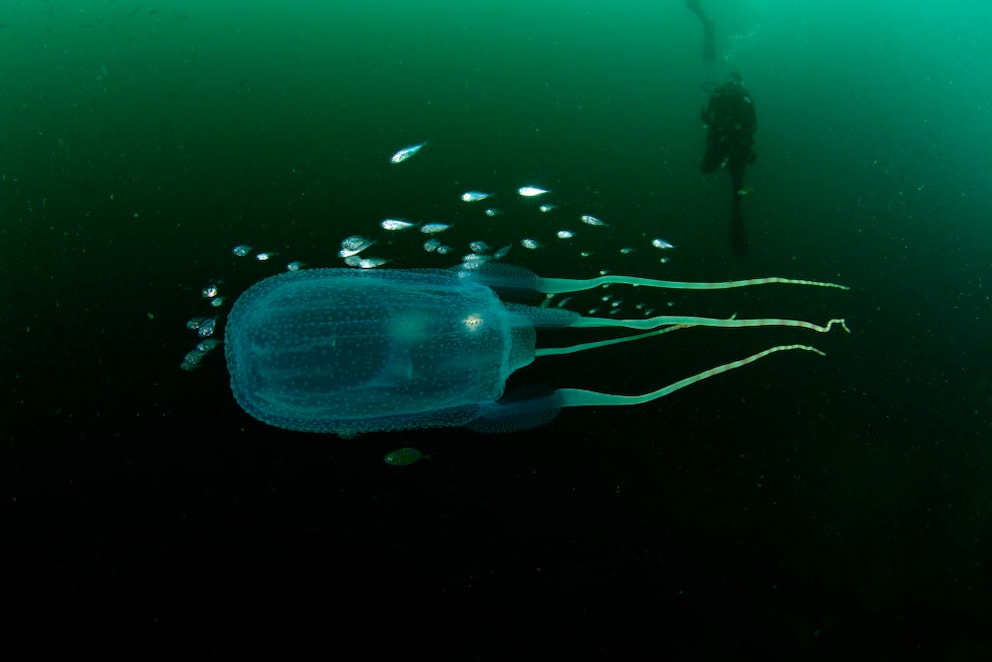
It is one of the most poisonous marine creatures, and its stings are deadly, but fortunately, it is very rare in the Mediterranean region. The box jellyfish’s native waters are in Australia. With a bell diameter of about 30 cm (usually only 14 cm) and tentacles ranging from 60 cm to 3 meters long, it appears almost inconspicuous at first glance. However, it can see excellently with its 24 eyes.4
Most accidents occur in shallow water when people swim into the almost invisible tentacles of the box jellyfish. The pain from contact is comparable to a burn from an iron. Death can occur five to twenty minutes after the sting. Quick action with the antidote is necessary, which must be administered intravenously for the victim to survive.
Chrysaora hysoscella (Compass Jellyfish)
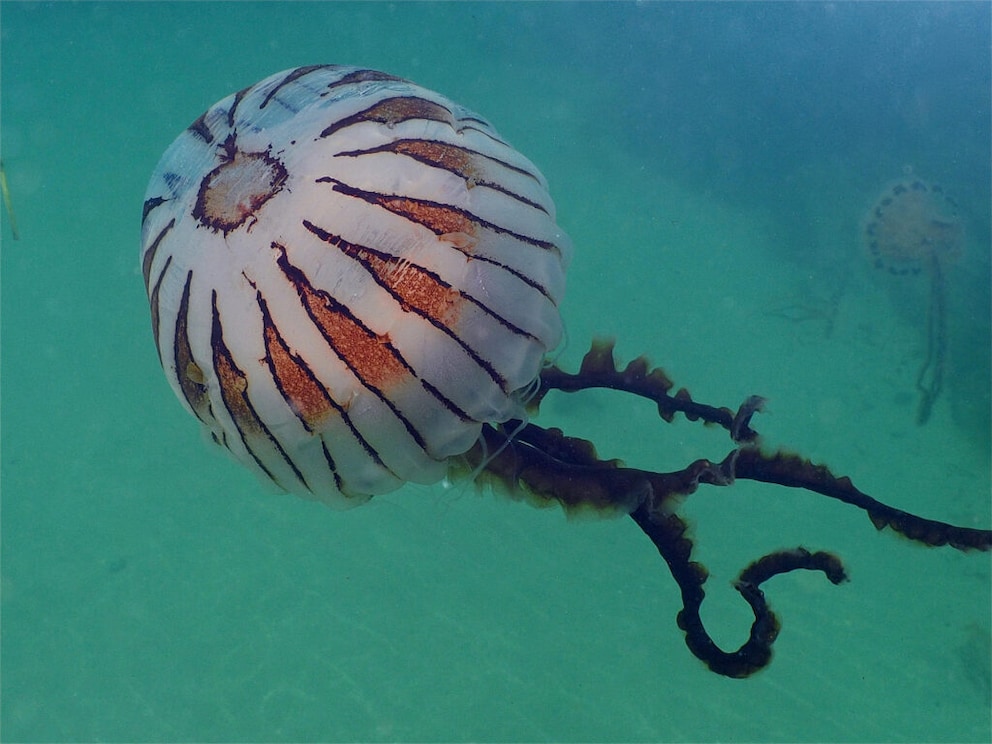
This jellyfish, with a bell diameter of up to 35 cm, is easily recognized by its yellow-brown, orange, red, and brown bands. It is also easily identifiable by its flat bell, which is symmetrically patterned in yellowish white, brown, and orange. Its tentacles can grow up to 1.5 meters long. The stinging toxin causes skin irritations in humans, and allergy sufferers may experience circulatory problems. Although this jellyfish is not very poisonous, the burning skin irritations it causes can last for days.5
This nearly invisible animal is considered the most poisonous in the world.
The most dangerous animals in Europe
What to Do if You Are Stung by a Poisonous Jellyfish?
The unpleasant and painful aspect of jellyfish is the stinging cells in their tentacles. They cause skin redness, irritation, and itching upon contact. Sensitive individuals or allergy sufferers may also experience nausea, vomiting, and headaches. After contact, proceed as follows:
- Leave the water immediately
- Rub the “burned” area with sand and rinse with seawater
- Remove tentacle remnants. Avoid the wound, as this can spread the toxin further
- Seek medical attention for an allergic reaction
- Apply cold compresses for relief
- Take painkillers if experiencing severe pain
- Use a hairdryer
Typically, the wound heals within one to two days.
How to Prepare for a Jellyfish Encounter on Vacation?
- Research jellyfish occurrences in your vacation region beforehand
- Wear swimming goggles
- Warn children not to touch unknown animals