

August 8, 2025, 3:14 pm | Read time: 4 minutes
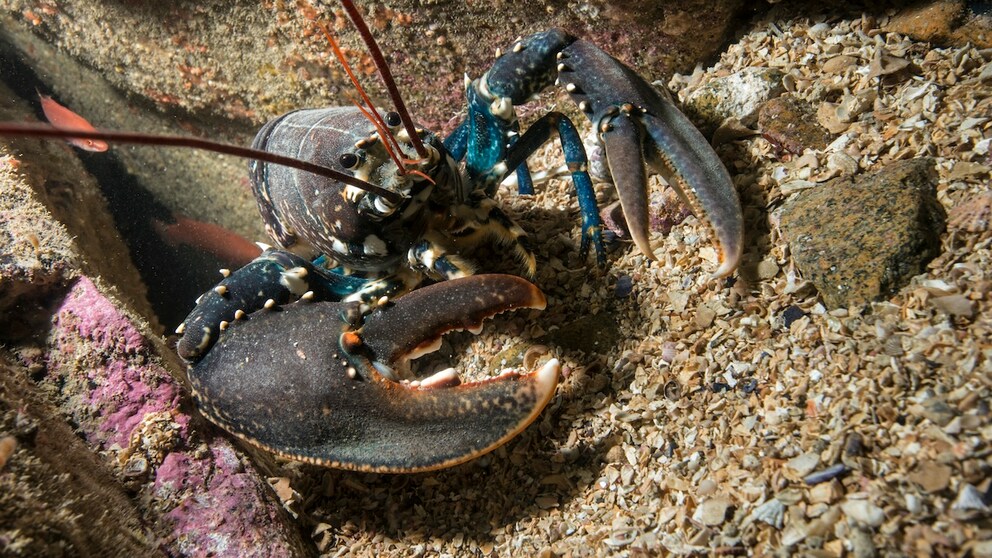
Lobsters are fascinating sea creatures—not just because of their powerful claws, but mainly due to a persistent myth: They are said to be immortal—if they aren’t eaten. A look at their biology reveals what this is all about and why this is at least theoretically true.
How Old Do Lobsters Get?
Although age records for lobsters are often viewed with admiration, they frequently have a bitter aftertaste for these crustaceans, because the potentially oldest specimens were not discovered in the wild, but in restaurants. In 2009, an American lobster named George made headlines. The animal weighed about 20 pounds and was estimated to be 140 years old. In 2017, another impressive specimen became known: Lobster Louie was estimated to be about 132 years old. Both animals ultimately escaped the cooking pot and were returned to the sea. 1, 2
As impressive as these numbers are, they raise fundamental questions: How old can lobsters actually get—or are they perhaps immortal after all? The age estimates for George and Louie are based on approximations and are not scientifically proven. As long as large specimens continue to appear mainly in culinary contexts, the true age potential of lobsters remains in the dark. Perhaps this is why the rumor persists that lobsters wouldn’t die if they weren’t eaten.

The 9 Longest-Living Species in the World

Why Are Whales So Huge and Yet Don’t Get Cancer?
Why Lobsters Are Theoretically Immortal
While in humans, muscles weaken, bones break, and cells renew slowly with age, it’s quite different for lobsters: They grow stronger over the years. A research group led by Guido Krupp from the Institute of Hematopathology at the Christian-Albrechts-University of Kiel addressed this question in a groundbreaking study in 1998. However, only the American lobster (Homarus americanus) was studied, not its European relative (Homarus gammarus). Due to their close relationship, similar mechanisms are assumed to be present in the latter.
Unlike many animals that eventually become “fully grown” and age, lobsters continue to grow throughout their lives. The reason for this is likely repetitive DNA sequences at the ends of chromosomes that protect them during cell division: the so-called telomeres. In humans and many other animals, these sequences are inactive, leading to a halt in cell division (senescence) over time.
In lobsters, however, telomerase ensures that the ends of chromosomes are protected during cell division, preventing DNA errors, according to the study. In most adult mammals, the telomerase enzyme is only active in certain cells, such as tumor cells or embryonic tissues. In lobsters, this process was detected in all tissue samples, especially in the hepatopancreas and heart, but also in skin and muscles. This could explain why lobsters can regenerate entire limbs even at an advanced age, indicating a consistently high cell division rate. 3
Also interesting: These 10 Animal Species Live Longer Than Humans
And Why Do Lobsters Die Anyway?
Although their cells practically do not age, lobsters are not immortal in reality. Even an eternally young interior is of no use if the outer shell becomes a problem. Like many crustaceans, lobsters molt regularly to grow—a process that requires a lot of energy.
Eventually, however, the strength is depleted, and the animal can (or will) no longer molt. The shell does not grow with it and begins to crush the lobster. Added to this are health risks from parasites and bacteria that have accumulated in the shell. When the molting process ceases, it is often a sign that the end is near. The lobster then dies from exhaustion, infections, or becomes prey itself.
Besides the shell issue, lobsters face other dangers. Accidents, fights with conspecifics, predators, or humans are common causes of death. Especially due to being caught for consumption, the lives of many lobsters end prematurely—regardless of their cellular health. As long as lobsters are considered a delicacy, we may never truly know how old these animals can get.