


April 16, 2026, 11:12 am | Read time: 3 minutes
An unassuming spider is drawing attention in the research community. Scientists from several South American institutions have described a new species that combines musical references with fascinating biological traits. PETBOOK editor and biologist Saskia Schneider explains what makes this tiny spider so special.
Spider Named After Pink Floyd
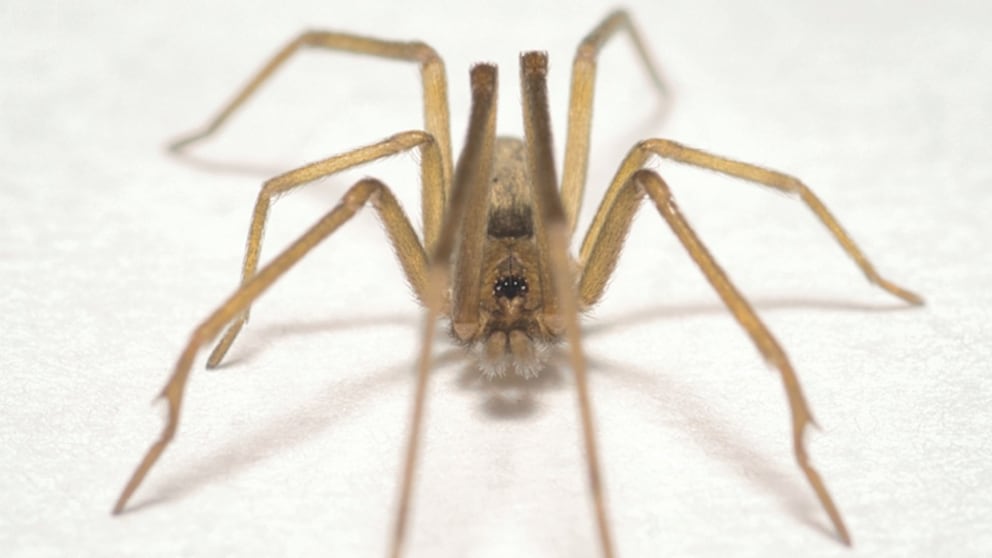
The newly described species is named Pikelinia floydmuraria—and the name is no accident. The researchers connect it to two things: a musical tribute and a nod to the animals’ habitat.
“‘Muraria,’ derived from the Latin word for ‘wall,’ reflects the species’ tendency to live in building walls—but also alludes to the iconic Pink Floyd album ‘The Wall,’” explain the study’s authors.1
Indeed, the spider feels particularly at home in wall crevices and building structures. This makes it one of the so-called synanthropic species, which are animals that have adapted to living in close proximity to humans. The findings were published in the journal “Zoosystematics and Evolution.”
Tiny but Amazingly Effective
At first glance, the spider named after Pink Floyd seems rather unremarkable: The animals grow to just three to four millimeters in size. But what they lack in size, they more than make up for with their hunting abilities.
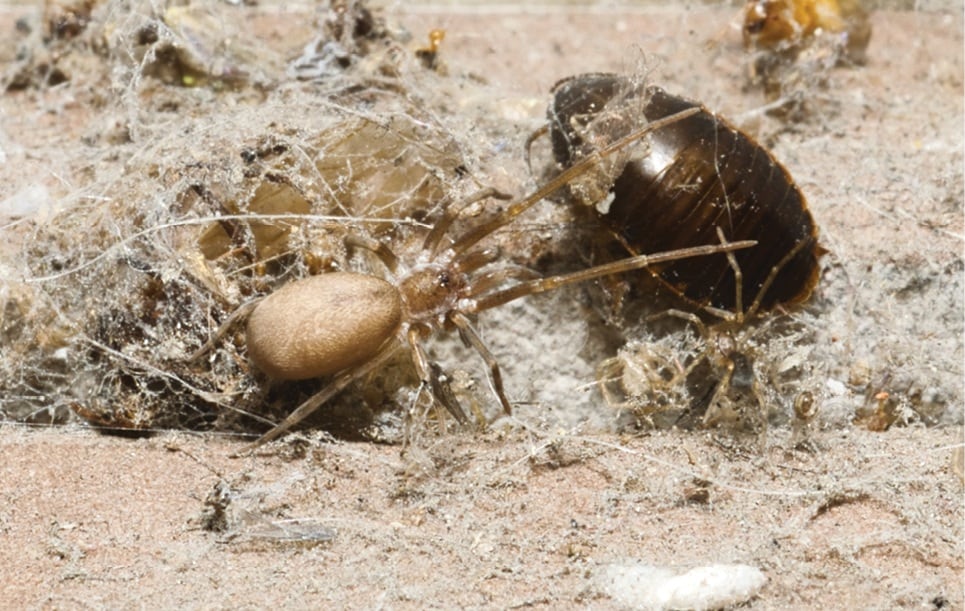
Research shows that the spiders primarily eat ants, flies, mosquitoes, and beetles. Particularly impressive: They overpower prey that is many times their own size. Researchers observed them capturing ants up to six times larger than their front bodies.
Useful Housemates?
Exciting for us humans: These small eight-legged creatures could even be useful. They specifically hunt typical everyday nuisances—including mosquitoes and houseflies.
A clever trick helps them do this. The spiders build their webs near artificial light sources, where many insects are known to gather—a feast for the mini-hunters. In this way, they could help reduce pest populations in cities.
However, the species has so far been discovered only in one region in Colombia. Whether it is more widespread remains unclear.
Mystery of Relatives on the Galápagos Islands
The study provides another intriguing insight. There appears to be a close relationship between the new species from Colombia and a spider from the Galápagos Islands.
With Pikelinia fasciata, discovered back in 1902, researchers examined the internal reproductive structures of the females in detail for the first time. They found remarkable similarities to the new species, particularly in the male reproductive organs.
How this closeness exists despite the large geographical distance is still unclear. Possible explanations include common ancestors or parallel adaptations to similar habitats.
The Coolest Vampire Animals–From Real Bloodsuckers to Eerie Namesakes

Danger to Humans and Animals! This Ant Species Becomes a Nightmare Indoors
Further Research Planned
So far, Pikelinia floydmuraria is only the second known species of this genus in Colombia. To clarify its exact origin, researchers plan further investigations, particularly genetic analyses.
This involves not only evolution but also a practical question: How great is the potential of this spider as a natural pest controller in our cities?
Conclusion: Small Spider, Big Stage
Would the spider also be a fan of “Another Brick in the Wall”? What is certain is that Pikelinia floydmuraria shows that even unassuming animals have great scientific and ecological potential.
And perhaps, in the spirit of Pink Floyd: “We don’t need no pesticides”—if such mini-hunters live on our walls.