

October 30, 2025, 1:14 pm | Read time: 11 minutes
Halloween is the time of vampires, bats, and other eerie creatures. But bloodsuckers aren’t just found in horror stories—they also exist in the animal kingdom, along with creatures named for their appearance or behavior. It’s time to get to know them better in this PETBOOK article—from the vampire bat to the vampire squid.
True Bloodsuckers–Animals That Really Drink Blood
Animals that have developed this diet are called hematophagous—true bloodsuckers. The blood they drink or suck provides them with valuable proteins and iron, but it’s hard to digest and requires highly specialized adaptations, such as sharp mouthparts, enzymes to prevent blood clotting, or special gut bacteria.
Humanity has been both fascinated and repelled by the idea of bloodsuckers for centuries. Bram Stoker’s “Dracula” is the most famous figure in vampire literature, but the myth goes much further back. It appears in many cultures, especially in the Slavic region, including the legendary Transylvania, and has often emerged during times of great plagues. But the first vampire animal takes us to another continent and is probably the most famous of all the species presented here.
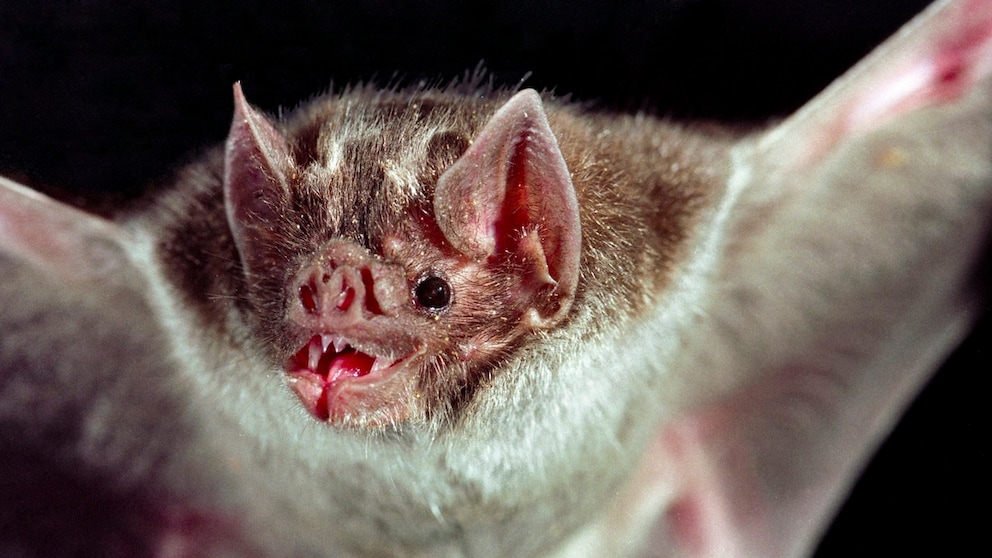
Vampire Bats (Desmodus rotundus, Diphylla ecaudata, Diaemus youngi)
It’s no wonder that the fascinating vampire bats eventually became part of this dark symbolism. Their nocturnal activities, silent wing beats, and hanging upside down made them the perfect symbol for vampire stories. Yet, they don’t deserve their bad reputation: Of the more than 1,400 known bat species, only three actually drink blood—and all live in Central and South America.
The common vampire bat (Desmodus rotundus), the hairy-legged vampire bat (Diphylla ecaudata), and the white-winged vampire bat (Diaemus youngi) feed on animal blood, not human. With their fine teeth, they make small cuts from which they gently lap up the blood. Their saliva contains the anticoagulant enzyme Draculin—a substance so effective that it’s being researched in medicine. And: Vampire bats are surprisingly social. They share their meals with fellow bats that have gone hungry—a behavior that could almost be called “blood brotherly.”
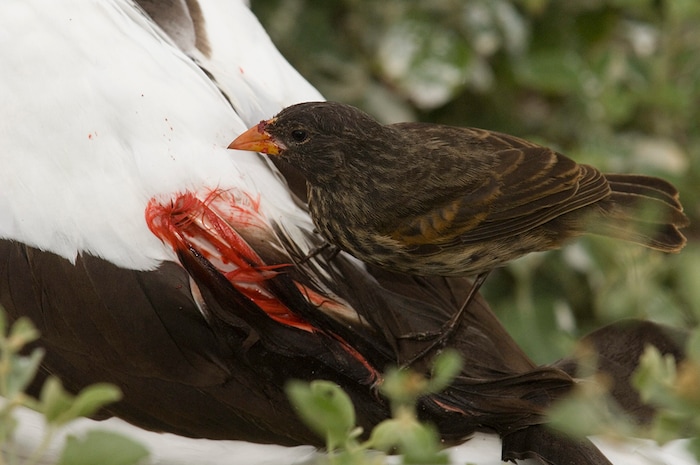
Vampire Finches (Geospiza difficilis septentrionalis)
There are also birds that drink blood. On the remote Galápagos Islands, there is indeed a small, inconspicuous finch species that does this—making it one of the world’s most bizarre birds and the “most bloodthirsty bird in the world” according to the Guinness World Records. The so-called vampire finches belong to the sparrow family and are closely related to European house sparrows. But unlike their European cousins, they feed on something unexpected for birds during the dry season: the blood of other animals.
The birds are found only on the two small, water-scarce islands of Wolf and Darwin, which are part of the Galápagos Archipelago. There is sparse vegetation and pronounced dry seasons. When water and insects become scarce, the finches radically change their diet. They then target larger seabirds—mostly blue-footed boobies—and peck small wounds at the base of their feathers to drink the oozing blood.
What sounds brutal is a brilliant survival trick for the finches: The blood provides them not only with nutrients but also with vital fluids. Biologically, this is a highly specialized diet found in very few vertebrates. Another proof that evolution writes stories more exciting than any horror film.
Vampire Moths (Calyptra thalictri)
In the insect world, there are also true bloodsuckers with fascinating biology—and the vampire moth is undoubtedly one of them. These harmless-looking nocturnal moths are actually fruit eaters, but the males have a special talent: With their sharp, needle-like proboscis, they can pierce the skin of mammals to suck blood.
Normally, they use this “mini-stinger” to drink sugary plant juices—but in rare cases, they take blood instead, even from humans. This is likely an evolutionary accident: Sucking blood provides the males with additional minerals they need for reproduction.
The thought of a “moth that stings humans” sounds like a nightmare—but it’s completely unfounded. The insects mainly live in Southeast Asia, are only occasionally found in Europe, and are considered biologically unique, not dangerous. Unlike mosquitoes or fleas, they are not disease carriers. And admittedly: A moth with vampire ambitions is more curious than creepy—but perfect Halloween material.
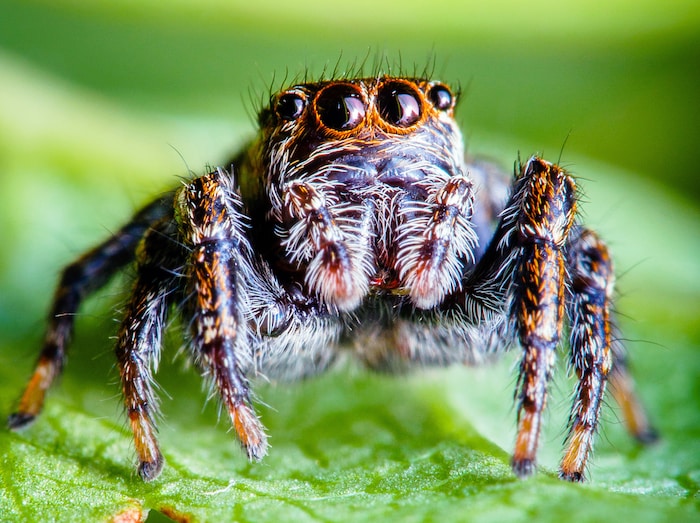
Vampire Jumping Spider (Evarcha culicivora)
Jumping spiders have become small social media stars in recent years—they are considered curious, smart, and almost cute. But one species has a different reputation: Evarcha culicivora, better known as the vampire jumping spider. It hails from East Africa and actually drinks human blood—but only indirectly.
The spider, only three to seven millimeters in size, lives around Lake Victoria in Kenya and Uganda. There, it shares its habitat with the dreaded Anopheles mosquitoes—those insects that transmit the malaria pathogen and claim hundreds of thousands of lives each year. These mosquitoes are the vampire spider’s favorite prey. Especially when they have just fed on human blood.
This way, it gets its “blood meal” indirectly—a kind of secondhand vampirism that makes it one of the world’s most unusual predators. There is no officially established scientific term for this, but its behavior is often referred to in research as “secondary hematophagy” or “indirect hematophagy.” Thus, Evarcha culicivora is jokingly called the “most ecological vampire” in the animal kingdom. While it gets tiny portions of human blood, it also helps regulate the malaria mosquito population—and could even save lives in the long run.
Candiru or Vampire Fish (Vandellia cirrhosa)
It’s barely finger-length, transparent, and yet feared: the candiru, also known as the vampire fish of the Amazon. This tiny catfish is considered one of the most notorious parasites in the freshwater world—and the source of many gruesome stories. This is likely due to its unusual feeding strategy: It is a bloodsucker that burrows into the gills of larger fish to drink their life force. This parasitic lifestyle makes it one of the few true hematophagous fish in the world.
Its reputation is owed to a myth: Since the 19th century, reports have circulated that it can enter human body openings—especially the urethra. However, this has never been scientifically proven. There is no verified case of a candiru being found alive in a human.
For researchers, this is also anatomically highly unlikely, as the fish needs water flow and gill movement to survive. Despite its tiny body, it has a remarkable sense of flow and chemical cues in the water, which it uses to locate its hosts.
Vampire by Name or Appearance–Creepy Word Relatives
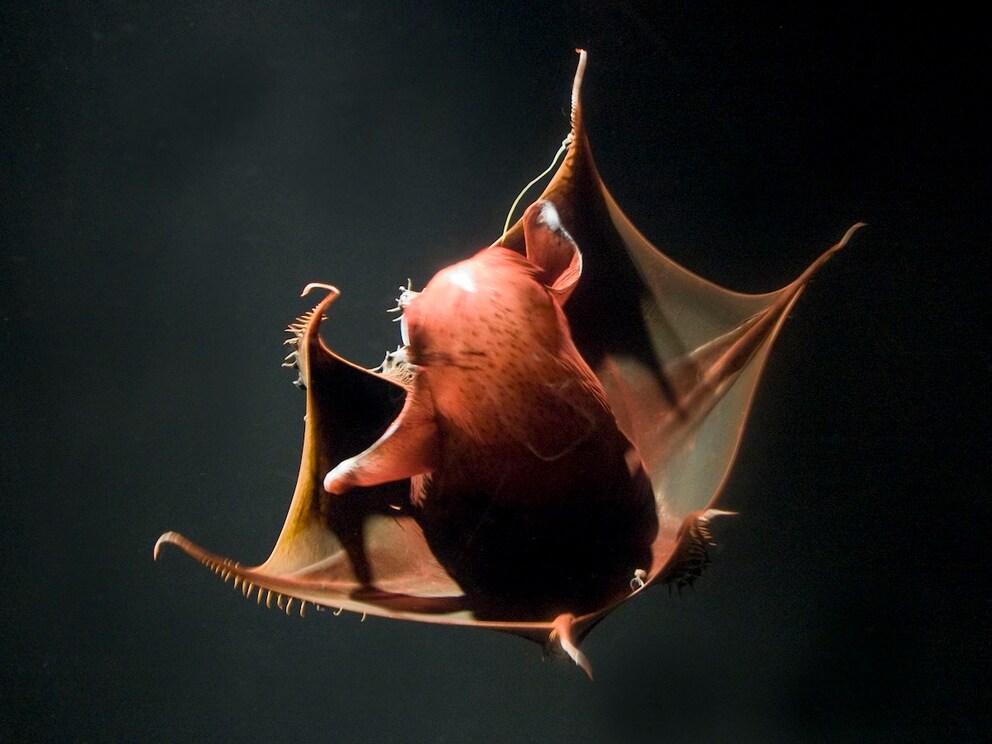
Vampire Squid from Hell (Vampiroteuthis infernalis)
The name alone sounds like a creature from the underworld: Vampiroteuthis infernalis—translated as “vampire squid from hell.” And indeed, it looks as if it came straight out of a nightmare: velvety red to black tissue, large, glowing eyes, and a skin-like web between its arms that resembles a cloak. When threatened, it turns this skin inside out, making it look like a small, upside-down vampire with tentacles.
The vampire squid lives at depths of up to 1,000 meters, in a zone with little oxygen. It inhabits an environment that few other animals can withstand. To survive there, it has perfectly adapted: Its metabolism is extremely slow, and instead of ink, it uses a glowing secretion to confuse enemies with bioluminescent particles.
Despite its fearsome appearance, it is not a predator but rather a deep-sea cleaner. The vampire squid feeds not on blood but on detritus—organic particles from dead animals, algae, and feces that slowly drift through the water column. With two thin filaments, it catches these “marine snowflakes” and rolls them into small food balls.
Dracula Parrot (Psittrichas fulgidus)
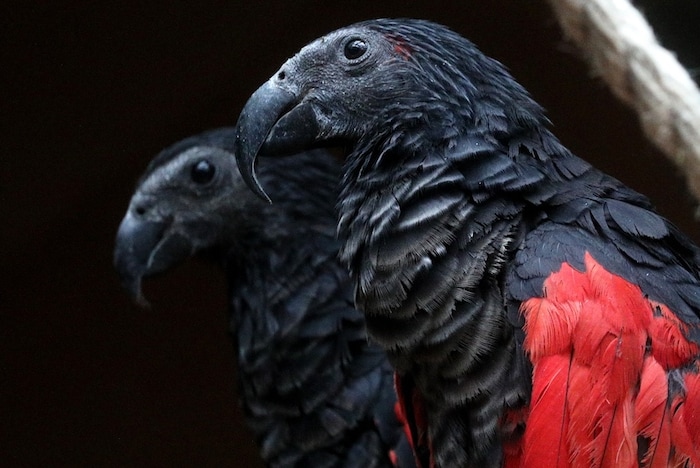
Its name already sounds like dark poetry—and when you see it, you immediately understand why: The Dracula parrot looks as if it flew straight out of a horror film. With deep black plumage, blood-red accents, and a piercing scream that echoes through the rainforest, it could easily pass as the animal incarnation of Bram Stoker’s “Dracula.” Researchers suspect that the scream is used to communicate over long distances in the dense rainforest and to impress enemies.
However, its imposing appearance and loud scream are misleading: This bird doesn’t drink blood—at most, fig juice. In reality, the Dracula parrot is a peaceful herbivore that feeds exclusively on fruits, flowers, and nectar. It particularly loves certain fig species, whose seeds it disperses in the rainforest during digestion—helping new fig trees grow. Its reputation as the “goth of birds” is only half justified: Visually a dark hero, ecologically a life-giver.
Chinese Water Deer (Hydropotes inermis)
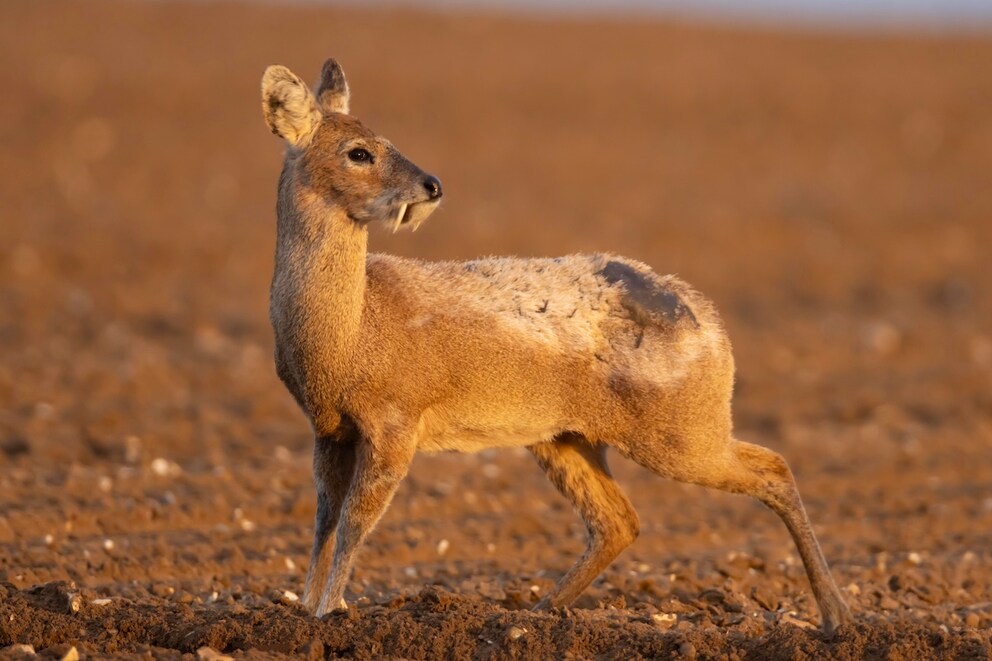
At first glance, the Chinese water deer looks like a normal, delicate wild animal—until you take a closer look. Then you see two long, curved canines that look as if they could have come straight out of a Dracula film. No wonder the animal is also colloquially known as the “vampire deer.”
These fangs are no accident but an impressive quirk of evolution. The canines, which can grow up to eight centimeters long, are only found in males. They are not used for hunting but for display during mating season. Instead of antlers, like other deer, water deer males engage in duels with their “fangs.” They bare their teeth, make threatening calls, and fight for territories and females.
Despite its “creepy” appearance, the water deer is a peaceful animal. It feeds exclusively on plants—grasses, herbs, and aquatic plants. Nevertheless—or perhaps because of this—the water deer is a little-known wonder among “vampire animals.”
Dracula Fish (Danionella dracula)
It is tiny, transparent—and has teeth: The Dracula fish (Danionella dracula) looks like the bloodthirsty star of a micro-horror film. Yet, this freshwater fish, just 17 millimeters long, is completely harmless. Danionella dracula was only discovered in 2009 in clear streams in northern Myanmar.
Its name comes from the bizarre tooth-like bony protrusions that only the males possess. These “fangs” protrude like tiny canines from the mouth and are used in battles over females. Not to drink blood, but to impress or drive away rivals. The species has lost real teeth in the evolutionary sense; this makes the bony replica even more remarkable.
It is also special that the body is almost transparent, as if the “vampire animal” had a particular aversion to the sun. You can see the heart, brain, and even the spine. This transparency, combined with the bizarre teeth, gives it its ghostly appearance and makes it an instant favorite in research.
Vampire Flying Frog (Rhacophorus vampyrus)
It lives deep in the rainforests of Vietnam, bears a name like something out of a fantasy novel, and looks as if it has a cape: the vampire flying frog (Rhacophorus vampyrus). With its large webbed feet, it can glide from tree to tree–up to 15 meters. At dusk, when it sails through the diffuse light of the jungle, this rainforest dweller, belonging to the moss frog family, indeed looks like a flying mini-vampire.
Its webbed toes function like mini-parachutes, and instead of laying eggs in water, it builds its nests from foam over puddles or tree hollows. It owes its name to its offspring. The tadpoles of the species have tiny, fang-like horn teeth with which they cling to food scraps–a unique feature not found in any other frog species. These teeth made the frog a biological sensation upon its discovery in 2010.

This Is the Most “Bloodthirsty” Bird in the World

11 Mythical Creatures That Actually Exist
Why We Find Vampire Animals So Fascinating
Perhaps it’s because blood symbolizes something magical, vital, and threatening in almost all cultures. Animals that drink it automatically seem eerie to us. But in nature, everything has its purpose. For the vampire bat, blood is simply food, for the vampire finch a brilliant survival trick—and for the vampire jumping spider a clever detour via already “pre-digested” blood.
Even extinct creatures like Vampyronassa rhodanica, the ancient relative of the vampire squid from hell, show that the fascination (or rather the advantage) of the “vampiric” is deeply rooted in evolution. And even in the world of microorganisms, there is a vampiric parallel. The so-called vampire amoebas (Vampyrellidae) are not officially classified as animals, but they rightfully bear their name–they bore into other cells and suck out their contents.
Conclusion
Whether tiny amoeba, extinct deep-sea dweller, or winged frog—the vampire concept runs through all realms of life. And let’s be honest: With names like Vampiroteuthis infernalis, Rhacophorus vampyrus, or Dracula fish, biologists prove that science sometimes has just as much a sense of humor, and nature itself sometimes writes the best Halloween stories.