


October 17, 2025, 12:16 pm | Read time: 6 minutes
They are among the smallest ants in the world and are still rare in Germany. But if you find them in your kitchen, bathroom, or pantry, you should act quickly. Unlike other ant species, Pharaoh ants are not only annoying but can also transmit dangerous pathogens and even damage technical devices. PETBOOK editor and biologist Saskia Schneider explains how to identify the insects and what to do if you have an infestation.
Invisible, Invasive, and Unhygienic
Pharaoh ants (Monomorium pharaonis) were introduced to Europe in the 19th century through transportation and trade. The tiny insects likely owe their name to a curious misunderstanding from the 18th century: Early naturalists believed the species originated from Egypt and had been found in the tombs of the pharaohs—hence the name Pharaoh ant.
In reality, they originate from tropical regions of South and Southeast Asia. They live in complex colonies with multiple queens and thousands of workers. Their colonies often consist of several nests connected by narrow ant trails.1
Like all ants, the tiny insects navigate using scent markers called pheromones and prefer to move along wires, cracks, or warm pipes. Because they are so small, they often end up in places where you wouldn’t expect ants: in sealed containers and even in electronic devices. This is one reason why the insects can become so dangerous.
Why Pharaoh Ants Are So Dangerous
The Pharaoh ant is not a typical nuisance but a genuine hygiene pest. Due to their small size, they can penetrate even the finest cracks, medical devices, or sterile packaging. In hospitals and care facilities, they have been observed contaminating wound dressings or catheters—with potentially dangerous germs.
In households, Pharaoh ants also transmit bacteria such as streptococci, staphylococci, or salmonella and contaminate food when they crawl over food, pet food, or work surfaces. This can lead to gastrointestinal diseases and, in rare cases, more severe and sometimes even life-threatening infections.
Additionally, their nests are often located in walls, under floors, or in electronic devices. There, they can cause short circuits or device failures due to moisture and dirt—another risk that many underestimate.
Because they are tiny and light-colored, an infestation often goes unnoticed for a long time. Most people only notice the insects when many workers appear. But by then, the problem is usually already significant. It becomes particularly dangerous when the ants appear in sensitive areas such as kitchens, doctors’ offices, or hospitals.2
Danger for Dogs and Cats
Pharaoh ants do not pose an acute poisoning risk to dogs and cats: The insects do not have a sting and do not inject strong venom. However, they can still be unpleasant or even problematic for pets, especially if they gather at the food bowl. There, they can potentially transmit pathogens that pets ingest through food. This way, Salmonella or Staphylococci can enter the digestive tract and, in the worst case, lead to diarrhea or stomach problems.
Even if pets eat the ants, it is usually harmless. However, it becomes critical if people in the household use bait or insecticides improperly to quickly get rid of the ants. If unsure, consult a veterinarian before using chemical agents.
How to Recognize an Infestation
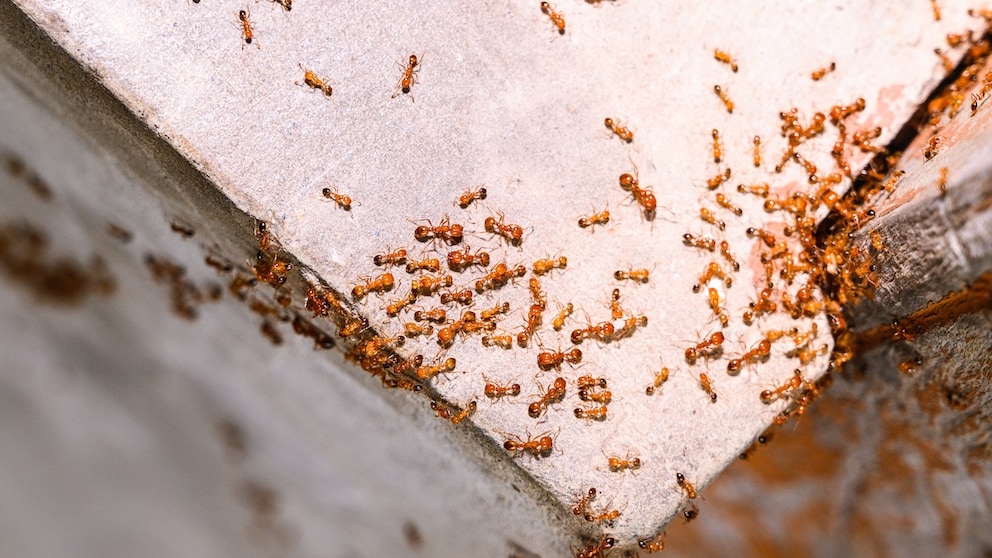
If you discover tiny ants, there’s no need to panic. Fortunately, Pharaoh ants are quite rare and can be easily distinguished from other native species. For one, they are tiny—about two millimeters in size—and their bodies are amber-colored, almost transparent, with a dark tip on the abdomen. If unsure, examine the ants under good lighting with a magnifying glass. Even a layperson can usually identify the insects this way.3
Signs of a Pharaoh ant infestation in the house include:4
- Fine ant trails on walls, tile joints, or along warm pipes
- Sweet-oily smell (especially with heavy infestation)
- Crawling ants in pantries, bakeries, or at pet feeding areas
How to Prevent an Infestation
Since Pharaoh ants are introduced through goods deliveries, packaging, or household items, protection begins with a preventive inspection. Check especially boxes, electronic devices, and pet food packaging if they have been stored warm or come from unknown sources.
Additional preventive measures:
- Always store food in tightly sealed containers
- Immediately remove pet food leftovers
- Regularly dispose of trash, especially organic waste
- Seal leaking joints, cracks, and wall openings
- Regularly check appliances like refrigerators or heaters
Since Pharaoh ants love warmth, they often find shelter in heating rooms, kitchens, or bathrooms. The warmer and more humid a place is, the more attractive it becomes for the tiny intruders.5
Fighting Pharaoh Ants: Why Home Remedies Don’t Help
Anyone who thinks they can repel Pharaoh ants with vinegar, baking soda, or essential oils is unfortunately mistaken. Such home remedies may work temporarily, but they often lead to the ants forming new nests and spreading even further. Once Pharaoh ants are detected, expect a months-long and consistent fight.
Professional support is essential. Effective control is only possible with bait laid by certified pest controllers. These contain active ingredients that are taken up by the workers and carried into the nest, thus reaching the queens. Only when these die can the colony sustainably disappear.6
One-time measures are not enough: Since the insects reproduce very quickly, multiple treatments over weeks to months are necessary. Regular inspections by a professional are also essential to prevent relapses.
Important: Insect sprays or contact poisons are counterproductive, as they only “shatter” the colony. The ants then form new nests—and the problem worsens.
How Professional Pharaoh Ant Control Works
- Inspection and Species Identification – Experts identify the ants and search for nests.
- Targeted Bait Placement – Tiny gel or bait points are set along the ant trails.
- Monitoring – The infestation is regularly checked over several weeks.
- Follow-up Treatment – If ants reappear, additional bait points are set until no activity is detectable.
Pharaoh Ant Infestation Must Be Reported
Since Pharaoh ants can transmit pathogens to humans, they are considered health pests in Germany and must be reported to the responsible health department. The health department is also responsible for monitoring the control.7
Ants Are Resentful and Can Even Take Revenge
What Do Wasps Actually Do in Winter?
5 Practical Tips Against Pharaoh Ants
- Secure Food: Store anything sweet or protein-rich in airtight containers.
- Seal Cracks: Silicone or sealant prevents new nests.
- No Scent Traps: Essential oils only repel ants briefly—professional bait is needed.
- Check Goods: Inspect newly delivered electronic devices or boxes for ant activity.
- Report Infestation and Call Experts: At the first signs, immediately contact a pest controller—the sooner, the better.
Conclusion: Small, Persistent—and Only Defeated with Patience
Pharaoh ants are a prime example of how tiny insects can cause significant damage. Their tropical origin, rapid reproduction rate, and ability to hide in buildings make them one of the most challenging household pests.
Home remedies are hardly effective—the key is a combination of professional control, patient monitoring, and consistent hygiene. Those who act early not only save themselves a lot of effort but also protect their own health and that of their pets.