

July 3, 2025, 1:44 pm | Read time: 3 minutes
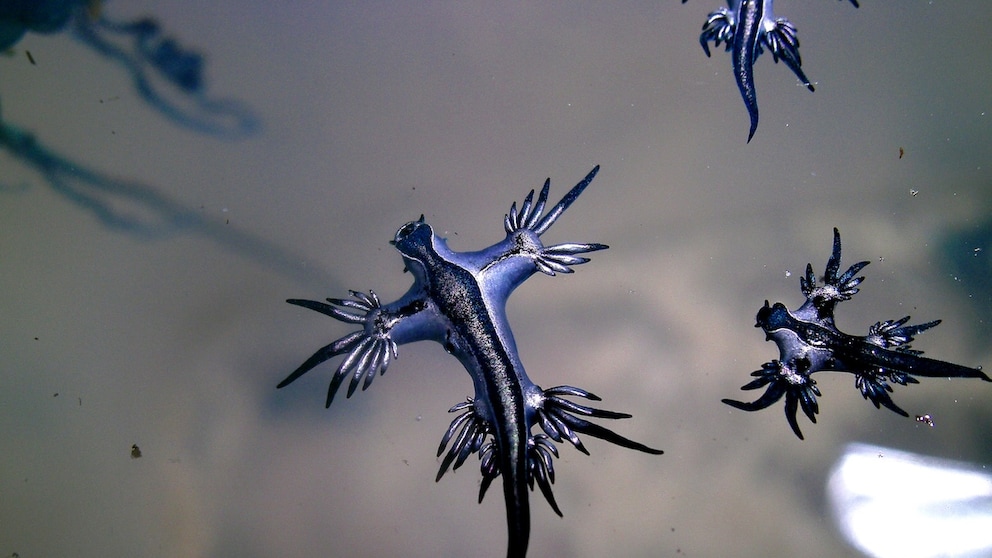
A discovery like something from another world: A marine biologist claims to have discovered an animal off the coast of Mallorca that had been missing for nearly three centuries–the “Blue Dragon.” As fascinating as its appearance is, contact with it can be dangerous.
For the first time since 1705, the rare sea slug Glaucus atlanticus is said to have been sighted again near Mallorca. Known as the “Blue Dragon,” this species can be dangerous for swimmers–especially now during peak season, as TRAVELBOOK first reported. Here’s what is known about the creature.
Rare Sighting Near the Serra de Tramuntana
Spanish marine biologist Gádor Muntaner told the newspaper “Ultima Hora” that she discovered a particularly rare marine animal during a boat trip in the northwest of Mallorca: the sea slug Glaucus atlanticus. “It is a ‘very, very rare creature,'” Muntaner told the paper. If the sighting is confirmed, it would be the first documented encounter with the species on the Balearic island since 1705–over 300 years ago.
Although Mallorca has been spared so far, the “Blue Dragon” has been sporadically observed on European coasts in recent years–such as in 2023 in Torrevieja on the Costa Blanca. It reportedly appeared there two years earlier as well.
Fascinating Camouflage and Extraordinary Appearance
The Glaucus atlanticus typically measures between three and five centimeters. According to “Ultima Hora,” the specimen sighted by Muntaner was particularly large. Its striking, deep blue body with wing-like appendages on the sides resembles a creature from another world. The slug usually lives just below the water’s surface in open ocean areas–often in groups.
The distinctive coloring serves as camouflage: The blue top blends with the water’s surface when viewed from above, while the gray-white underside is hardly distinguishable from the sky when seen from below–a perfect defense against predators from both air and water.

Which Jellyfish Are Dangerous in the Mediterranean?

These Sharks Live in the Mediterranean and How Dangerous They Are
Avoid Contact at All Costs–For Good Reason
The “Blue Dragon,” as Phillip Kanstinger, a marine animal expert at WWF, explained to TRAVELBOOK, is a nudibranch that preys on cnidarians like jellyfish and corals–and feeds on them. “It’s actually good for us humans that the slug eats Portuguese man o’ war, for example, because they are dangerous.”
According to Phillip Kanstinger, nudibranchs store the toxins they consume. “This makes them toxic themselves, so you shouldn’t touch them.” Unlike other snails, these marine mollusks lack a hard shell, so the cnidarian toxin is transferred upon skin contact. If the “Blue Dragon” has absorbed the toxin of a Portuguese man o’ war, for instance, contact can lead to red, painful welts on the skin. In the worst case, it can cause an allergic shock. However, no cases are known so far where contact with the “Blue Dragon” has had similar effects on humans. Panic is therefore unwarranted.
Nevertheless, if you encounter the unusual creature on the beach, it’s best to keep your distance. It’s advisable to report the find to a lifeguard–better safe than sorry.
Climate as a Possible Cause? Hypothesis Unproven So Far
Climate change is mentioned in some reports as a possible reason for the increased occurrence of exotic marine animals–including the “Blue Dragon.” However, Phillip Kanstinger puts this theory into perspective: “The animals are only seen sporadically, due to influx events. There is no evidence yet that they are spreading due to climate change.” Whether the rare visit off Mallorca’s coast is a harbinger of greater changes remains uncertain.