

July 27, 2025, 1:42 pm | Read time: 3 minutes
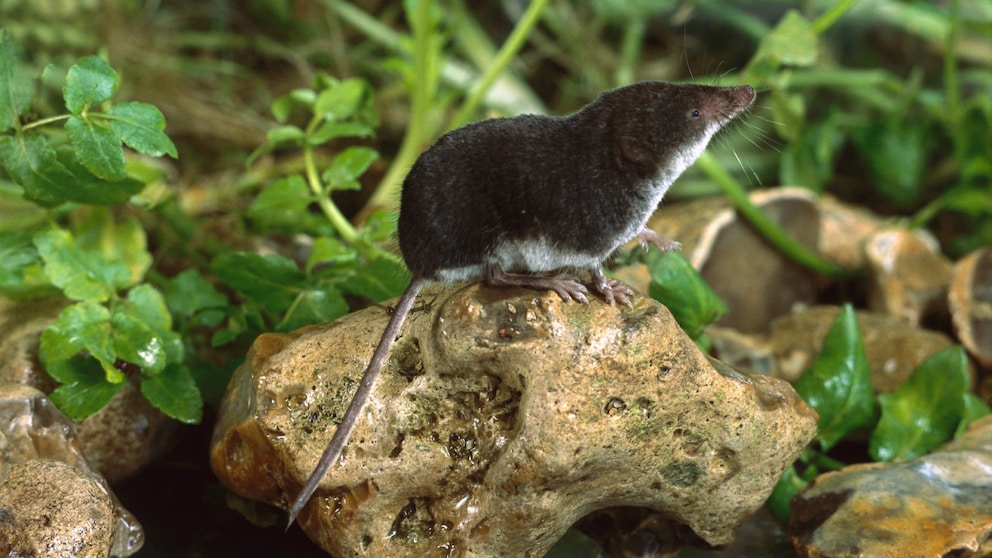
Small, inconspicuous, and seemingly harmless: At first glance, the water shrew appears to be a typical resident of our gardens. But appearances can be deceiving—it is one of the few venomous mammals in Germany. Anyone who discovers this nocturnal hunter in their garden should know what to look out for.
Surprisingly Venomous: What Makes the Water Shrew So Special
Germany is home to six species of shrews—the largest among them is the water shrew (Neomys fodiens). With a body length of up to nine centimeters, it significantly surpasses its relatives. Compared to the pygmy shrew, which measures only about five centimeters, it is a true giant.
Its habitat is closely linked to bodies of water. With water-repellent fur and bristle-covered hind feet, it is perfectly adapted to hunting in water. It proves to be a skilled predator, not shying away from larger prey.
Most striking, however, is a feature that sets it apart from most other mammals: its saliva is venomous. Under its tongue are venom glands that allow the water shrew to paralyze small prey such as insects, worms, and amphibians with a bite.
Why the Water Shrew Thrives in the Garden
Despite its name, the water shrew is not part of the mouse family but is more closely related to moles and hedgehogs. Its diet mainly consists of insects and spiders.
Moist habitats such as ponds, streams, or ditches are essential for the water shrew. If such water sources are present within a naturally designed garden—complemented by piles of leaves or wood, a compost heap, or a rich selection of insects—the garden can quickly become an ideal habitat for the animal.
Snakes That Live in the Garden and How to Identify Them

Hedgehogs Need Year-Round Support–Here’s How to Help
No Danger to Humans—But Unpleasant for Pets
The water shrew itself is difficult to spot. As a shy and primarily nocturnal or crepuscular animal, it avoids direct encounters with humans. However, there are some signs that may indicate its presence: feeding marks on snails, insect remains, or small amphibians, as well as tunnels and burrow systems in moist soil, especially near water. Observing the animal hunting in water provides the clearest evidence of its presence.
For humans, the venomous bite of the water shrew poses little risk. Only in very rare cases does a bite occur—and even then, the jaw is usually not strong enough to penetrate the skin. For pets like cats or dogs, however, the neurotoxin can be painful. While not life-threatening, encounters with the shrew should still be avoided.
Protection Instead of Expulsion: What to Consider with Water Shrews in the Garden
The water shrew is more threatened by humans than vice versa. As reported by the magazine Geo, its habitat is increasingly restricted by drainage, land consolidation, and agricultural use. Due to this decline, it is now under species protection. As an endangered species on the Red List of the International Union for Conservation of Nature, it is illegal to capture, injure, or kill it.
Discovering a water shrew in the garden should be seen as a sign of a healthy, diverse environment. To avoid endangering the animals, it is advisable to refrain from using chemical agents for weed or pest control. Relocation is legally prohibited.
If the presence of the small predator is bothersome, the only option is to make the garden less attractive: remove water sources, clear leaf and wood piles, and keep the area as dry as possible. However, it should be noted that such measures also deprive other beneficial garden inhabitants, like hedgehogs or birds, of their habitat.