


March 17, 2026, 4:21 pm | Read time: 5 minutes
A snake in the garden—for many people, that’s initially a moment of shock. But in most cases, there’s no need to worry. In Germany, most native snakes are completely harmless, extremely shy, and usually disappear faster than you can even get a good look at them. In fact, you can even be pleased about the rare garden visit: Snakes are important beneficial creatures and a sign of a natural garden. Which species you might encounter, how to recognize them, and why they are so valuable to the ecosystem are all explained by PETBOOK editor and biologist Saskia Schneider in this article.
What Snakes Are in the Garden and How Do I Recognize Them?
There are about 3,000 species of snakes worldwide. In Germany, there are only seven—and only two of them are venomous. Most that appear in the garden belong to the completely harmless species.
Grass Snake–the Most Common Garden Visitor
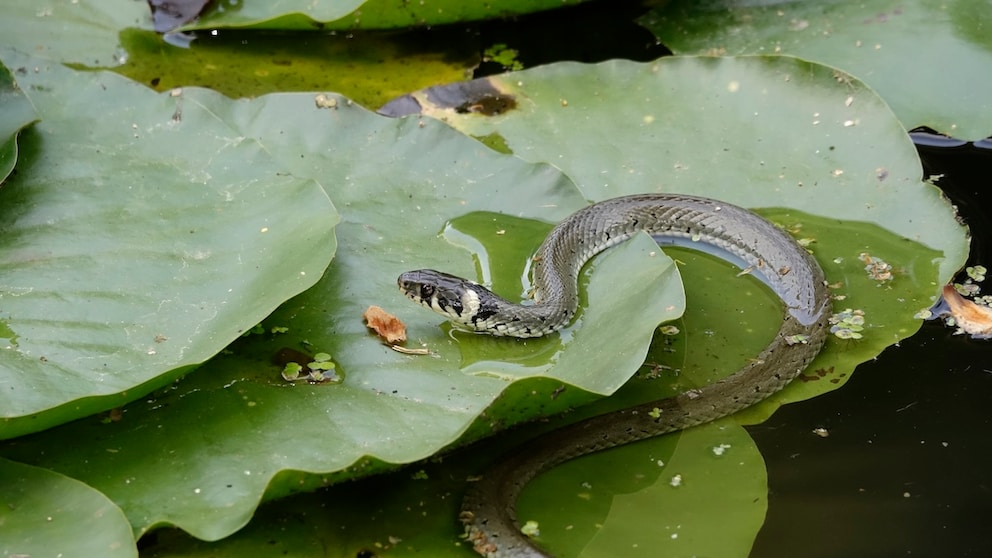
When people in Germany discover a snake in the garden, it is very often a grass snake.
It usually grows between 80 and 120 centimeters long and is relatively easy to recognize: Behind the head are two yellowish, crescent-shaped spots—a kind of “ring” that gave it its German name (Ringelnatter). There are now more and more black variants in Germany.
Grass snakes particularly like to stay near water. A garden pond with frogs or small fish is therefore a veritable buffet for them.1
Smooth Snake–Small, Shy, and Often Mistaken
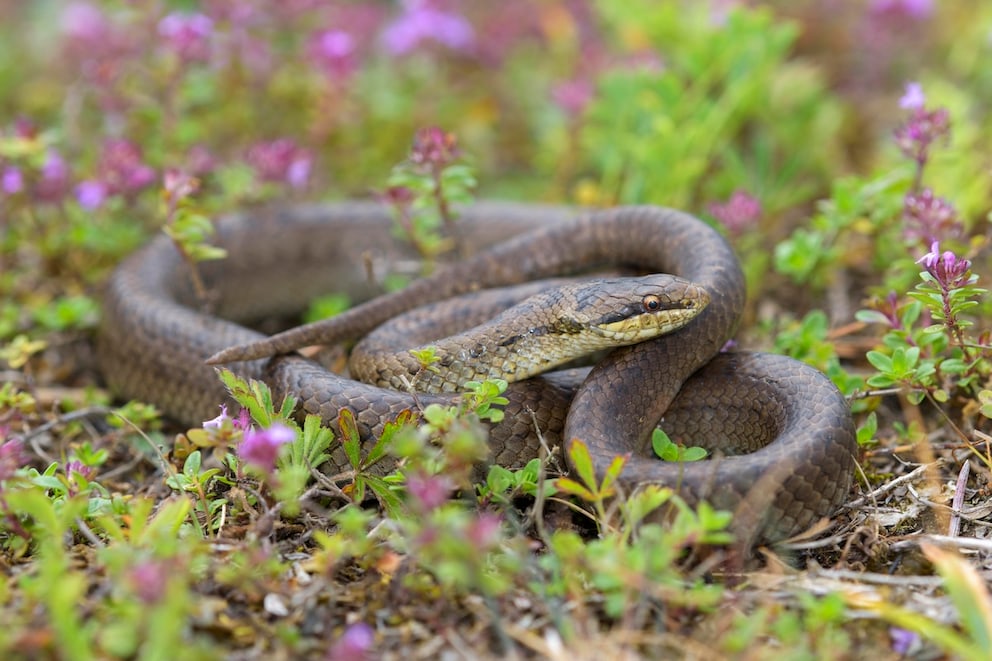
The smooth snake—also known as Coronella austriaca—is significantly smaller than the grass snake. It usually only grows to about 60 to 70 centimeters long. Its gray-brown body has dark spots, and a dark stripe runs from the eye to the corner of the mouth.
The problem: Laypeople often mistake it for the adder, one of the few venomous snakes in Europe. However, the smooth snake is completely harmless. A simple distinguishing feature is the pupils: The smooth snake has round pupils, while the adder has slit-shaped ones.2
Dice Snake and Aesculapian Snake–Rare Visitors
Very rare—but theoretically possible—are encounters with the dice snake, a water snake with cube-shaped spots on its back. It lives almost exclusively along larger rivers.
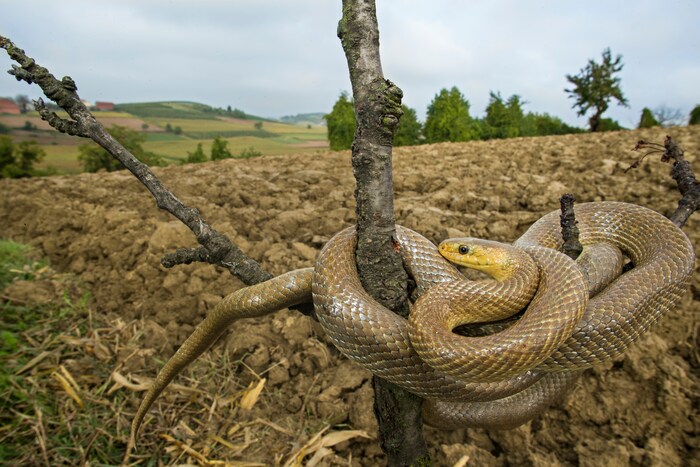
The largest native snake is the Aesculapian snake, which can grow up to one and a half meters long. However, its occurrence is limited to a few regions in Germany.
Venomous Species: Adder and Asp Viper
The two venomous snakes in Germany—the adder and the asp viper—are extremely rare in gardens. Both species are considered so-called culture avoiders and shy away from human settlements.
Even if a bite occurs, it usually happens only if the animal feels severely threatened.
More Common in the Garden, but Not a Snake: The Slow Worm
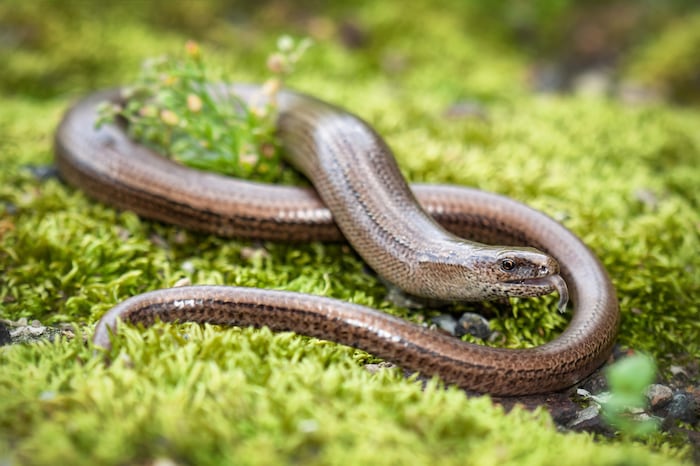
Incidentally, the slow worm is often mistaken for a snake. In fact, it is a legless lizard.
An important feature: Slow worms can blink—snakes cannot. They can also shed their tails if they feel threatened. For garden owners, they are a real boon, as they eat, among other things, slugs.
Where Do Snakes Stay in the Garden?
Snakes are cold-blooded animals. This means their body temperature depends on the environment. Therefore, they need both warm sunny spots and safe hiding places.
Typical places in the garden are therefore:
- Stone piles or dry stone walls
- Compost heaps
- Wood and brush piles
- Dense hedges or bushes
- Garden ponds and damp areas
However, anyone who thinks snakes constantly show up in the garden is mistaken. The animals are extremely shy. They perceive the slightest ground vibrations and usually disappear long before we even spot them.3
Are Snakes in the Garden Dangerous for Pets?
In short: No, usually not. Most native snakes are non-venomous and also very reserved. They do not actively attack humans or pets.
If there is an encounter with a dog or cat, snakes usually try to flee immediately. A bite is mostly a pure defensive reaction—and is correspondingly rare. Therefore, the most important thing is not to corner or try to touch the animal.
Why Snakes in the Garden Are a Positive Thing
Snakes play an important role in the ecosystem. They are part of a complex food web and fulfill several important tasks.
- They regulate rodent populations: Mice and other small mammals are on the menu for many species.
- They often eat sick or weak animals, which can curb diseases in animal populations.
- They are themselves food for other animals, such as birds of prey or martens.
Their presence is also an indication that a garden is ecologically diverse—with sufficient food, hiding places, and natural structures.4,5

The 7 Native Snake Species of Germany and How to Identify Them
Rare but Deadly: How Dangerous Is the “Hell Viper”?
How to Attract Snakes to the Garden
Snakes are demanding when it comes to their habitat. If you want to help them, you should design your garden as naturally as possible.
Helpful measures include:
- A garden pond with a natural shore
- Stone or dry stone walls for sunbathing
- Deadwood or brush piles as hiding places
- Compost heaps, which can also serve as egg-laying sites
- Structurally rich gardens with hedges and wild corners
Such measures not only help snakes but also many other endangered species, such as frogs, lizards, and insects.6
Conclusion
A snake in the garden may be surprising at first. But it’s actually a good sign. Most native species are completely harmless and extremely shy. Those who encounter them are usually lucky enough to observe a rare resident of our natural world.
And perhaps it’s worth overcoming the initial shock next time—and instead taking a moment to marvel. Because snakes are among the most fascinating and yet most misunderstood animals in our native wildlife.