


November 15, 2025, 2:56 pm | Read time: 3 minutes
As autumn turns to winter, many people think of hedgehogs, helping them with food and shelter through the cold season. But few consider frogs, toads, and newts, which are particularly endangered at this time. For these animals, the search for a safe winter refuge can quickly become a deadly trap. This makes small, targeted changes in the garden all the more important, as they can significantly benefit local amphibians in winter with minimal effort.
Defusing Dangerous Traps Around the House
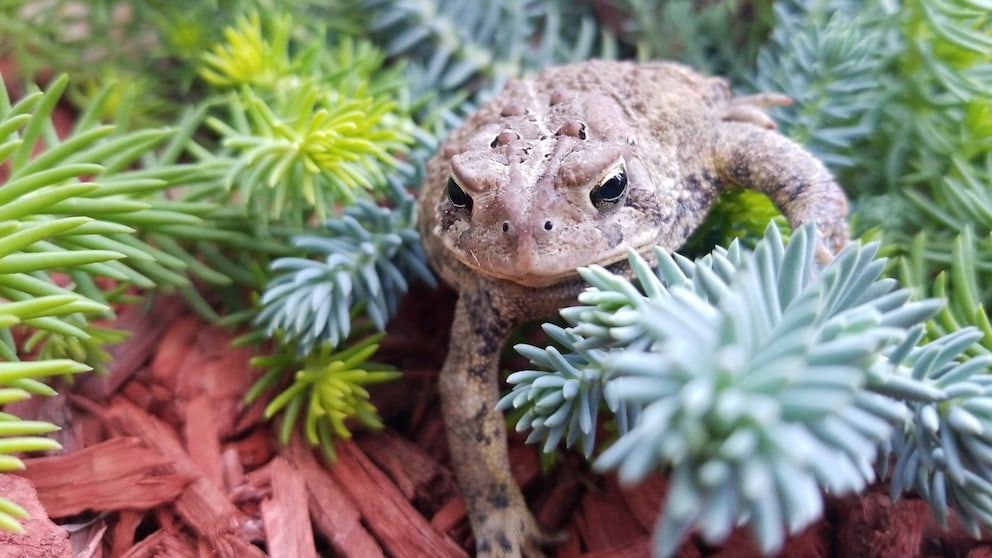
Amphibians like common toads, grass frogs, and smooth newts seek shelter in damp, dark, and frost-free hideouts during the cold season. However, in built-up areas, the search for a suitable winter refuge quickly becomes dangerous.
“Especially for toads and newts, the search for winter quarters around our buildings can quickly become life-threatening,” warns Andreas von Lindeiner from the Bavarian Association for the Protection of Birds (LBV). Basement shafts and drains quickly become deadly traps: The animals fall in and can’t find a way out.
To prevent this, the LBV recommends securing dangerous spots around the house. Light shafts and drains can be covered with fine-mesh grates—simple, inexpensive, and effective.
Noise at the Garden Pond? These Frogs Are Still Croaking in Fall

How Dangerous Raccoons Are to Humans and Animals
Facilitating Escape with Ramps and Nets
Additionally, simple climbing aids can help rescue trapped animals. In a light shaft, a rough wooden board as an inclined ramp or a tightly woven plastic net can suffice for the animals to climb up.
Outdoor basement stairs can also become traps. Regularly checking for trapped animals and installing escape aids can help. “A rough board or a rope at the edge can serve as a climbing aid to facilitate escape,” advises von Lindeiner. Alternatively, a board can be used to create a barrier that prevents amphibians from going down in the first place.
Actively Supporting Amphibians for Winter in the Garden
Those who want to actively support amphibians should design their garden as naturally as possible. “To provide toads, frogs, and newts with a good winter refuge in the garden, rely on natural hideouts and sufficient food—nothing more is needed for a small paradise,” says amphibian expert Andreas von Lindeiner.
Amphibians living with us, such as common toads, grass frogs, and smooth newts, prefer frost-free places as hideouts: in compost or leaf piles, under tree roots, or in damp earth holes. There, they enter a winter torpor.
Having a dry stone wall, brushwood hedge, or pile of deadwood in the garden also benefits them. Some amphibians, like the grass frog, also overwinter in water. However, to prevent a pond from becoming a death trap, it should be at least one meter deep—only then will it not freeze completely.
With material from dpa