

December 5, 2025, 4:58 am | Read time: 5 minutes
Raccoons are appearing more frequently in our surroundings—and with them, many questions are raised. What does this actually mean for us? Do these animals transmit dangerous diseases? PETBOOK explains how dangerous raccoons are for humans and pets and how you should behave if you encounter one.
Raccoon Is Among the Most Common Carnivores in Germany
Many people find raccoons to be cute and curious visitors. However, experts have been warning for years about the ecological consequences that the small bear, which migrated from North America, can have on native animals and habitats. With an estimated 1.6 to 2 million animals, it is now one of the most common carnivores in Germany. Studies show: Its strong spread significantly alters local ecosystems—and the perception of the “cute newcomer” is becoming increasingly critical.1
Raccoons Are Spreading in Germany
The fact that raccoons are increasingly seen in Germany is not only due to their curiosity but primarily to their astonishingly rapid spread. Raccoons were originally brought from North America to Central Europe for fur production. In the 1930s and 1940s, they were more frequently released or escaped from fur farms into the wild. From two regions—North Hesse and Brandenburg—they spread rapidly across the country.
Today, studies by Goethe University Frankfurt show that development varies greatly depending on the area. This is mainly possible due to the animals’ enormous adaptability. Raccoons easily find shelter in forests as well as in cities, use every food source, and cope well with losses. All of this explains why they have been able to establish themselves so quickly here.2, 3, 4
Raccoons Are Generally Not Aggressive
Raccoons usually appear calm and reserved. Instead of relying on their eyes, they explore their surroundings with their remarkably sensitive front paws. They examine every possible piece of food—especially near water, where it seems as if they are “washing” it. Their diet is diverse: fish, frogs, birds, small mammals, snails, worms, as well as fruits and nuts are included.
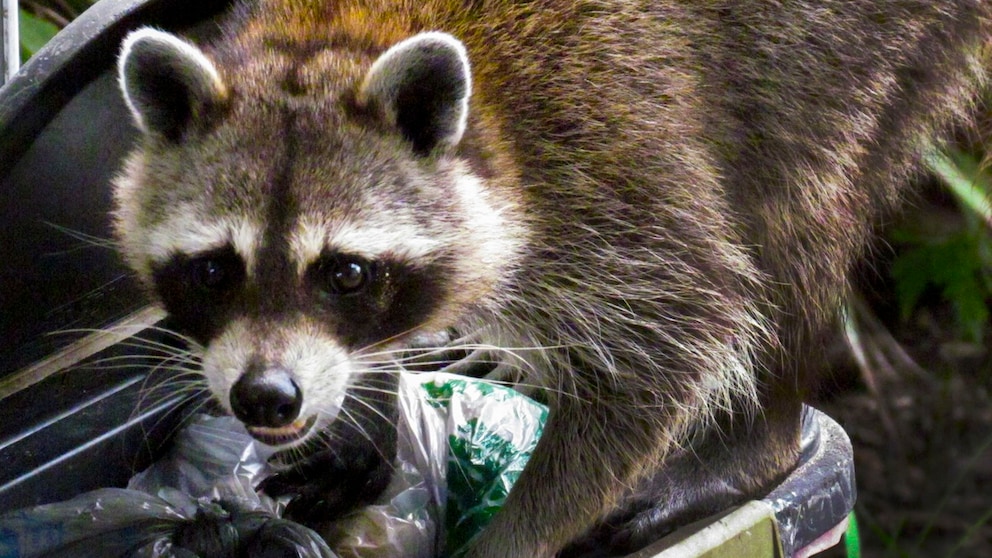
In settlements, they also use what people leave behind, such as garbage or open feeding bowls. During the day, they retreat to tree hollows, burrows, sheds, or attics. They are nocturnal, good climbers, and mostly live alone or in small family groups. Therefore, raccoons are generally harmless in everyday life.5
Are Raccoons Dangerous to Animals Like Dogs or Cats?
Since raccoons also like to feed on leftovers and actively search for them in garbage dumps or gardens, they increasingly come into contact with pets like cats or dogs. As omnivores, they might even consider dead animals like cats as food. However, aside from this scenario, raccoons do not actively hunt cats and are generally not aggressive toward dogs.
If the animals attack, it is usually only to defend themselves or when their food supply becomes scarce. However, raccoons can be much more dangerous as carriers of infectious diseases, parasites, and worms for cats and dogs.
When Raccoons Can Become Dangerous
Even though raccoons are rarely dangerous in direct contact, they can still cause a number of problems. As nest robbers, they pose a threat, especially to ground-nesting birds, amphibians, and small mammals. Another risk arises from diseases: In some areas, raccoons carry the raccoon roundworm, whose eggs can cause severe tissue and nerve damage in humans. Pets can also become infected, for example, with distemper. In villages, but also in urban areas, conflicts arise when raccoons use attics or barns.
Feces, urine, food scraps, noise, and damage to the building structure quickly become a nuisance. They are often additionally attracted by garbage, compost, or feeding stations. For humans, raccoons remain mostly harmless in direct contact, but their presence can still bring ecological and health problems.
Raccoons Are a Major Threat to Native Wildlife
A study by Goethe University and the Senckenberg Biodiversity and Climate Research Center shows that raccoons consume significant amounts of endangered amphibians and reptiles in German nature reserves. By analyzing the feces, stomach contents, and parasites of 108 animals, researchers found evidence of common toads, newts, grass frogs, and grass snakes in their diet. Spawning areas are particularly intensively used—in the Spessart, over 400 skinned toads were discovered in a small water area in a single day.
The results confirm previous findings that raccoons can specialize in certain native species, thereby endangering their populations. In addition to amphibians and reptiles, hedgehogs and birds are also affected. Researchers, therefore, call for targeted management measures in areas with rare species to ensure the conservation goal of species preservation. Originally from North America, raccoons have spread widely in Germany since the 20th century and now pose a serious threat to native wildlife.6

Are Raccoons a Problem in Germany?

What Cute Raccoon Videos Don’t Show
What to Do If a Raccoon Visits?
If a raccoon appears in the garden or at the house, it helps to stay calm. Raccoons like to seek out sheltered places such as sheds, attics, or narrow crevices to retreat. Therefore, possible entry points should be well sealed. Food sources also play a major role: Secure garbage cans tightly, cover compost, pick up fallen fruit, and do not leave feeding bowls outside overnight. Many things that seem trivial to us are a real buffet for raccoons. Smooth collars on downspouts or trees make climbing more difficult, and the animals usually avoid light or movement in the garden.
Important: Never feed or touch them. Raccoons are wild animals and should be treated as such. If they feel threatened, they may try to bite—so keep your distance and always give them a way to retreat. If you find an injured raccoon, you should contact a wildlife or animal protection organization that can provide expert help.7, 8
So, Are Raccoons Dangerous?
Raccoons are usually harmless to humans and pets like dogs or cats. However, their growing presence brings ecological, health, and structural challenges. Those who encounter them should exercise caution, not feed them, and secure access points and food sources. As an invasive species, the raccoon remains a fascinating but not unproblematic resident of our landscapes and cities.