

April 3, 2023, 11:36 am | Read time: 3 minutes
Raccoons originate from North America. However, more and more of them are found in German forests. Since the early 20th century, these adaptable wild animals have been spreading further in this country. But not everyone is pleased about this: Raccoons are suspected of displacing other species and transmitting diseases. But is there any truth to these prejudices?
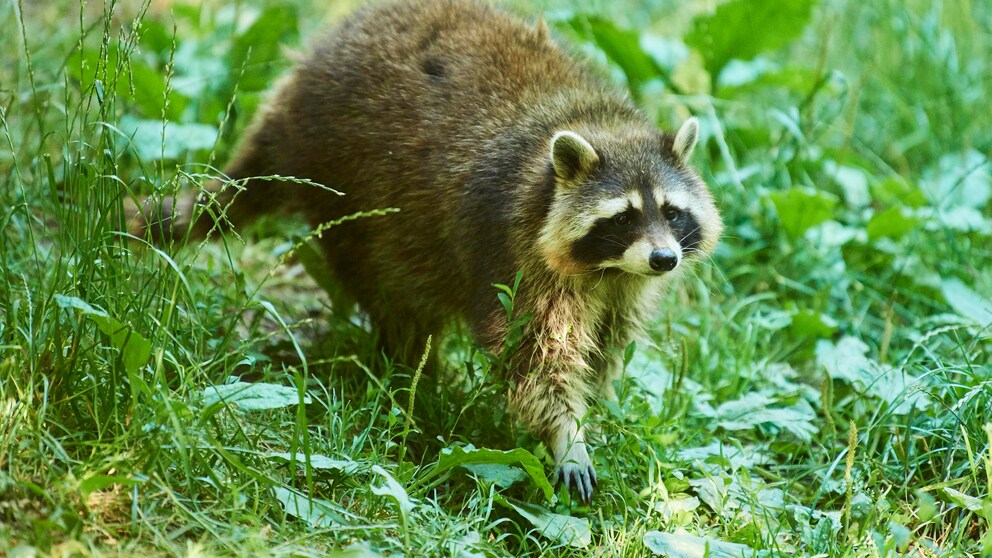
The raccoon does look cute. Its black eye mask, ringed tail, and humped gait make the twilight and nocturnal small bear easily recognizable. Yet despite its charming appearance, the wild animal is controversial even among conservationists. This is because the species was introduced to Germany. They are descendants of animals that once escaped from fur farms or were simply released. Thus, the raccoon is not originally native here. Some see it as a threat to the native wildlife. But how dangerous are Germany’s raccoons really?
Where are raccoons found in Germany?
In Brandenburg, Lower Saxony, and Hesse, there are particularly many raccoons. But the furry newcomers are also appearing more frequently in other federal states. They no longer just inhabit forests but also roam through villages and cities. Open trash cans, compost heaps, and available pet food attract the hungry omnivores like a magnet.
For some native wild animals, the small predators pose a serious threat. Ground-nesting birds such as lapwings and black grouse are defenseless against the predator. Since the raccoon is an excellent climber, it also raids high bird nests. Even young eagles are not safe from it. And it digs up the eggs of the endangered European pond turtle to eat them. All this makes the neozoon, as non-native animals are technically called, not exactly a welcome guest in Germany.
Also interesting: Beware! These diseases can be transmitted by raccoons
Are raccoons a nuisance in Germany?
Since 2016, the raccoon has been on the EU-wide “List of Invasive Alien Species of Union Concern.” This specifically means: Raccoons may not be kept privately or released. EU member states must monitor and curb the spread of the raccoon. In Germany, this species can therefore be hunted year-round in almost all federal states.
Whether the raccoon is a nuisance or not is a matter of debate. Some would like to eradicate the fur bearer to protect native wildlife. Others believe that peaceful coexistence between raccoons and other wild animals is indeed possible. For example, the Nature and Biodiversity Conservation Union (NABU) calls for preserving and expanding the habitats of birds, amphibians, fish, and small mammals instead of relentlessly hunting the non-native predator.

Sterilize Instead of Shoot–Can the Raccoon Problem Be Solved This Way?

How Dangerous Raccoons Are to Humans and Animals
What to do if a raccoon is in the garden?
Raccoons are unwelcome guests in many places. They rummage through trash cans and sometimes even enter houses. To keep the small bears away, waste should be stored out of reach. Animal products such as meat and fish scraps should not be put in the compost. To ensure raccoons do not enter the house, it is also advisable to keep cat flaps closed at night and cover chimneys with metal grates. Those who want to protect birds in the garden from the furry predator can install climbing guards on trees.
Good to know: Dog and cat owners, in particular, should avoid contact with raccoons. The wild animals can carry fleas, lice, and ticks, as well as various diseases that can be dangerous to our animal companions. These include the highly contagious, often fatal feline disease panleukopenia and the feared viral disease distemper.
Sources
- Nabu.de, “The Raccoon: Naturalized Neighbor on the Rise” (accessed April 3, 2023)
- Umweltbundesamt.de, “Raccoon” (accessed April 3, 2023)
- Jagdverband.de, “Raccoon (Procyon lotor)” (accessed April 3, 2023)