

September 11, 2025, 3:07 pm | Read time: 7 minutes
The croaking of frogs and toads is as much a part of spring as birdsong and gardening. When these creatures head to ponds and pools in search of mates, it’s hard to miss–though not everyone appreciates the nighttime frog concerts. But by summer, when the young frogs are growing, the concert at the pond usually ends–or does it? Some frogs continue croaking into the fall. Who’s still making music and why–PETBOOK investigated.
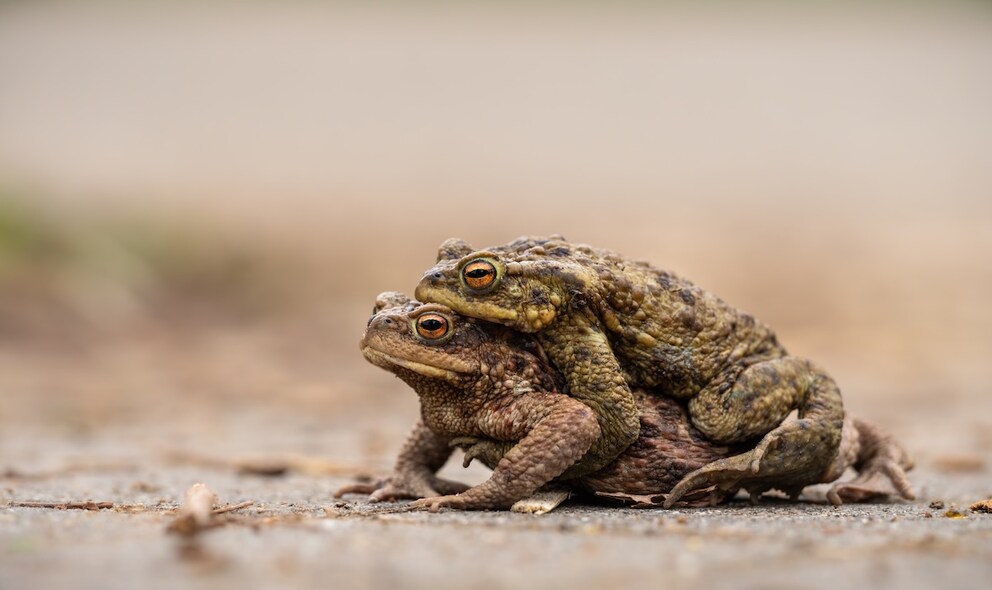
For most people, it’s clear: Frogs croak. But their amphibian relatives, the toads, can also be quite vocal. It’s not always easy for laypeople to tell which is which in the garden–the animals look similar. However, even laypeople can distinguish between toads and frogs. Toads have a warty, rough skin, unlike frogs. They have visible glands that can secrete a bitter-tasting toxin to deter predators from putting them in their mouths or beaks.
In Spring, It’s Time for Mating
Amphibians like frogs and toads are cold-blooded: Their body temperature depends on their surroundings. In cooler temperatures, they are sluggish; when it’s warmer, they become more active, and their body temperature rises. Frogs and toads spend the cold season buried in mud, under leaf piles, or at the bottom of the lake where they live, depending on the species.
In early spring, after waking from winter dormancy, they begin their mating rituals. As soon as nighttime temperatures consistently exceed five degrees Celsius, the first specimens become active and start their journey. Many toads and frogs head to their breeding waters, which can sometimes be just a large puddle. Countless animals are on the move during mild nights. 1 2 3 4
Also interesting: What is the difference between a frog, a toad, and a newt?
Only Males Croak Loudly
Depending on the species, these animals use croaking to mark their territory or attract females during mating season. Only the males croak loudly. They have a vocal sac, which is located either on the sides or in the middle of the throat, depending on the species, and amplifies the sound. The loudest croakers can be heard from several hundred meters away.
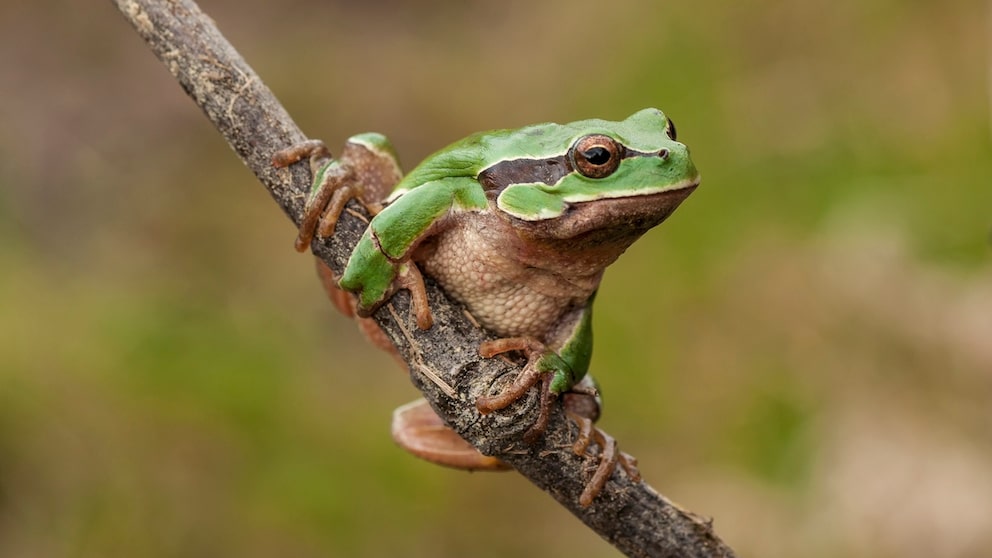
Not only frogs can croak audibly; toads can also make themselves heard, depending on the species. However, the tree frog is the loudest of its kind. “The tree frog is a loud frog,” says biologist Andreas Zahn when asked by PETBOOK. According to literature, these frogs can reach up to 90 decibels, equivalent to a loud lawnmower or a starting motorcycle, and can be heard more than a kilometer away.
But the lake and pond frogs, which are part of the so-called green frogs, can also be heard. Of the five toad species living in this country, only the natterjack and the green toad croak significantly louder. The common toad is rarely heard–it is one of the quieter members of the amphibian kingdom. The other toad species also keep their volume down, says Zahn. Moor and grass frogs are also among the quieter animals, making more bubbling or growling sounds to attract females.5 6
Croaking as a Call
But whether frog or toad, most animals are only heard from spring to early summer when it’s time to attract females. Frogs also use croaking to signal to others in the same pond where the territorial boundaries are. The territories average only a few centimeters, so many frogs can fit into one pond if needed. It’s important to defend one’s area. Male toads, on the other hand, croak not only to attract females but also to drive away other males.
After the female frogs and toads have laid their eggs between April and May to early June, depending on the species, peace returns to the garden or pond. “During the dry phase in summer, frogs don’t croak, and most toads are also quiet.” Only toad species that under certain circumstances lay eggs again after a few weeks might be heard later in the year.7
Autumn Calls Due to Loud Machines?
However, tree frogs are an exception. Only about three to five centimeters in size, they are not only among the loudest of their kind but also croak into late summer and fall.
Anyone who has passed by lakes or moors, forest edges, or wetlands on warm weekends may have heard strange croaking sounds in the evening that resembled the typical “äpp, äpp, äpp” of the tree frog. But at this time of year, that’s hardly possible, right? “Yes,” says biologist and frog expert Andreas Zahn when asked by PETBOOK. “Among tree frogs, there are occasional autumn calls.” These climbing animals often sit in trees or hedges and make themselves heard. Sometimes lake and pond frogs can also be heard on mild late evenings. But it’s usually a tree frog that makes evening walkers perk up their ears.
Why the animals croak so late in the year, even though it’s not breeding season, is still speculative. “We don’t know why they do it,” says Dr. Andreas Zahn, biologist, frog expert, and chairman of the BUND district group in Mühldorf, Bavaria. However, it is clear that tree frogs also like to climb trees during the mating season, where they rest, eat flying insects, and croak. Perhaps, Zahn suggests, the daily rhythm in early fall reminds them of spring: The days are still warm, the evenings mild, but the days are relatively short–similar to early spring.

How Small Changes in the Garden Can Help Amphibians Survive the Winter
Caution! The toad migration has already begun
Other Theories on Why Frogs Croak in Fall
Other theories suggest that the animals might already be in a kind of premature mating mood, which could also be related to the daily rhythm. Often, autumn calls from tree frogs are also triggered by humans, as described in the literature. Loud engine noises, such as those from airplanes or motorcycles, seem to prompt the frogs to call. Even rattling lawnmowers or human shouts can be triggers.
Why the tree frog reacts to these noises by croaking is also unclear. “Maybe it just croaks because it enjoys it,” says Zahn. “We simply don’t know.” However, anyone who hears a tree frog can be pleased: The animals are highly endangered in this country–as in all of Europe–because they find fewer suitable habitats. They are therefore under special protection and are a sign of still-intact nature.8
Earplugs Against Frog Croaking
By the way, anyone annoyed by frog or toad croaking usually has few options to do anything about it. It doesn’t matter what time of year the animals are heard or if they’re making noise in a neighbor’s garden or a nearby forest pond. Since frogs and toads are protected species, they cannot be caught, killed, or removed. The pond, their habitat, cannot be filled in just to stop a few weeks of frog concerts.
Especially in rural or nature-adjacent residential areas, croaking is generally something to be tolerated, as animal sounds are considered typical for the area. Only under special circumstances, such as when the noise level of the amorous frogs exceeds a certain threshold (in the past, more than 55 decibels near a bedroom was considered unbearable by the court), can annoyed neighbors potentially achieve the relocation of the animals. However, this is subject to strict conditions. For instance, an exemption must be applied for with the responsible nature conservation authority. And even then, it’s not certain if they will agree.
It should also be noted that the noise must be officially measured; simply saying “it’s too loud” is not enough. By the time a relocation is achieved, the frogs will likely have quieted down on their own. Additionally, the certain noise level must be regularly exceeded. Moreover, relocation does not guarantee that the animals will stay away next spring. Earplugs might then be the more effective and cheaper solution if the few weeks of frog croaking are really that bothersome.9 10