

October 30, 2026, 4:10 pm | Read time: 3 minutes
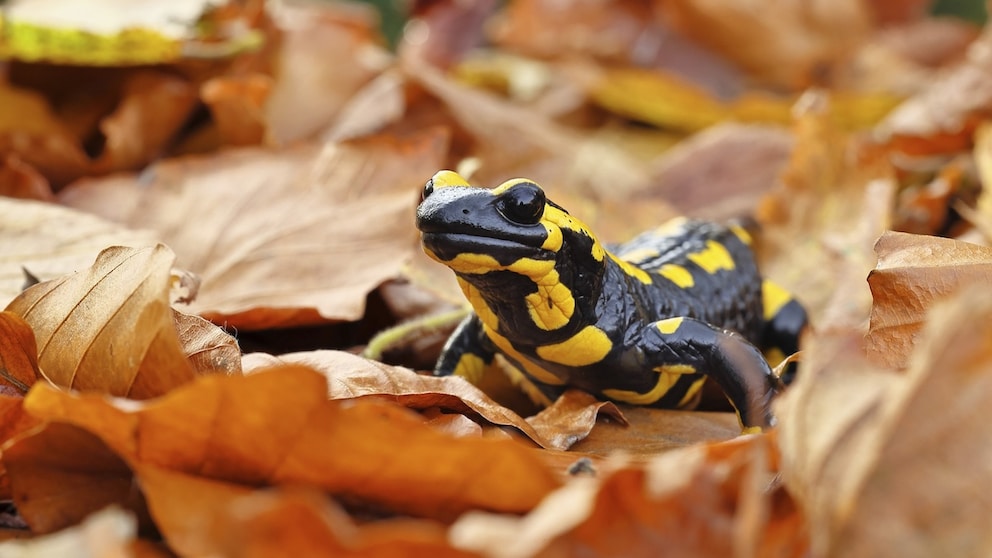
A walk in the woods ended fatally for a one-year-old English Springer Spaniel in Austria’s Burgenland: After the dog apparently encountered a fire salamander in the leaves, it suffered severe convulsions and died within 15 minutes. An autopsy confirmed poisoning from the animal’s secretion, according to a media report. The case has unsettled many dog owners. PETBOOK reached out to NABU for more information.
Why Fire Salamanders Are Poisonous
Fire salamanders produce a toxic secretion in the glands on their head and back to ward off predators. The fluid contains salamander alkaloids, including the neurotoxin samandarin. If it enters a dog’s mouth or nose in larger quantities, it can cause convulsions and breathing problems. It becomes particularly dangerous if a dog picks up or bites the salamander.
Silvia Teich, spokesperson for NABU, explains to PETBOOK: “Fire salamanders are not generally dangerous, but can cause skin irritation and nausea in humans. Their poison serves to deter predators and protect their skin from fungi.”
Humans are not immune to the poison either. Although the secretion is not necessarily deadly to us, it causes skin irritation upon contact. If it gets into the eyes or mouth, it can lead to shortness of breath, convulsions, nausea, and vomiting. Silvia Teich warns: “You should never touch, pick up, or pet fire salamanders. They are wild animals that can panic in such situations and release their poison. Therefore, always observe, never touch. It’s safer for both humans and animals.”
Also interesting: 8 poisonous animals living in the heart of Germany
Is Contact Always Fatal for Dogs?
An encounter does not automatically result in severe poisoning. The risk depends on factors such as the amount of poison ingested, the type of contact, and the size and health of the dog.
Austrian media, citing a veterinarian, report up to 30 fatal cases per year. However, no publicly accessible statistics confirm this number. According to NABU, cases of dogs being killed are isolated incidents.1
These Symptoms Are Warning Signs
If a pet has come into contact with a fire salamander’s secretion, the following symptoms may quickly appear:
- excessive drooling
- retching or vomiting
- tremors and convulsions
- unsteady gait
- weakness or altered consciousness
- breathing problems
If a dog or cat shows such symptoms, it is a veterinary emergency.
What Dog Owners Should Do in an Emergency
If the dog has licked, picked up, or bitten a fire salamander, owners should immediately call a veterinary practice or animal clinic. It’s important to separate the dog and salamander without touching the wild animal with bare hands.
Whether the mouth or mucous membranes should be rinsed can be clarified by phone with a veterinary practice. However, first aid measures should not delay the trip to the clinic.

This Snake, Which Can Grow Up to 1.5 Meters Long, Lives in German Lakes

Why Wildfires Are Deadly for Many Wildlife
How to Avoid Encounters
Fire salamanders primarily live in moist deciduous and mixed forests. They hide under leaves, deadwood, or stones and are especially active during rain. In such areas, dogs should be kept on a short leash and not allowed to roam unattended in the leaves or underbrush.2
The Fire Salamander Is Also Threatened
Fire salamanders are specially protected in Germany. They must not be captured, injured, or killed. A major threat to these amphibians is the salamander plague Bsal, Teich reports. “Hikers and dogs can spread the fungus against which our native tailed amphibians have no defense,” she continues. After walks in affected areas, owners should remove soil from shoes and dog paws.