

July 1, 2026, 2:54 pm | Read time: 4 minutes
Huge eyes, meter-long jumps, and a diet unique even among primates: The tarsier is one of the most extraordinary mammals in the world. PETBOOK presents the most fascinating facts about the tiny nocturnal hunter.
Small Primates with Big Distinctions
Tarsiers belong to the order of primates and are native exclusively to Southeast Asia. There, they primarily inhabit tropical rainforests but can also be found in swamps and bamboo thickets. Currently, researchers distinguish 14 species, which can be divided into three groups: Philippine, Sunda, and Sulawesi tarsiers. Despite their small size, these animals are among the most extraordinary primates in the world. PETBOOK reveals what makes them so unique.
1. Eyes as Big as the Brain
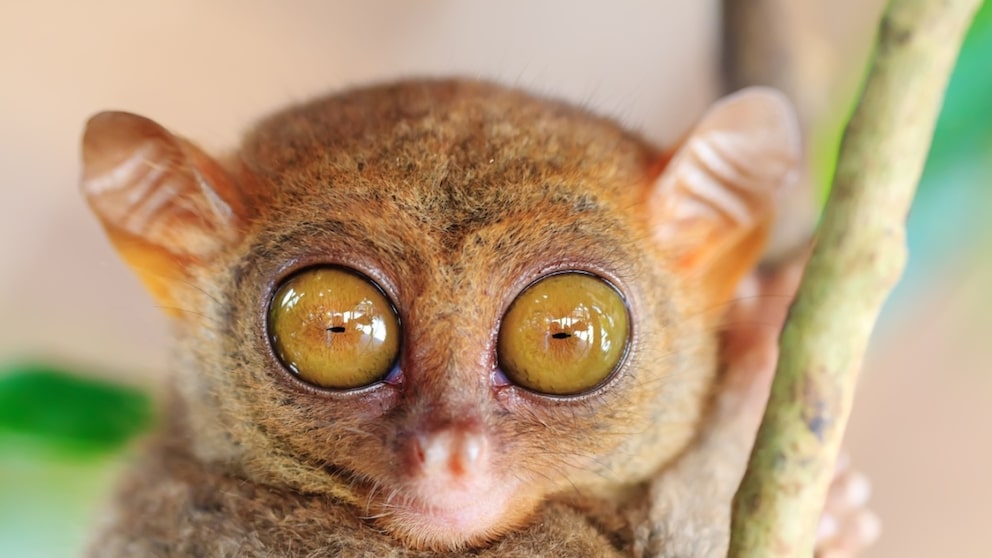
When you see a tarsier (Tarsius), two things immediately stand out: the large eyes and how tiny the animal is. With a diameter of up to 16 mm, the eyes of the tarsier are larger than its brain.1
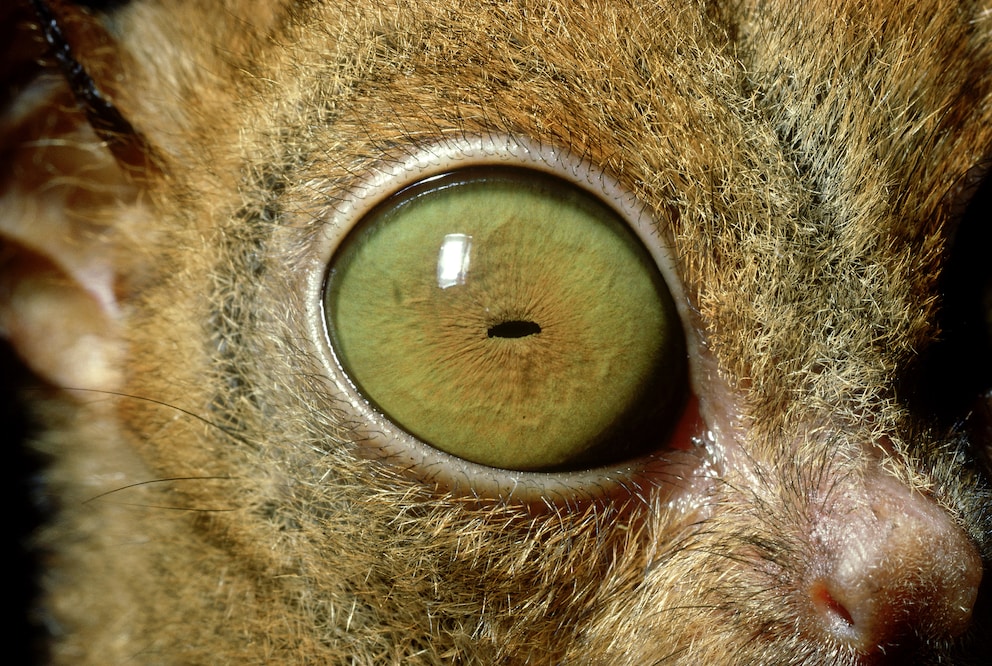
As small as this primate is, it is also light. The eyes are not only larger but also heavier than the brain, which weighs only two to three grams.
2. Tarsiers Can Jump Up to 3 Meters
Tarsiers live in the rainforests and swamp areas of Southeast Asia. They spend almost their entire lives in the trees, moving with impressive ease through the dense branches. Their exceptionally long hind legs are particularly beneficial. Notably, the elongated tarsal bones, after which the animals are named, stand out.
Thanks to this special anatomy, tarsiers can make jumps of up to three meters. For a primate that is only about the size of a fist, this is an astonishing feat. The long tail, which functions as a steering and balancing organ, also aids in jumping. Together with their huge eyes, these nocturnal hunters can spot prey at a distance even in low light and snap it up in a flash
3. Why Do Tarsiers Have Such Large Eyes?
The huge eyes of the tarsier are a perfect adaptation to its life as a nocturnal hunter. They have a diameter of about 1.5 centimeters, capture a lot of light, and allow the small primate to spot insects, spiders, and small vertebrates even in darkness. However, the large eyes also have a downside: They are almost immobile. If a tarsier wants to look to the side, it has to turn its entire head.
Unlike many other nocturnal animals—such as cats—tarsiers do not have a so-called tapetum lucidum, a reflective layer behind the retina that improves night vision. They compensate for this disadvantage with their exceptionally large eyes.
This adaptation is very old, as shown by fossils from China. A roughly 45-million-year-old skull of an extinct tarsier relative already shows the distinctively large eye sockets—an indication that the characteristic appearance of these animals has changed little over millions of years.2
4. Are Tarsiers Poisonous?
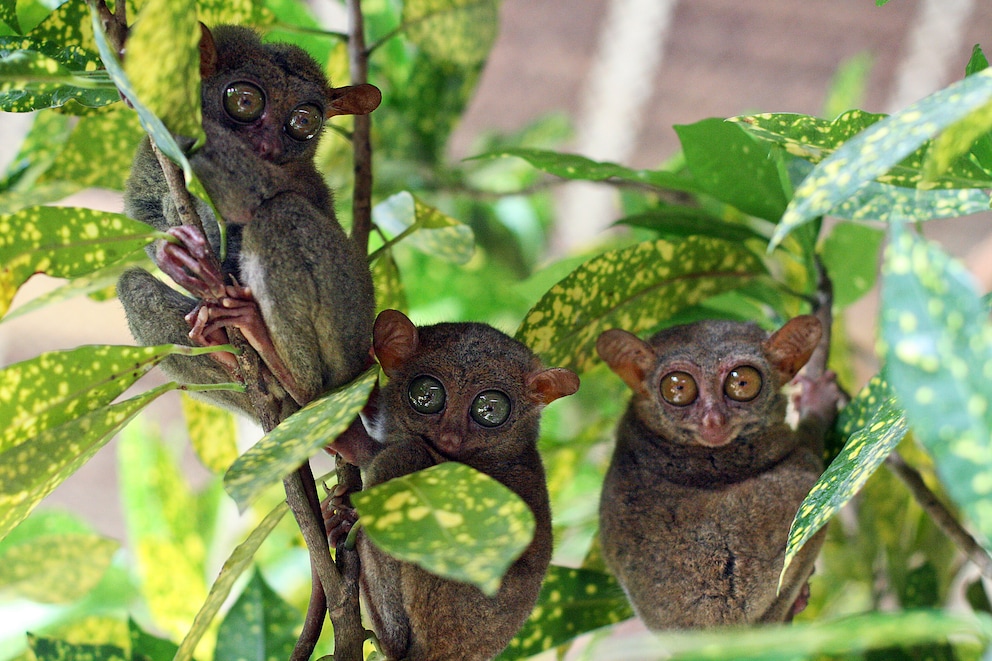
Many people wonder if tarsiers are poisonous. The answer is clear: no. The small primates may seem mysterious with their huge eyes and nocturnal lifestyle, but they do not rely on poison or other special weapons for hunting. Instead, they depend on their sharp senses, lightning-fast reflexes, and impressive jumping ability.
The Coolest Vampire Animals–From Real Bloodsuckers to Eerie Namesakes

Hardly anyone knows these 16 wild cats
5. Tarsiers Are Carnivores
But what do these tiny nocturnal hunters eat? Unlike all other primates, tarsiers feed exclusively on animal matter. They are the only known primates that are pure carnivores. Their diet mainly consists of insects such as grasshoppers, beetles, or crickets. They also hunt spiders, scorpions, and other invertebrates.
Also interesting: Whether from a Blackbird or a Pigeon—Taking Bird Feathers Is Prohibited
Tarsiers usually find their food at night. Once they spot prey, they strike quickly and grab it with their long fingers and strong hands. Their combination of sharp hearing, excellent vision, and enormous jumping ability aids them in this.
Tarsiers Need Protection
As cute as tarsiers may look, the future for many species is anything but bright. Their biggest problem is the loss of their habitat: More and more rainforest is being cleared for plantations, roads, or settlements. Additionally, pesticides affect the small primates because they find fewer prey animals. Poaching and the illegal trade in exotic animals also threaten their populations. It is all the more important to protect the remaining rainforests—because that is exactly where tarsiers belong.