

May 19, 2026, 2:48 pm | Read time: 4 minutes
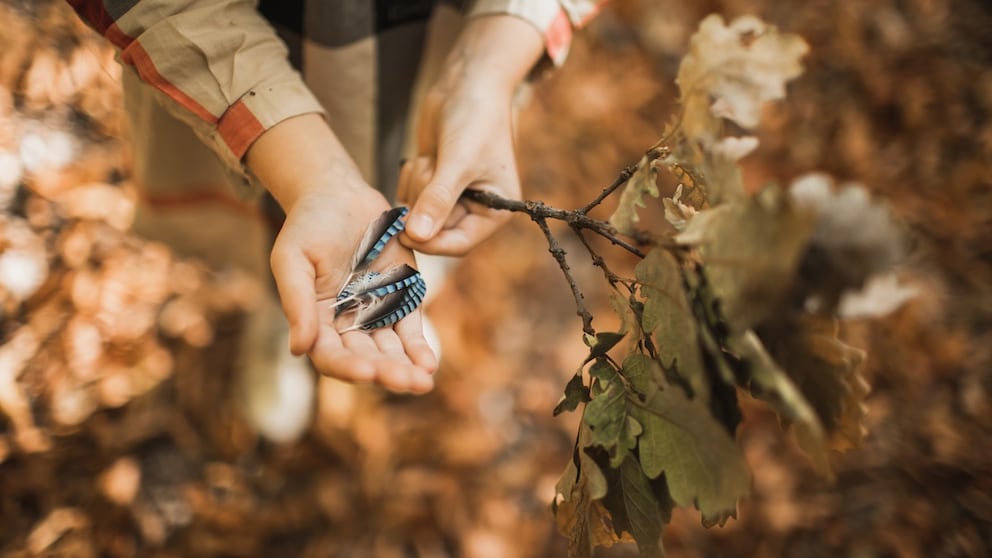
In late summer, feathers suddenly appear everywhere on paths, in gardens, or at the edge of the forest. For walkers and children, they seem like harmless natural finds, but they can lead to a legal issue. In Germany, you are not allowed to take bird feathers. Even a single blackbird or pigeon feather can be protected under species conservation laws. Collecting, possessing, or even selling feathers can result in a fine. There is a serious reason for these strict regulations.
Why Is Collecting Bird Feathers Prohibited?
The prohibition on taking bird feathers has an important background: species conservation. In Germany, all native wild birds are protected. This protection extends not only to the wild animals themselves but also to their eggs, nests, and individual feathers.1
The lawmakers aim to prevent a trade in rare feathers. If everyone could claim they just found the feather, it would be difficult to control whether a bird was possibly killed specifically for its plumage.
Conservation organizations have been warning for years about a black market for rare feathers. Large flight feathers from birds of prey or owls are particularly sought after by collectors and can fetch high prices.
Where Is It Stated That Collecting Bird Feathers Is Prohibited?
The prohibition on taking bird feathers is regulated, among other things, by Section 44 of the Federal Nature Conservation Act. It states that animals of protected species and parts of these animals may not simply be collected or possessed. Legally, even individual feathers are considered such “parts” of protected animals. Therefore, even a single blackbird or pigeon feather cannot generally be taken home.
What Are the Fines?
Those who violate the nature conservation law may face hefty fines. Depending on the state and the severity of the violation, fines can amount to several thousand euros. The Federal Nature Conservation Act provides for fines of up to 50,000 euros for certain violations, such as killing a protected bird.2
In practice, however, there is usually a distinction: Whether a child picks up a single feather or someone systematically collects and sells rare bird feathers makes a significant legal difference.
When Do You Find Particularly Many Bird Feathers?
Feathers are particularly common in late summer on paths, meadows, or in gardens. This is when many native bird species begin molting. During this process, birds renew their plumage. Old or damaged feathers fall out and are replaced by new ones. Waterfowl such as ducks, geese, or swans often lose all their flight feathers at once during molting and are unable to fly for several weeks.3
Molting is extremely exhausting for birds. The new plumage requires a lot of energy. According to experts, feathers make up a large part of a bird’s body mass.
Therefore, many animals retreat during molting. They sing less, hide more often, and avoid unnecessary flights. Especially during this time, people should not disturb or startle the animals.

Rare Discovery in Bavaria: The Story Behind the Snow-White Fox

Is It Permissible to Keep Crows as Pets?
Are Bird Feathers Dangerous?
An old myth persists around this topic. Many believe that bird feathers generally transmit diseases. In fact, a clean, dry feather is usually considered harmless. It becomes critical if blood, feces, or tissue residues are attached. Then bacteria, parasites, or germs may be present.
Experts therefore recommend not handling feathers unnecessarily and washing hands thoroughly after contact. Children should also not put bird feathers in their mouths.
Are There Exceptions to the Prohibition?
Yes, but only a few. Those who wish to collect bird feathers usually need an official exemption permit. These are granted to research or educational institutions, for example.
Feathers from pets or livestock are completely unproblematic. This includes, for example, chicken feathers from your own garden or legally purchased feathers with proof of origin.