

February 16, 2026, 5:29 am | Read time: 3 minutes
Round, red, and somehow cute—often that’s all it takes, and someone exclaims, “Oh, a robin!” Or is it a bullfinch? No worries: With this little bird guide for impressing on your next walk, PETBOOK brings order to the garden chaos.
Robin vs. Bullfinch–Who Is Who?
At first glance, both have something bright red about them–and that’s exactly what regularly causes confusion. But if you look closer, the two native birds are quite different.
The Robin–Insect Eater with Signal Effect
The robin is about 13 to 14 centimeters tall and weighs an average of 16 to 22 grams. It appears delicate, with relatively long legs and a fine, pointed beak—typical for an insect eater.
Characteristics
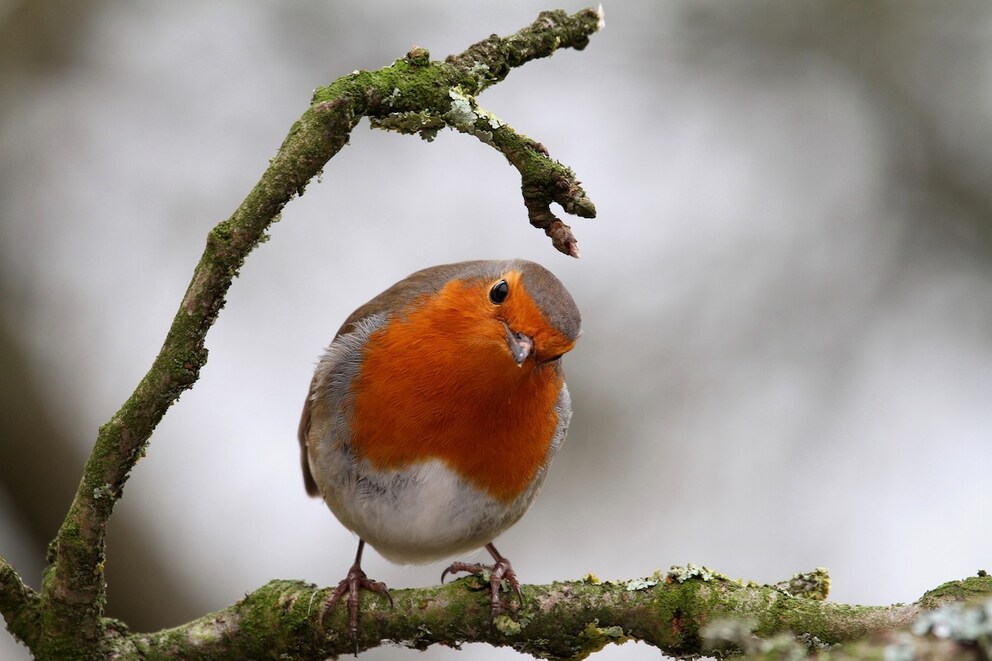
- Bright orange-red throat and upper chest
- Face also orange-colored
- Belly light gray to whitish
- Upper side olive-brown
- No black cap on the head
The red coloring primarily serves territory communication. Robins react strongly to the color red—even to mirror images or fabric pieces—and defend their territory energetically.
The Bullfinch–Robust Seed Eater with Distinctive Cap
The bullfinch, on the other hand, reaches about 15 to 18 centimeters in length and weighs 21 to 27 grams. It appears more compact, almost stocky. Characteristic is the short, strong, conical beak—ideal for cracking seeds.
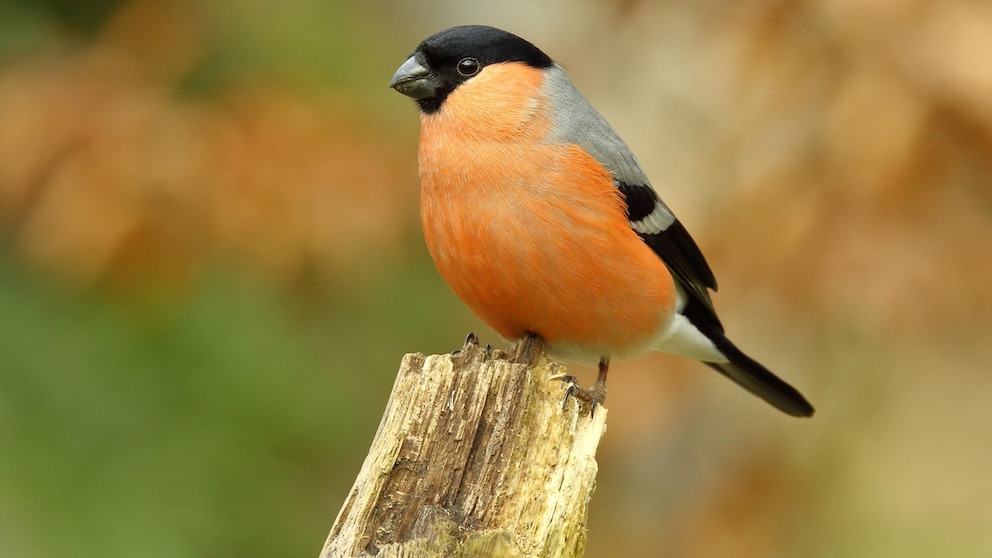
Characteristics of the Male
- Strong pink-red to carmine-red chest and belly
- Black cap on the head extending below the eye
- Black beak
- Gray back
- White rump
The female is overall much duller in color: chest and belly are beige to gray-brown instead of red.
Why Robins Are Seen More Often in Winter Than in Summer?

Do You Know Them All? These 6 Types of Tits Are Found in Germany
Bullfinch and Robin–Differences at a Glance
Despite superficial similarity due to the reddish coloring, bullfinches (Pyrrhula pyrrhula) and robins (Erithacus rubecula) differ significantly in several key features. The distinctive black cap makes it relatively easy to distinguish the bullfinch from the robin.
The robin belongs to the family of flycatchers (Muscicapidae) and is accordingly quite slender. The bullfinch is a member of the finches (Fringillidae). Its body is compact, stocky, and overall more robust. The difference is particularly noticeable when both species are observed side by side: The robin appears delicate, the bullfinch almost spherical.
The birds’ beaks also reveal much about their ecological niches. The robin’s is rather fine and pointed—typical for insect eaters. The bullfinch has a short, conical beak. This shape is ideal for cracking seeds and biting off buds. Its diet consists mainly of seeds, berries, and plant parts. The robin primarily feeds on insects, spiders, worms, and soft berries.
Additionally, bullfinches are often seen in pairs or small groups even outside the breeding season. Overall, they exhibit far less aggressive social behavior than robins, which are solitary by nature. There are also acoustic differences. The robin has a variable, melodic song and sings even in fall and winter. The bullfinch is vocally more reserved; its call is usually a soft, whistling “diü” or “bju.”
Conclusion: Who’s Sitting in the Garden?
For your next walk, you can remember: If it’s small, slender, and orange on the chest → it’s most likely a robin. If it’s round, red, and has a black cap → it’s a bullfinch.